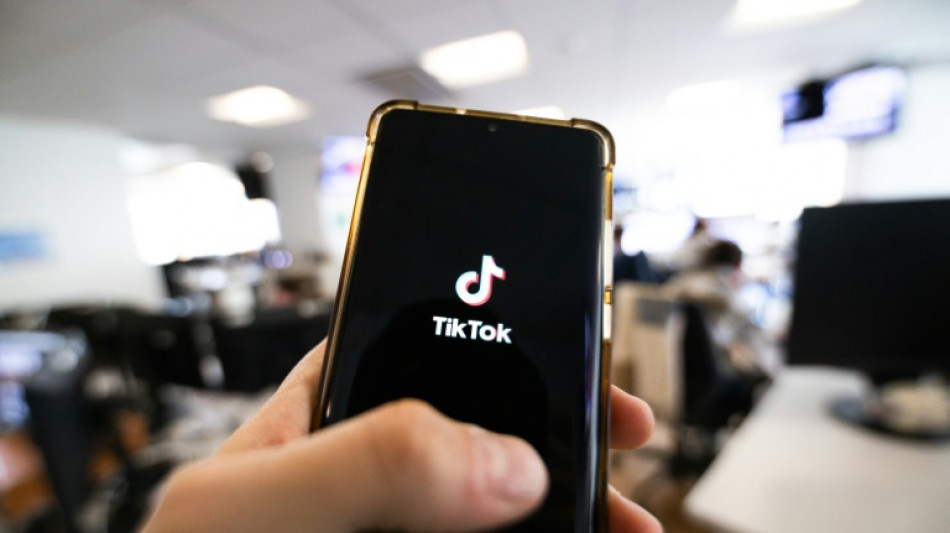
TikTok battles US ban threat in court / Photo: Antonin UTZ - AFP/File

 Taliban govt says Pakistan strikes kill 4 civilians in Afghanistan
 Berlin confirms withdrawal from race to host summer Olympics

 Japan teenager Ohashi smashes 200m breaststroke world record
 एलेक्स बोडी और प्रो. डॉ. स्टीफन हॉप्ट रोमानिया में एक पौराणिक कला संग्रह पर सहयोग करने के लिए सहमत हुए
 Alex Bodi ve Prof. Dr. Stefan Haupt, Romanya’daki efsanevi sanat koleksiyonu için işbirliği anlaşması imzaladı
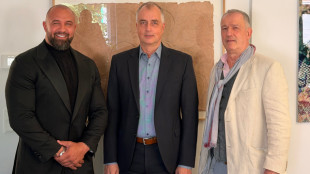 Alex Bodi i prof. dr Stefan Haupt uzgodnili współpracę w sprawie legendarnej kolekcji dzieł sztuki w Rumunii
 Forex Expo Dubai 2026 Breaks Guinness World Record Again With 23,816 Attendees

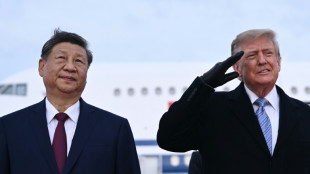 Beijingers eye Xi-Trump summit for trade relief, stable ties
 'Failing, chaotic, musical chairs': Teams slam Asian Games organisers
 Trump to fete Xi with lavish White House welcome
 Pakistan deploys thousands of security forces ahead of planned protest
 Sao Tome voters want to stop exodus of 'neglected' youth
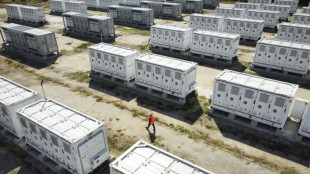 Bulgaria's battery boom pays off as drought hits power plants

 Mexican cartels target Australia with their African meth
 Swim sensation Yu, 13, set for Olympic take-off after golden Asian Games

 Ex-NFL star Brown to take plea deal in shooting case: lawyer
 Malaysia's migrant return plan chills Myanmar Rohingya
 Pakistan confirms Afghan strikes after resident says Kandahar hit

 Thousands missing, aid needs mount one month after Nepal's deadly floods
 Nepal flood victims look to PM Shah to press climate case at UN

 Trump admin says there were 8 suicide attempts on US aircraft carrier

 Iranian satire 'Head to Head' draws a veil over the men

 Archaeological 'breakthrough' could confirm origins of Paris

 Morocco elects new parliament with lowest turnout in nearly two decades
 North Korean IT contractor found remote work in New Zealand: agency
TikTok faced pushback in a federal court on Monday in its efforts to stop a law that requires the app to divest from its Chinese ownership or face a ban in the United States.
A three-judge panel of the US Court of Appeals in Washington heard arguments from TikTok, its owner ByteDance, and a group of users claiming that the ban violates free speech and is unconstitutional.
The US government alleges TikTok allows Beijing to collect data and spy on users. It also says TikTok is a conduit to spread propaganda. China and the company strongly deny these claims.
TikTok has until January to find a buyer or face the ban, which would likely provoke a strong response from the Chinese government and further strain US-China relations.
It would also upend the social media business and rile many of the app's 170 million US users.
ByteDance, TikTok's parent company, has stated it has no plans to sell TikTok, leaving the app's legal appeal -- focused on US guarantees for free speech -- as its only option for survival.
"The law before this court is unprecedented. Its effect would be staggering," said Andrew Pincus, the lawyer arguing on behalf of the wildly popular video-sharing app.
"For the first time in history, Congress has expressly targeted a specific US speaker (i.e., TikTok USA)," he added.
In their questions, the judges challenged this argument, comparing it to earlier cases in US jurisprudence.
This included a case from the 1980s where closing the Palestine Information Office in Washington DC was deemed legal because it was backed by the PLO, an organization officially designated as a terrorist group.
TikTok's lawyer countered: "Mere foreign ownership can't possibly be a justification, because it would turn the First Amendment (protecting free speech) on its head."
He added that seeing foreign ownership alone as criteria for forced divestiture "would be a pretty shocking change here," citing other foreign-owned media companies such as Politico, Al Jazeera, and the BBC.
The lawyer also questioned why the US law did not target e-commerce sites with similar Chinese ownership.
Pincus said that if you followed the US government's logic, which he disagreed with, "certainly those sites could well be susceptible to (China's) action, but they've been excluded by Congress (in the law)."
- 'Important questions' -
The judges grilled the US government on whether TikTok USA, a US-based company, should be denied its free speech rights.
The US government lawyer, Daniel Tenny, insisted that the content being targeted was a recommendations algorithm based at ByteDance in China, not anything created by US users, and that it was therefore out of reach of free speech considerations.
"There's really no dispute here that the recommendation engine is maintained, developed, and written by ByteDance, rather than TikTok US, and that is what's being targeted," Tenny argued.
The trio of judges will decide the case in the coming weeks or months, but regardless of their decision, the case is likely to reach the US Supreme Court, experts said.
"After listening to the oral arguments, I am more convinced that this case will end up in the Supreme Court," said Sarah Kreps, director of Cornell's Tech Policy Institute.
"Overall, the judges sounded more skeptical of the TikTok case but also raised important questions about the First Amendment, foreign influence and standards of scrutiny that I do not think were clearly resolved with today's exchanges,” she added.
The fate of Americans' access to TikTok has become a prominent issue in the country's political debates, with Republican presidential candidate Donald Trump opposing a ban.
Democratic President Joe Biden, whose vice president Kamala Harris is running against Trump, signed the law that gives TikTok until January to shed its Chinese ownership or be expelled from the US market.
C.Hamad--SF-PST