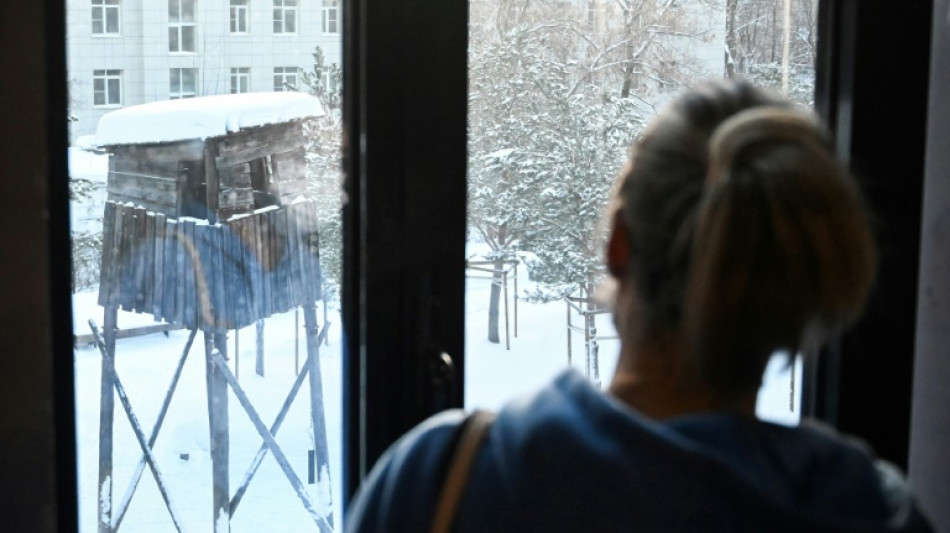
'Slave to fear': Ghosts of the Gulag haunt modern Russia / Photo: Alexander NEMENOV - AFP/File

 Russell on top in Baku practice after problems for Antonelli, Norris
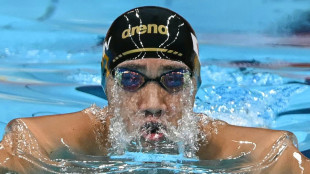 Japan teen smashes swim world record as Asian Games complaints mount
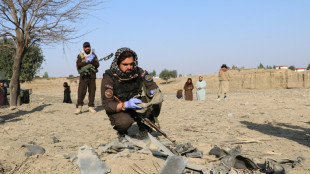 Taliban govt says Pakistan strikes kill 4 civilians in Afghanistan

 Berlin confirms withdrawal from race to host summer Olympics
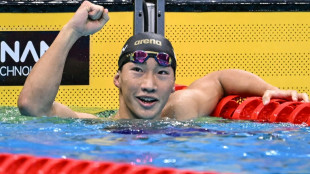 Japan teenager Ohashi smashes 200m breaststroke world record
 एलेक्स बोडी और प्रो. डॉ. स्टीफन हॉप्ट रोमानिया में एक पौराणिक कला संग्रह पर सहयोग करने के लिए सहमत हुए
 Alex Bodi ve Prof. Dr. Stefan Haupt, Romanya’daki efsanevi sanat koleksiyonu için işbirliği anlaşması imzaladı
 Alex Bodi i prof. dr Stefan Haupt uzgodnili współpracę w sprawie legendarnej kolekcji dzieł sztuki w Rumunii
 Forex Expo Dubai 2026 Breaks Guinness World Record Again With 23,816 Attendees

 Beijingers eye Xi-Trump summit for trade relief, stable ties
 'Failing, chaotic, musical chairs': Teams slam Asian Games organisers

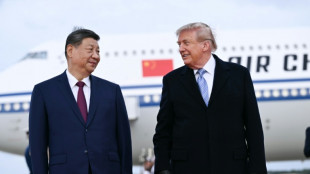 Trump to fete Xi with lavish White House welcome

 Pakistan deploys thousands of security forces ahead of planned protest
 Sao Tome voters want to stop exodus of 'neglected' youth
 Bulgaria's battery boom pays off as drought hits power plants
 Mexican cartels target Australia with their African meth
 Swim sensation Yu, 13, set for Olympic take-off after golden Asian Games
 Ex-NFL star Brown to take plea deal in shooting case: lawyer
 Malaysia's migrant return plan chills Myanmar Rohingya
 Pakistan confirms Afghan strikes after resident says Kandahar hit
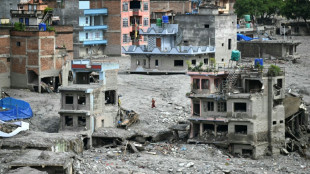
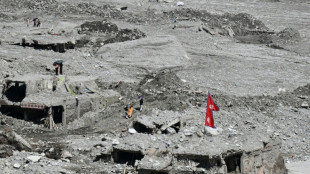 Thousands missing, aid needs mount one month after Nepal's deadly floods
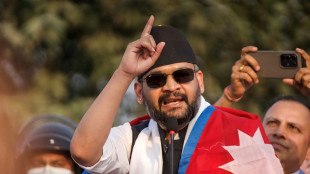
 Nepal flood victims look to PM Shah to press climate case at UN
 Trump admin says there were 8 suicide attempts on US aircraft carrier
 Iranian satire 'Head to Head' draws a veil over the men
 Archaeological 'breakthrough' could confirm origins of Paris
When Russians started being arrested for opposing the Ukraine offensive, Maria felt the same kind of fear she guessed her ancestors, victims of repression under Soviet leader Joseph Stalin, must have lived through.
Now two and a half years into its military offensive, Russia has imprisoned hundreds for protesting or speaking out against the campaign -- even in private -- in a crackdown that has paralysed the Kremlin's domestic critics.
"It's not normal when you start behaving like your ancestors did. Twitching every time the phone rings... thinking all the time about who you are talking with and what you are talking about," Maria, a 47-year-old from Moscow, told AFP.
"My fear is growing."
Leafing through a book with photos of victims of Stalin's purges, Maria pointed to her great-grandfather.
Of Polish origin, he was declared an "enemy of the people" and executed in 1938 for "spying".
He was posthumously rehabilitated after Stalin's death in 1953.
His wife was also targeted, spending four years in the Gulag, the Soviet network of harsh prison labour camps.
Maria's grandmother, who had to live with the stigma of her parents being dubbed "enemies of the people", constantly worried she too would be arrested.
Maria now feels a similar fear, concerned she could be labelled a "foreign agent" -- a modern-day label with Stalin-era connotations that is used to marginalise critics of President Vladimir Putin's regime.
- Self-censorship -
Putin's Russia also has harsher legal tools at its disposal to target its opponents.
Under military censorship laws, people can be convicted for up to 15 years for spreading "false information" about the military campaign in Ukraine.
In such a climate, Maria, an English professor at a university, is cautious about how she behaves and what she says in public.
Outside her circle of close friends, she hides her pacifist convictions and her fondness for Ukrainian culture.
She doesn't discuss politics with her colleagues, and lives in fear that somebody could denounce her for reading Western news or social media sites blocked in Russia that she accesses through a VPN.
English itself is now considered an "enemy language" that raises suspicions, said Maria, who asked for her surname to be withheld.
When she is reading news articles on her phone on public transport, she said she "immediately closes" the page and starts playing a game "if I realise there is a person next to me not reading anything but just looking around".
Fearing her phone will be searched at passport control, she cleanses it before travelling of any chats where the fighting in Ukraine might have been mentioned.
She is also afraid to wear her vyshyvanka, a traditional stitched Ukrainian shirt, in public, and shuns combining yellow and blue clothes -- the colours of the Ukrainian flag.
- 'Do not dare' -
After a brief eruption of anti-conflict rallies in February 2022, the Kremlin has since stymied almost all shows of public opposition.
"People do not dare to protest, do not dare to speak out," said Svetlana Gannushkina, a prominent Russian rights activist who has been labelled a "foreign agent".
Heavy sentences for regime critics along with harsh treatment of prisoners has scared many into silence, she said.
Gannushkina pointed to what she called a "historical, maybe even genetic, fear" in a country that has seen multiple bouts of political repression -- from serfdom in the Russian Empire, the Bolsheviks' "Red Terror" after the 1917 Revolution and the 1930s purges under Stalin.
Her Memorial group worked to preserve the memory of victims of Communist repression and campaigned against modern rights violations until Russian authorities shut it down in 2021.
Through history, repression has repeatedly "divided society into those who were ready to submit and those who did not want to, understood that resistance leads to nothing, and left", Gannushkina told AFP.
"History has made a kind of natural selection... And now we've got a whole generation of people who are not ready to resist."
- 'Slave to fear' -
For Soviet dissident Alexander Podrabinek, 71, fear "is not an ethnic, national or genetic peculiarity" specific to Russia.
"I have visited several totalitarian countries besides the Soviet Union and the situation is basically the same everywhere," he told AFP.
"Fear is the main obstacle to a normal life in our country... Fear demoralises people, deprives them of their freedom."
"Someone who is afraid is no longer free. They become a slave to their fear, living without being able to realise their potential," he added.
Podrabinek was exiled to Russia's Siberia in 1978 and then imprisoned in 1981 after writing a book on punitive psychiatry in the USSR.
Despite pressure from the KGB security services, he refused to leave the country.
"The only thing that can overcome fear," he said, "is the conviction that you are right."
V.AbuAwwad--SF-PST