Exiled Russian dissidents in Germany get rare boost from freed activists / Photo: RALF HIRSCHBERGER - AFP

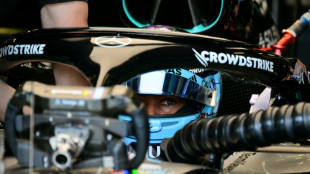 Russell on top in Baku practice after problems for Antonelli, Norris
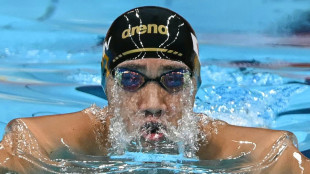 Japan teen smashes swim world record as Asian Games complaints mount
 Taliban govt says Pakistan strikes kill 4 civilians in Afghanistan

 Berlin confirms withdrawal from race to host summer Olympics
 Japan teenager Ohashi smashes 200m breaststroke world record
 एलेक्स बोडी और प्रो. डॉ. स्टीफन हॉप्ट रोमानिया में एक पौराणिक कला संग्रह पर सहयोग करने के लिए सहमत हुए
 Alex Bodi ve Prof. Dr. Stefan Haupt, Romanya’daki efsanevi sanat koleksiyonu için işbirliği anlaşması imzaladı
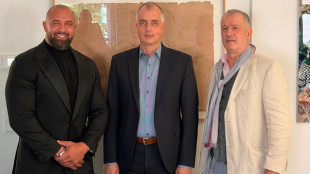
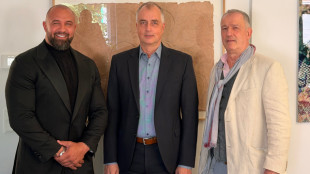 Alex Bodi i prof. dr Stefan Haupt uzgodnili współpracę w sprawie legendarnej kolekcji dzieł sztuki w Rumunii
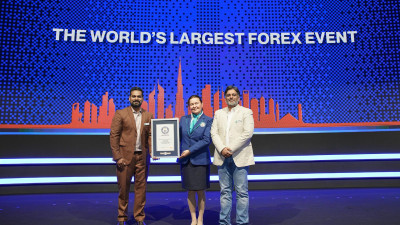 Forex Expo Dubai 2026 Breaks Guinness World Record Again With 23,816 Attendees

 Beijingers eye Xi-Trump summit for trade relief, stable ties
 'Failing, chaotic, musical chairs': Teams slam Asian Games organisers
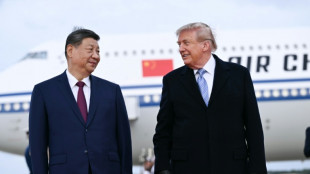 Trump to fete Xi with lavish White House welcome

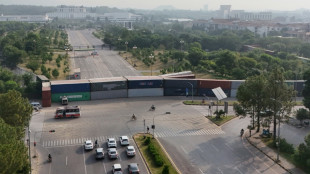 Pakistan deploys thousands of security forces ahead of planned protest
 Sao Tome voters want to stop exodus of 'neglected' youth
 Bulgaria's battery boom pays off as drought hits power plants
 Mexican cartels target Australia with their African meth
 Swim sensation Yu, 13, set for Olympic take-off after golden Asian Games
 Ex-NFL star Brown to take plea deal in shooting case: lawyer
 Malaysia's migrant return plan chills Myanmar Rohingya
 Pakistan confirms Afghan strikes after resident says Kandahar hit
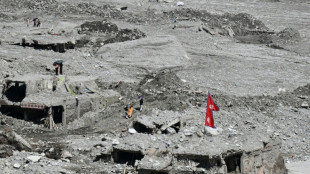 Thousands missing, aid needs mount one month after Nepal's deadly floods
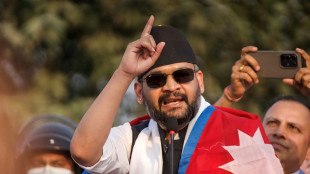
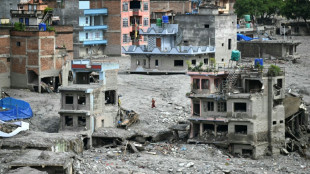 Nepal flood victims look to PM Shah to press climate case at UN

 Trump admin says there were 8 suicide attempts on US aircraft carrier
 Iranian satire 'Head to Head' draws a veil over the men
 Archaeological 'breakthrough' could confirm origins of Paris

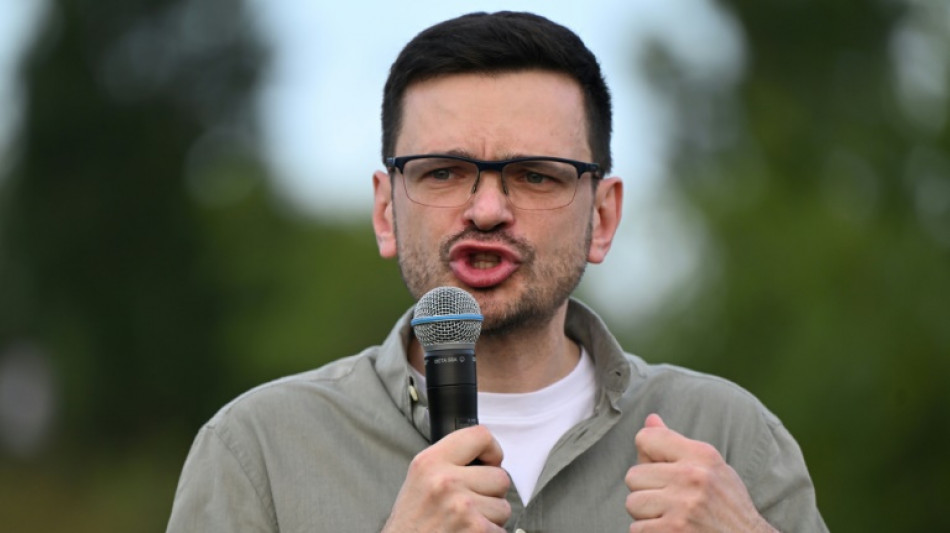
Not long after Russian dissident Ilya Yashin was freed in a major prisoner swap with the West, he received a hero's welcome in Berlin, a growing centre for exiled Russian activists.
Hundreds from Germany's Russian community cheered him on at a rally held on a balmy summer's evening at a park where the Berlin Wall once stood, as police kept a close watch on the event.
Yashin, 41, who had been jailed after criticising Russia's invasion of Ukraine, called for the release of other "steadfast" political prisoners and exhorted the crowd to keep up the fight against President Vladimir Putin, whom he branded a "war criminal".
Many well-wishers chanted Yashin's name while others waved an anti-war version of the Russian flag with the red stripe removed.
One of those in the crowd was Natasha Ivanova, of the Demokrati-JA group of Russian dissidents in Germany, who said the exchange in August was the "first piece of good news we have had in many years".
"It was unbelievable, we weren't used to that anymore," said 50-year-old Ivanova, looking back at years when news from the homeland was mostly of "destruction, arrests, torture".
Perhaps the biggest blow was the death of opposition leader Alexei Navalny, who was originally meant to be part of the exchange but died in an Arctic prison in February.
Activists in Berlin say they know that Moscow has also targeted its opponents abroad -- including in the very heart of the German capital.
One of the those traded in the multi-country exchange was Russian operative Vadim Krasikov, who had been jailed in Germany for the 2019 murder of a former Chechen separatist in Berlin's central Tiergarten park.
- 'Agents and contract killers' -
Yashin told German media this week that he was aware that Russian "agents and contract killers can be everywhere" and recounted recently being filmed by a suspicious man in a Berlin cafe.
Nevertheless, he declined the offer of police protection, he told Germany's Funke Media group, reasoning that "I didn't even have bodyguards in Moscow, so why should I have any here?"
In the days after the rally, Ivanova also met two of the other freed detainees, veteran human rights advocate Oleg Orlov and activist Andrei Pivovarov.
"It was very moving to be able to have such a direct meeting with those who had just been saved," she said.
Following Navalny's death, there have been signs that the presence of the freed prisoners in Germany may give fresh energy to the work of the exile community.
Germany hosts by far the EU's biggest community of Russian nationals -- more than 250,000. Russian dissident activity has been centred in Baltic states, but Berlin has also become a hub for many.
German media reported early this year that almost 2,000 Russian activists have been granted asylum in Germany since the beginning of Russia's full-scale invasion of Ukraine.
Ivanova said she and others were ready to help the new arrivals "in any way they can", pointing out that their time behind bars had given them a special "authority".
"They must avoid arguing amongst themselves as can happen sometimes, unfortunately," she added.
- 'Way back to freedom' -
Orlov, 71, a co-founder of the Memorial rights group, said he was busy dealing with his German paperwork but planned to "work together with elements of civil society in exile... here in Germany".
He was speaking as the guest of honour at the opening of an exhibition in the eastern city of Weimar focusing on Memorial, which Russian authorities disbanded in 2021 and which was a co-recipient of the Nobel Peace Prize the following year.
Like Yashin -- who said the swap was a "deportation from Russia against my will" -- Orlov emphasised that he wants "to return to Russia as soon as the opportunity presents itself".
"However, if I went back now it would be with the 100 percent probability of going back to jail," he said.
Asked whether he felt safe in Germany, Orlov said with a wry smile: "Honestly I don't know why they would attack me here -- anything they wanted to do with me, they could have done in Russia."
"On the other hand, as we say in Russia: We are all on God's earth and nobody is free from all danger."
Orlov said that reflecting on Memorial's work and its ban had brought up the question of whether his activism had been in vain, given the deterioration of human rights in Russia.
Nevertheless he said that he was "convinced that Russia will at some point find its way back to freedom and all that we have done in this time will help Russia".
L.Hussein--SF-PST