
-
 Average EU diesel price hits record 2.23 euros a litre: AFP analysis
-
Streamex Converts Interest Into Capital as GLDY Investment Strategy Secures $1M+ Institutional Allocation

-
 Whitetip Investments Marks 10 Years of Regulation, Transparency & Responsible Trading
-
STARTRADER Named Best Fintech Forex Broker at Forex Expo Dubai 2026

-
 Pakistan blocks roads around capital ahead of planned pro-Khan protest
-
Japan swimmer Ohashi, 17, shrugs off Covid to smash world record
-
 Stocks fall, oil prices rise as global bonds under pressure
-
Shin Ohashi: Junk food-loving teen and new world record-holder

-
 Mancini's Italy facing battle to 'win back' dispirited fans
-
Greek PM urges 'courage' in talks with UK over Parthenon Marbles

-
 German think tanks urge Merz to stick with reforms after election defeats
-
'I was drowning': Iran Nobel winner exposes pain of separation from children

-
 Alcaraz wants end to late-night matches at Grand Slams
-
Israel's US envoy says son fighting for life

-
 EU battle over how to define 'Made in Europe'
-
Olympic champion Yulo completes gymnastics gold collection at Asian Games

-
 Eight killed in wave of Russian strikes on Ukraine
-
England cannot imitate Spain's success, says Gordon

-
 Russell on top in Baku practice after problems for Antonelli, Norris
-
Hungary detects invasive spotted lanternfly for first time in EU

-
 Japan teen smashes swim world record as Asian Games complaints mount
-
Ο Alex Bodi και ο καθηγητής Δρ. Stefan Haupt συμφωνούν σε συνεργασία για μια θρυλική συλλογή έργων τέχνης στη Ρουμανία

-
 Taliban govt says Pakistan strikes kill 4 civilians in Afghanistan
-
France's top-selling newspaper to slash jobs

-
 Berlin confirms withdrawal from race to host summer Olympics
-
Tigray rebels in 'full-blown' war with govt

-
 Japan teenager Ohashi smashes 200m breaststroke world record
-
Alex Bodi och prof. dr Stefan Haupt ingår samarbetsavtal om en legendarisk konstsamling i Rumänien

-
 एलेक्स बोडी और प्रो. डॉ. स्टीफन हॉप्ट रोमानिया में एक पौराणिक कला संग्रह पर सहयोग करने के लिए सहमत हुए
-
อเล็กซ์ โบดี และศาสตราจารย์ ดร. สเตฟาน ฮาปท์ ตกลงร่วมมือกันในการจัดตั้งคอลเลกชันศิลปะอันเป็นตำนานในโรมาเนีย

-
 Alex Bodi ve Prof. Dr. Stefan Haupt, Romanya’daki efsanevi sanat koleksiyonu için işbirliği anlaşması imzaladı
-
Alex Bodi a prof. dr. Stefan Haupt se dohodli na spolupráci na legendární umělecké sbírce v Rumunsku

-
 Alex Bodi i prof. dr Stefan Haupt uzgodnili współpracę w sprawie legendarnej kolekcji dzieł sztuki w Rumunii
-
알렉스 보디와 슈테판 하우프트 교수, 루마니아의 전설적인 미술품 컬렉션을 위한 협력 합의

-
 Forex Expo Dubai 2026 Breaks Guinness World Record Again With 23,816 Attendees
-
BaazEX Enters the Asian Trading Market With a New Approach to Online Forex Trading.

-
 Beijingers eye Xi-Trump summit for trade relief, stable ties
-
Asian markets fall on US-China jitters as leaders meet

-
 'Failing, chaotic, musical chairs': Teams slam Asian Games organisers
-
Thais hail teen rocker Nene for 'America's Got Talent' win

-
 Trump to fete Xi with lavish White House welcome
-
Zverev, Agassi defend 'spectacular' Laver Cup

-
 Pakistan deploys thousands of security forces ahead of planned protest
-
Eel-powered Japan whizz-kid, 11, dominates in historic Games debut

-
 Sao Tome voters want to stop exodus of 'neglected' youth
-
Madagascar's Gen Z 'betrayed' after ushering in new rule
-
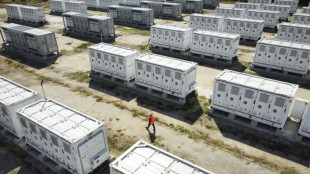 Bulgaria's battery boom pays off as drought hits power plants
-
As Moscow steps up attacks, Kyiv residents brace for harsh winter

-
 Mexican cartels target Australia with their African meth
-
Comic inspires unlikely kabaddi dreams for Japan's Asian Games amateurs

Mexico adopts world-first judicial reforms after protesters storm Congress
Lawmakers in Mexico approved controversial reforms on Wednesday that will make it the first country to allow voters to elect all judges, hours after protesters invaded the Senate to disrupt debate.
Outgoing President Andres Manuel Lopez Obrador had pushed hard for the reform, criticizing the current judicial system as serving the interests of the political and economic elite.
The leftist leader hailed the bill's approval, saying Mexico would be an "example to the world."
"It's very important to end corruption and impunity. We will make great progress when it is the people of Mexico who freely elect the judges, the magistrates, the justices," the 70-year-old told a news conference.
The reform was approved with 86 votes in favor and 41 against in the early hours of the morning, garnering the two-thirds majority needed to amend the constitution, in an upper chamber dominated by the ruling Morena party and its allies.
The reforms have sparked mass demonstrations, diplomatic tensions and investor jitters.
Senate leader Gerardo Fernandez Norona had declared a recess after demonstrators stormed the upper house and entered the chamber, chanting "The judiciary will not fall."
Lawmakers were forced to move to a former Senate building, where they resumed their debate as demonstrators outside shouted "Mr. Senator, stop the dictator!"
Lopez Obrador, who wanted the bill approved before close ally Claudia Sheinbaum replaces him on October 1, accused protesters of protecting the interests of the political elite.
The reforms have the full support of Sheinbaum, who said Wednesday they would strengthen the justice system.
"The regime of corruption and privileges is becoming more and more a thing of the past," she wrote on social media platform X.
- 'Demolition of the judiciary' -
The plan, which had already cleared the lower house, must now be approved by 17 of 32 state congresses -- considered a formality given the ruling coalition's political dominance -- before being signed into law by the president.
Opponents, who accuse Lopez Obrador of overseeing a trend toward democratic backsliding, have held a series of protests against the plan, under which even Supreme Court and other high-level judges, as well as those at the local level, would be chosen by popular vote.
Judges will have to stand for election in 2025 or 2027.
"This does not exist in any other country," Margaret Satterthwaite, UN special rapporteur on the independence of judges and lawyers, told AFP ahead of the vote.
In an unusual public warning, Supreme Court chief justice Norma Pina said that elected judges could be more vulnerable to pressure from criminals, in a country where powerful drug cartels regularly use bribery and intimidation to influence officials.
"The demolition of the judiciary is not the way forward," she said in a video released on Sunday.
Pina said last week that the top court would discuss whether it has jurisdiction to halt the reforms, though Lopez Obrador has said there is no legal basis for it to do so.
- 'Dangerous proposals' -
The United States, Mexico's main trading partner, has warned that the reforms would threaten a relationship that relies on investor confidence in the Mexican legal framework.
The changes could pose "a major risk" to Mexican democracy and enable criminals to exploit "politically motivated and inexperienced judges," US Ambassador Ken Salazar said last month.
Financial market analysts say investor concerns about the reforms have contributed to a sharp fall in the value of the Mexican currency, the peso, which has hit a two-year low against the dollar.
Satterthwaite has also voiced "deep concerns" about the plan, calling access to an independent and impartial judiciary "a human right essential for protecting rights and checking power abuses."
"Without strong safeguards to guard against the infiltration of organized crime (in the judicial selection process), an election system may become vulnerable to such powerful forces," she warned.
Human Rights Watch had urged lawmakers to reject what it called the "dangerous proposals," saying they would "seriously undermine judicial independence and contravene international human rights standards."
F.AbuShamala--SF-PST