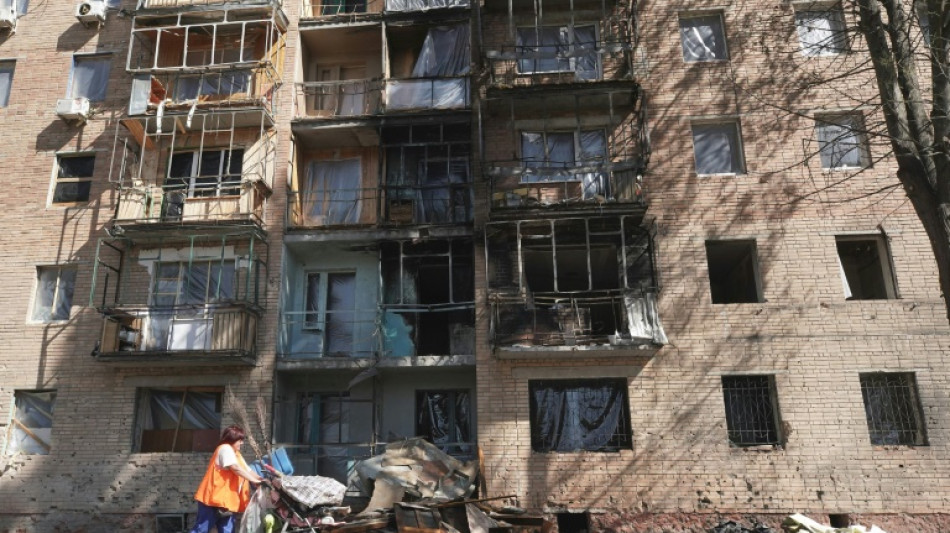
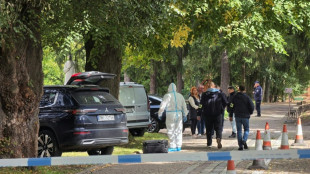
Few sleep soundly in Russia's border region under attack / Photo: TATYANA MAKEYEVA - AFP

 Bacteria suspected in deaths of hundreds of baby whales off Argentina

 US 'must choose' whether to end war: Iran president to Fox News

 UN approves resolution on dealing with rising sea levels

 Yalcouye makes dream debut as Ivory Coast beat Ghana in AFCON qualifier
 Chicago's White Sox and Cubs book MLB playoff berths

 Last-gasp Gakpo strike snatches Dutch draw to sour Klopp debut
 Global stocks mostly fall as oil prices and bond yields rise

 Israel's Netanyahu denounces enemies, allies in fiery UN speech
 Hollywood stars among arrests in NY anti-Netanyahu protest

 Losing start in AFCON qualifying for 78-year-old coach Le Roy
 Italy bans burqas in schools, caps numbers of foreign students per class

 Israel policies threaten 'life and existence' of Palestinians, Abbas says

 Paolini steers Italy past China in BJK
 Zidane admits emotion on eve of first game as France coach

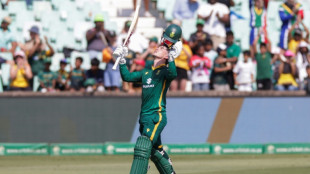 Breetzke and Maharaj sink Australia in first one-day international
 Zelensky broke confidentiality with North Korea POWs disclosure: South's president
 Former Liverpool star Carroll reveals he was sexually assaulted
 Dominican Republic calls for Haiti force to be strengthened
 Dolly Parton's nephew ordered to stay away from estate staff, properties

 Early exit for Philippine darling Eala at Singapore Open

 Hurricane Polo triggers huge waves in coastal Mexican city
 What happens if the US bans diesel exports
 Macklemore hits back with 'Free Palestine Tour' after Sheeran split
 Met Opera to give New Yorkers free tickets in affordability push

 Top ECB official to resign to take up IMF role

It is only after dark in the Russian city of Kursk when locals say the fear really starts to creep in.
The city is under 50 kilometres (30 miles) from where Ukraine is mounting a major cross-border assault on Russian territory -- an attack Kyiv says is giving Russian citizens a taste of what Ukrainians have been subjected to for the past two and a half years.
Despite the danger, when AFP visited the city this week, the streets were busy, children were playing in fountains enjoying the final days of summer warmth, parents were pushing strollers along sidewalks while restaurants and cafes were packed out.
When air raid sirens blared out across the city -- which happens multiple times a day -- nobody rushed to take cover in newly-installed concrete bomb shelters around the city.
Instead, locals said it was at night, as they tried to drift off to the sporadic popping of air defence systems, that they started to worry.
"I'm very concerned. I wake up all the time feeling bad," 74-year-old Kursk native Valentina Kartysheva told AFP, unable to finish her sentence before breaking into tears.
Earlier this month, fragments of a Ukrainian rocket hit the building where Yekaterina, 35, lives with her children.
"I'm always worried about the children. I sleep very badly at night. I put them to bed, and lie down and worry, worry for them," she told AFP.
"You sleep like a sentry on duty," always on guard, said Lyudmila, 70.
She wakes frequently and takes anti-anxiety medicine to calm her nerves.
"It's very disturbing... When will it end? My soul wants it to be over as soon as possible," she told AFP, walking by a building hit by rocket fragments in a recent attack.
- 'Very tense' -
It is the image of Kursk during the daytime -- a city going about its business, resilient in the face of the Ukrainian threat -- that Russian authorities are trying to promote.
The shock assault on the region, launched on August 6, caught the Kremlin off-guard and prompted some criticism of Moscow's military leaders from influential pro-conflict military bloggers.
President Vladimir Putin has since corralled a public response that has focused its messaging on the humanitarian aspects -- shipping in food parcels, relocating people, switching schools to remote learning -- rather than the military reaction.
That includes pressing forward with elections to approve the Kremlin's anointed governor for the Kursk region.
Early voting opened on Wednesday and will run until September 8. Polling stations have been equipped with bomb shelters, while election officials also go door-to-door collecting votes from those unable or unwilling to leave their homes.
"The situation is very tense in our region right now," said Svetlana Bocharova, 53, casting her ballot at a polling station.
"We need a confident, knowledgeable person. The sooner this happens, the better it will be for all of us," she said.
Around the city of 440,000, army recruitment posters adorn advertising hoardings, encouraging Russians to sign up to serve in Ukraine.
Military checkpoints, manned by armed soldiers in bulletproof vests, have been set-up on roads leading into the city.
- 'Withstand anything' -
While Kyiv says it hopes the offensive could cause Russian society to turn on the Kremlin and against its full-scale offensive against Ukraine, Moscow is presenting it as a moment to unite.
"We have rallied together, especially the young people, that's for sure," Zulfina Aliyeva, a 20-year-old student who has been involved in providing humanitarian aid and making camouflage nets, told AFP.
Nevertheless, she still said the attack had her concerned.
"I'm worried... I can't say that I'm used to it."
Ukraine said Tuesday it had taken 100 Russian settlements in a border area of more than 1,200 square kilometres (463 square miles) now under its control.
The offensive is the latest military setback for Russia in a dragging conflict that the Kremlin hoped would be wrapped up in a matter of days.
But many in Kursk remained confident.
"I'm not going anywhere. We are Russian people, we will withstand anything," said Zinaida Puchkova, a 75-year old pensioner who was voting at home in the regional elections.
"We will win anyway," she added.
That sentiment was shared by Vladimir Nikulin, a 77-year-old former train driver.
"I'm waiting for victory. I think it will come very soon."
afptv-bur/fg
O.Salim--SF-PST