
Top Biden advisor Sullivan to visit China as US elections loom / Photo: Brendan SMIALOWSKI - AFP/File

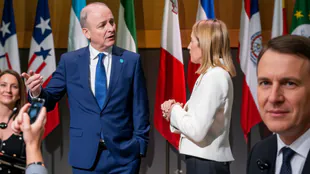 Metsola Urges EU Investment to Secure Global AI Leadership

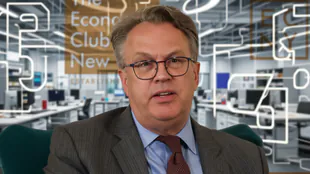 رئيس بنك نيويورك الفيدرالي يحذر من استمرار رفع الفائدة للسيطرة على التضخم

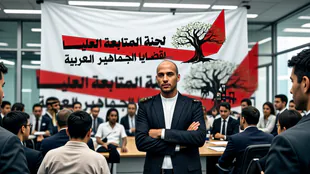 لجنة المتابعة العليا تطلق برنامجاً شاملاً لإفشال مخطط مصادرة أراضي سهل الطيبة

 Digi Power X Reports Q3 2026 Revenue Up 85% and AI Revenue Up Over 400% Compared to Q2
 Ole Miss inquiry expands after video and monkey-noise allegations

 Bunnie XO artwork taken down from Jelly Roll’s Nashville bar
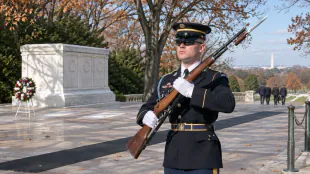 Arlington sentinel rebukes Pete Hegseth entourage for laughter near memorial

 Kylie Jenner employee describes closet ordeal and pepper-spray incident

 Authorities to identify Montauk Mary and five other Long Island cold-case victims
 Barbie sequel negotiations stall over reported $25 million pay packages
Jake Sullivan, President Joe Biden's national security advisor, will visit China next week in a new bid to manage tensions months before US elections, the White House said Friday.
Sullivan will travel to Beijing from August 27 to 29 in the first visit by a US national security advisor to China since 2016, although other senior officials including Secretary of State Antony Blinken have visited over the past two years.
The visit comes months ahead of US elections in November. The Democratic presidential nominee, Vice President Kamala Harris, would be expected, if she wins, to continue Biden's approach of seeking dialogue with China while also maintaining pressure.
Her Republican rival Donald Trump has vowed, at least rhetorically, to take a harder line, with some of his aides seeing a far-reaching global showdown with China.
A senior US official told reporters that the Biden administration's engagement with China did not indicate any softening of approach and that it continued to believe that "this is an intensely competitive relationship."
"We are committed to making the investments, strengthening our alliances, and taking the common steps on tech and national security that we need to take," the official said, referring to sweeping restrictions on US technology transfers to China imposed under Biden.
"We are committed to managing this competition responsibly, however, and preventing it from veering into conflict," she added, speaking on customary condition of anonymity.
A key area of friction has been Taiwan, the self-ruling democracy which Beijing considers its territory and has not ruled out "reuniting" through force.
China has kept up its saber-rattling since the inauguration this year of President Lai Ching-te, whose party emphasizes Taiwan's separate identity.
"We're going to raise concern about the PRC's increased military, diplomatic and economic pressure in Taiwan," the administration official said, referring to the People's Republic of China.
"These activities are destabilizing, risk escalation, and we're going to continue to urge Beijing to engage in meaningful dialogue with Taipei," she said.
The official said Sullivan would also discuss the South China Sea, where tension has been rising between China and US ally the Philippines.
- Key role -
The official did not indicate that the United States expected breakthroughs on the trip, in which Sullivan will meet with China's foreign policy supremo Wang Yi.
The official said Sullivan will reiterate US concerns about China's support for Russia in its major expansion of its defense industry since the Ukraine invasion. Beijing counters that, unlike the United States, it does not directly give weapons to either side.
China has historically been eager to work with US national security advisors, seeing them as decision-makers close to the president who can negotiate away from the media spotlight that comes with the secretary of state or top leadership.
The modern US-China relationship was launched when Henry Kissinger, then national security advisor to Richard Nixon, secretly visited Beijing in 1971 to lay the groundwork for normalization of relations with the communist state.
Sullivan and Wang have met four times over the last year and a half -- once in Washington and the other times in Vienna, Malta and Bangkok -- as well as alongside Biden and President Xi Jinping at their November summit in California.
The meetings between Wang and Sullivan were sometimes announced only after they were finished and the two had spent long hours together behind closed doors.
Sullivan will also speak to Wang about North Korea and the Middle East. China has criticized US support for Israel, and the United States has sought to call Beijing's bluff by urging it to use its relations to rein in Iran.
U.Shaheen--SF-PST