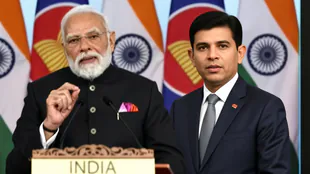
Russian veto ends monitoring of UN's N.Korea sanctions / Photo: Daniel SLIM - AFP/File

 استقرار أسعار الذهب مع ترقب المستثمرين لقرارات الفائدة الأمريكية
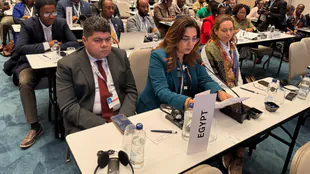
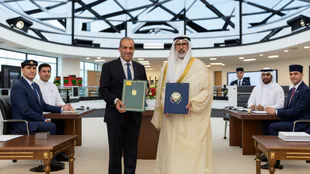 Kuwait and Egypt Sign Eight Agreements to Expand Strategic Partnership

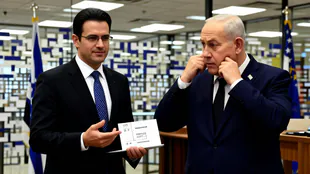 تقارير إسرائيلية تكشف عن محاولات نتنياهو وزملائه للتأثير على نتائج الانتخابات عبر استهداف الفلسطينيين

 بنك القدس يتعهد بتأمين احتياجات مرضى السكري خلال أمسية توعوية في رام الله
 AI Job Losses at NAB, Qantas, Canva and Atlassian Signal Market Shift, Not Workforce Collapse

 Owner Review: 2023 Volvo XC60 Recharge Exceeds Expectations for Calgary Driver
 Indiana River Otters Make Comeback After Decades of Conservation Efforts

Russia on Thursday blocked the renewal of a panel of UN experts monitoring international sanctions on North Korea, weeks after the body said it was investigating reports of arms transfers between Moscow and Pyongyang.
The move was met with a flurry of criticism, including by Ukraine's Foreign Minister Dmytro Kuleba, who took to social media to call the veto "a guilty plea" amid allegations that Pyongyang is aiding Moscow in its war against Kyiv.
The United States called the veto by Russia a "self-interested effort to bury the panel's reporting on its own collusion" with North Korea.
"Russia's actions today have cynically undermined international peace and security, all to advance the corrupt bargain that Moscow has struck with the DPRK," State Department spokesman Matthew Miller said, referring to the North by its official name, the Democratic People's Republic of Korea.
Moscow's veto at the Security Council does not remove the sanctions on North Korea, but spells the end for the group monitoring their implementation -- and myriad alleged violations.
The panel's mandate expires at the end of April.
North Korea has been under mounting sanctions since 2006 put in place by the UN Security Council in response to its nuclear program.
Since 2019, Russia and China have tried to persuade the Security Council to ease the sanctions, which had no expiration date.
The council has long been divided on the issue, with China's deputy ambassador Geng Shuang arguing Thursday that the sanctions "have exacerbated tensions and confrontation with a serious negative impact on the humanitarian situation."
China abstained rather than joining Russia in the veto.
Russia's UN envoy Vasily Nebenzia said that without an annual review guaranteed to assess and potentially modify the sanctions, the panel of experts was unjustified.
"The panel has continued to focus on trivial matters that are not commensurate with the problems facing the peninsula," Nebenzia said.
"Russia has called for the council to adopt a decision to hold an open and honest review of the Council sanctions... on an annual basis."
- Rising tests -
Additional Security Council sanctions were leveled on Pyongyang in 2016 and 2017, but the North's sanctioned nuclear and weapons development have continued.
Last week, Pyongyang tested a solid-fuel engine for a "new-type intermediate-range hypersonic missile," state media reported.
Recent cruise missile launches have prompted speculation that North Korea is testing those weapons before shipping them to Moscow for use in Ukraine.
In its latest report, issued at the beginning of March, the sanctions panel reported that North Korea "continued to flout" sanctions, including by launching ballistic missiles and breaching oil import limits.
It added that it is investigating reports of arms shipments from Pyongyang to Russia for use in Ukraine.
"This veto does not demonstrate any concern for North Korean people or for the efficacy of sanctions," said Britain's UN ambassador Barbara Woodward.
"It is about Russia, gaining the freedom to evade and breach sanctions in pursuit of weapons to be used against Ukraine."
In a joint statement, 10 Security Council members, including Britain, France and the United States, defended the sanction monitors' work.
"In the face of these repeated attempts to undermine international peace and security, the panel's work is more important now than ever before," it said.
All members of the Security Council other than Russia and China voted for the resolution.
N.Awad--SF-PST