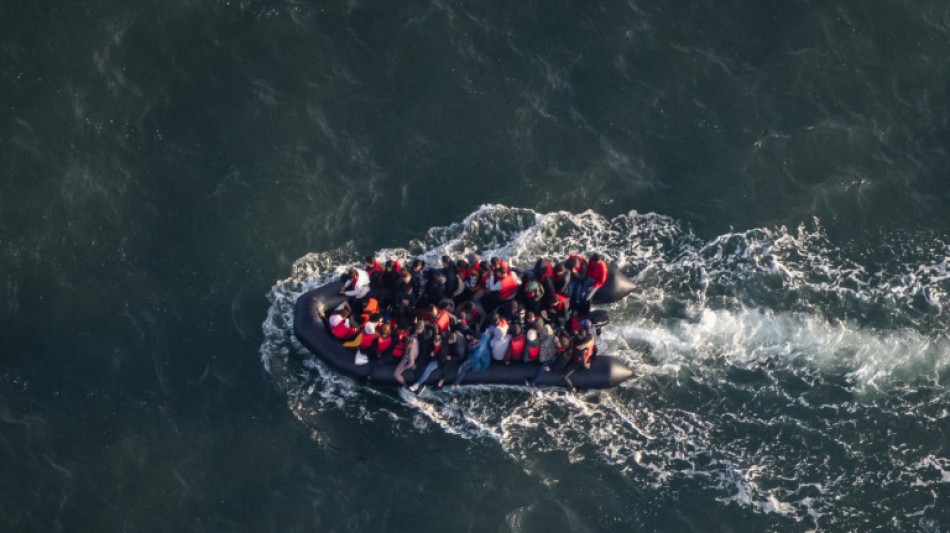
UN says majority of migrant deaths in 10 years from drowning / Photo: Sameer Al-DOUMY - AFP

 Nobel Laureate Venkatraman Ramakrishnan’s Journey from Academic Setbacks to Scientific Triumph

 استقرار أسعار الذهب مع ترقب المستثمرين لقرارات الفائدة الأمريكية

 Kuwait and Egypt Sign Eight Agreements to Expand Strategic Partnership

 تقارير إسرائيلية تكشف عن محاولات نتنياهو وزملائه للتأثير على نتائج الانتخابات عبر استهداف الفلسطينيين

 بنك القدس يتعهد بتأمين احتياجات مرضى السكري خلال أمسية توعوية في رام الله

 AI Job Losses at NAB, Qantas, Canva and Atlassian Signal Market Shift, Not Workforce Collapse

 Owner Review: 2023 Volvo XC60 Recharge Exceeds Expectations for Calgary Driver

 Indiana River Otters Make Comeback After Decades of Conservation Efforts
Drowning has been the biggest cause of recorded migrant deaths over the past 10 years, the UN's migration agency said Tuesday, with victim numbers topping 36,000.
Of the 64,000 migrant deaths recorded over the last decade, nearly 60 percent were linked to drowning, according to a report by the UN's International Organization for Migration (IOM).
Of those deaths at sea, over 27,000 occurred in the Mediterranean -- a route followed over the years by many migrants trying to reach southern Europe from northern Africa.
The figures in the report were likely a "fraction of the actual number", the IOM said, while much of the data was incomplete.
The Mediterranean was an "extremely dangerous region and the journeys are extremely risky", IOM data analyst Andrea Garcia Borja told journalists in Berlin.
But relatively larger totals in the region in part reflected more intense monitoring efforts, Garcia said.
The figures for the Mediterranean were most likely "closer to reality" than other, harder to monitor regions, such as the Sahara Desert, where reliable data was hard to come by, she said.
Of the deaths and disappearances recorded, two in three remained unidentified, according to the IOM.
And in over half of all cases, the IOM was unable to even establish the sex or age of the migrant.
For those cases where the migrant's origin could be identified, just over one-third came from "countries in conflict or with large refugee populations".
The figure highlighted "the dangers faced by those attempting to flee conflict zones without safe pathways", it said.
Over 8,500 people died on migration routes worldwide in 2023, making it the deadliest year since the IOM started collecting data a decade ago.
So far in 2024, the figures were "no less alarming", the organisation said.
For the Mediterranean route, the number of arrivals had declined relative to 2023, but "the number of deaths are nearly as high as last year".
The IOM said there was an "urgent need for strengthened search and rescue capacities", as well as "safe, regular migration pathways" to prevent further deaths.
At sea, greater assistance was needed for migrants in distress "in line with international law and the principle of humanity", the IOM said.
Q.Najjar--SF-PST