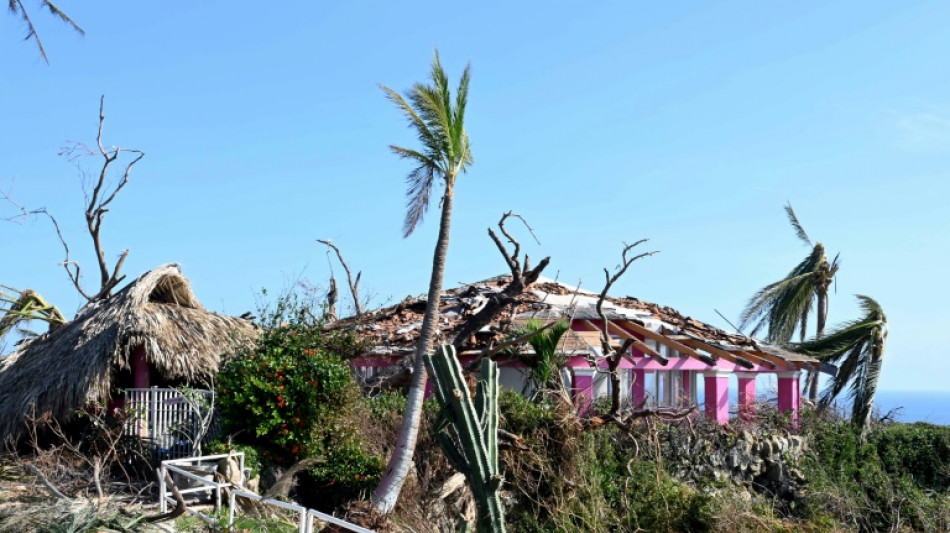
Dora, Otis retired from list of Pacific hurricane names / Photo: FRANCISCO ROBLES - AFP

 India's Wholesale Inflation Jumps to 12.29% as Fuel Costs Surge

 Japan's Economy Edges Into Contraction as Costly Oil Weighs on Demand

 Modi’s ASEAN Agenda Prioritizes Trade Balance and Defense Ties in Manila

 Egypt Demands Tripling of Climate Adaptation Finance for Africa by 2035

 Met Office Issues Yellow Snow Warning for Nottinghamshire on Tuesday

 اللواء أبو هارون: توطين التدريب العسكري الفلسطيني بنسبة 100% رغم القيود الإسرائيلية

 Ali Almansoori Claims BTCC Double at Bahrain National Race Day

 حملة طبية مجانية في حزما تخفف الأعباء عن سكان القدس

 بلينكن يحذر من 'مغامرة طائشة' في الحرب على إيران ويؤكد خروجها أقوى
The World Meteorological Organization on Wednesday said it had withdrawn Otis and Dora from the list of northeast Pacific hurricane names due to their roles in destructive extreme weather events.
Otilio and Debora will replace the disused names in the rotating list, overseen by the WMO and set up to facilitate public communication about the potentially fatal risks associated with hurricanes.
Names are repeated every six years unless a storm was so deadly that its name is retired.
That was the case for Otis, which caused 51 deaths and more than $3 billion in damage when it struck the Mexican resort city of Acapulco in October 2023.
Dora was taken off the list "because of sensitivities to the name" and its "indirect meteorological role" in the wildfires that devastated Maui in Hawaii in August last year, the WMO said.
"There were some indications that Dora's passage to the south enhanced the low-level trade winds which fanned the deadly flames across the Hawaiian Islands," it added.
No names were retired in the Atlantic basin list, a first since 2014.
Scientists say climate changed driven by human activity is increasing the frequency, intensity and length of extreme weather events across the world, including storms and floods.
Oceans absorb 90 percent of the excess heat produced by carbon pollution from human activity since the dawn of the industrial age and their temperatures have been rising.
Last year was the hottest recorded in human history, with observations of "unprecedented levels of ocean warming in the North and tropical Atlantic", said WMO Secretary General Celeste Saulo.
The WMO said the warmer waters helped feed an "above-average" 2023 hurricane season and counterbalanced the effects of El Nino, a naturally occurring weather phenomenon originating in the Pacific that tends to reduce the number of hurricanes.
W.Mansour--SF-PST