
Russia rages against Olympic chiefs, accuses them of 'neo-Nazism' / Photo: John MACDOUGALL - AFP/File

 India's Wholesale Inflation Jumps to 12.29% as Fuel Costs Surge

 Japan's Economy Edges Into Contraction as Costly Oil Weighs on Demand

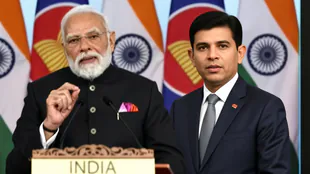 Modi’s ASEAN Agenda Prioritizes Trade Balance and Defense Ties in Manila

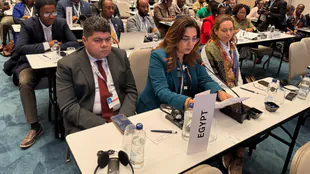 Egypt Demands Tripling of Climate Adaptation Finance for Africa by 2035
 Met Office Issues Yellow Snow Warning for Nottinghamshire on Tuesday
 اللواء أبو هارون: توطين التدريب العسكري الفلسطيني بنسبة 100% رغم القيود الإسرائيلية

 Ali Almansoori Claims BTCC Double at Bahrain National Race Day

 حملة طبية مجانية في حزما تخفف الأعباء عن سكان القدس

 بلينكن يحذر من 'مغامرة طائشة' في الحرب على إيران ويؤكد خروجها أقوى
Russia launched a furious tirade at the International Olympic Committee on Wednesday, arguing the IOC's restrictions on Russian athletes and its criticism of the Moscow-organised Friendship Games amounted to "neo-Nazism".
The IOC on Tuesday both barred Russian athletes from taking part in the opening ceremony of the 2024 Paris Olympics on July 26 and criticised the Kremlin for planning to hold its own "Friendship Games" to rival those held in the French capital.
"These decisions demonstrate how far the IOC has moved away from its stated principles and slipped into racism and neo-Nazism," Russian foreign ministry spokeswoman Maria Zakharova said in a briefing.
The IOC suspended Russia from the 2024 Games last year, but gave the green light for its athletes to compete as neutrals as long as they did not actively support the Kremlin's assault on Ukraine.
This neutral status forces Russian athletes to "renounce any association with their homeland, with their citizenship, with their history, culture and people," Zakharova argued.
"The IOC's decisions are wrongful, unjust and unacceptable," she said.
"We are outraged by the unprecedented discriminatory conditions imposed by the International Olympic Committee on Russian athletes."
- 'Intimidation' -
Russia's fury comes a day after the IOC issued a strongly-worded statement accusing the Kremlin of "politicising sport" by planning to hold its own Friendship Games.
Announced several months ago, the first edition of the Summer Friendship Games is "planned to be held in Moscow and Yekaterinburg" next September, the IOC said, with the first winter edition to take place in 2026 in Sochi, the venue for the highly controversial 2014 Winter Olympics.
The IOC called on the sporting world and governments invited by Moscow "to reject any participation in and support of" the event, but stopped short of sanctioning those who take part.
The Kremlin warned the IOC against such sanctions on Wednesday.
"This is intimidation of the athletes. It completely undermines the credibility of the IOC," Kremlin spokesman Dmitry Peskov said.
Tensions between Moscow and the Olympic body had already been running high for years over a long-running doping scandal which saw Russians barred from competing under their own flag in the 2020 Tokyo Games.
The IOC accused Moscow in the same statement of "total disrespect for the global anti-doping standards and the integrity of competitions", citing concerns made last week by the World Anti-Doping Agency (WADA) in light of the institutionalised doping at the Sochi Winter Olympics 10 years ago.
Athletes from Russia and Belarus have faced sanctions from a myriad of sports since Moscow launched its assault on Ukraine in February 2022.
Over the past year a number of Olympic sports have eased restrictions, allowing athletes from both countries to return to competition under certain conditions.
Sportspeople from Russia and Belarus will compete in Paris as "Individual Neutral Athletes".
But competitors from both countries remain banned from the sport of athletics.
N.AbuHussein--SF-PST