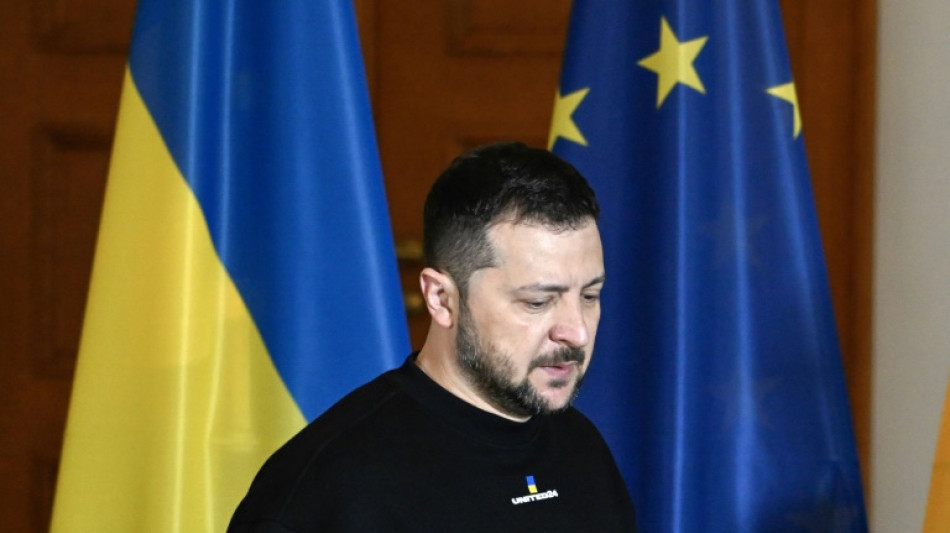
EU moves to tap profits from Russian assets for Ukraine / Photo: Tobias SCHWARZ - AFP

 Rice work: Dutch test new crop to save sinking peatlands

 Russians join street choirs to sing away sorrows -- or show dissent

 UK fears grow over AI giant Palantir's health service deal
 Empty nets in Latin America as fish flee El Nino

 Meidroth blasts White Sox through, Phillies survive in MLB playoffs

 'Catastrophic': Swiss glaciers lose fifth of mass in five years

 California roller coaster shut after brain damage claims

 Panama ministers push for reopening of huge open-pit copper mine

 Bohm's blast keeps Phillies alive in MLB playoffs

 US judge accepts Paramount's Warner Bros. buyout settlement

 Global stocks mixed as markets weigh higher oil prices, bond yields
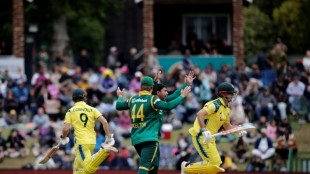 Marsh hails improvements after Australia win final one-day international

 Hegseth says US cut number of generals, admirals by 20%

 Kanye West's Russian concerts have been cancelled, organisers say

 First Hollywood, now Fat Bear Week: nepobaby wins Alaska contest

 Barcelona lay down marker in Women's Champions League, Arsenal slip up
 US pushes against overproduction with eye on China at G20 meeting

 Swiss FA withdraws support for FIFA chief Infantino
 Man City's meteoric rise clouded by financial scandal

 Polish activists open first abortion pill locker in Warsaw

 NHL Avalanche ink Bednar to four-year coaching deal
 Polish activists opens first abortion pill locker in Warsaw

 Turkey says news site closed for 'LGBTQ propaganda'
 Oil companies close in on Venezuela despite hurdles
 Turkey freezes ex-minister's assets as fund scandal grows

The EU has reached an agreement on a first step towards tapping profits from frozen Russian assets to help pay for rebuilding war-ravaged Ukraine, officials said.
EU ambassadors agreed on a plan to set aside the profits from the assets in order for them to eventually be used to help pay for Ukraine's reconstruction, the Belgian presidency of the European Union said on X, formerly Twitter, late Monday.
The agreement moves forward a long and legally fraught debate about how to use Russian state assets that were blocked by Western institutions immediately in the wake of Moscow's all-out invasion of Ukraine nearly two years ago.
The EU has frozen some 200 billion euros ($220 billion) of Russian central bank assets, with about 90 percent of those funds held by the international deposit organisation Euroclear, based in Belgium.
Simply confiscating all that money and giving it to Ukraine's reconstruction efforts is not seen as an option, as that could rattle international markets and undermine the euro.
Some countries, notably Belgium, had proposed a windfall tax on the frozen funds that could generate some three billion euros a year for Kyiv.
The European Commission made a cautious proposal that was put to all 27 EU member countries under which deposit holders like Euroclear would first have to separate interest or profits earned on the frozen assets and ring-fence them.
A second proposal was to be put forward later on how the ring-fenced profits could then be shifted into a fund that would go to Kyiv.
Lithuania's ambassador to the EU, Arnoldas Pranckevicius, called the overnight preliminary agreement a "very important and long awaited decision".
But, he said on X, it was "only the beginning of the road," adding: "Now looking forward to the 2nd step proposal from the European Commission on the use of profits for reconstruction of Ukraine and the start of discussion on confiscating assets themselves."
- G7 issue -
The issue goes beyond the EU. The bloc acted in concert with the G7 group of wealthy nations to freeze the Russian assets.
The United States wants a collective G7 decision on how to tap the Russian money.
Diplomats say Washington is increasingly in favour of outright confiscation of all frozen Russian funds, but that the Europeans have pushed back on that.
The movement on the frozen funds issue comes at an otherwise difficult time for Ukraine as continued Western support runs into political headwinds in both Washington and Brussels.
In the United States, opposition Republicans are blocking further US funds and weapons for Ukraine in manoeuvring over domestic issues, notably migration.
And in the European Union, Hungary -- whose leader Viktor Orban is close to Russian President Vladimir Putin -- has blocked a 50-billion-euro EU financial lifeline for Kyiv.
A summit in Brussels on Thursday will again tackle that issue with hopes of persuading Hungary to drop its veto.
The estimated total cost of rebuilding Ukraine is at least $411 billion (380 billion euros), according to a joint assessment put out in March last year by the World Bank, the European Commission and the United Nations.
X.AbuJaber--SF-PST