
Milei's dilemma: how to solve a problem like Argentina? / Photo: Luis ROBAYO - AFP

 Botched US execution leaves murderer unconscious on ventilator: lawyers
 Cornell rape case exposes sexual violence at US colleges
 France held by Italy in Zidane's homecoming after Olise stunner

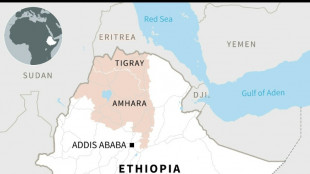
 Ethiopian pro-government militia claims Tigray airport as regional tensions spike
 Ohtani shaking off injuries as Dodgers launch MLB post-season
 Sea levels to rise in California as coastal wave surges up west coast
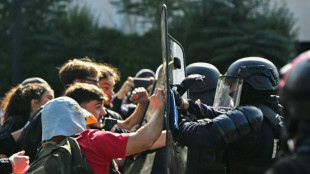 New rallies urged in France as protests disrupt over 730 schools

 Djokovic survives China Open scare, Sabalenka starts strong

 King Charles to evoke colonial 'darkest days' on Caribbean tour

 Tesla shares jump after global car sales top estimates

 DR Congo Ebola outbreak killed more than 4,000: official figures
 Djokovic survives China Open scare against wildcard world no. 104
 Lula, Bolsonaro trade blows in final scramble for votes in Brazil
 New clashes erupt as protests disrupt over 560 French schools
 NY governor vows to close loophole after alleged Cornell gang rape

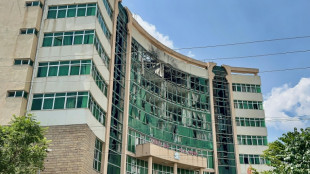 Ethiopia Tigray rebels pushed back as regional tensions spike
 Stocks rise, yields fall as US job numbers disappoint

 Man City verdict a 'big topic' for England players, says Tuchel

 NY attorney general tasked with investigating alleged Cornell gang rape
 China widens military footprint with Laos air base
 G7 talks as US pressures Europe over diesel stocks
 Man City launch appeal against explosive financial ruling
 Swiss president to quit government

 Europe rejects US threats over diesel stocks, urges joint G7 action
 Philippines tennis star Eala says 'I get overwhelmed sometimes'
Argentina's president-elect Javier Milei will have no time to bask in his Sunday victory as he inherits a country crippled by inflation and short on cash, creditors and international sympathy.
"Being president of Argentina has got to be one of the worst jobs in politics in the world," said Benjamin Gedan, director of the Argentina Project at the Washington-based Wilson Center.
"The problems have become so deep and complex and intertwined that they're not easily solvable, even if they're easily identifiable."
Milei surged to power on a wave of anger over decades of economic mismanagement, vowing to ditch the peso for the US dollar, shut down the central bank and slash spending.
He has promised "the end of Argentina's decline" and warned there is no time for "gradualism... or half-measures."
He will take office on December 10, and analysts predict a rocky ride with inflation at 143 percent and poverty levels of over 40 percent.
- How and when will he dollarize the economy? -
Milei has proposed the dollarization of the economy by 2025 to halt the "cancer of inflation", meaning he would drop the peso and Argentina would lose control over monetary policy such as setting interest rates.
Dollarization requires a hefty stock of greenbacks, and the International Monetary Fund (IMF) has warned Argentina's dollar reserves are dangerously low.
Even with the backing of the center-right opposition, political newcomer Milei has "very little legislative power," said analyst Carlos Gervasoni of the Torcuato Di Tella University.
"So there is no way to pass laws that, for example, require changing the country's currency or closing the central bank."
- What will happen with the peso? -
To try and keep a lid on inflation, the Argentine government has for years strictly controlled the exchange rate of the peso to the dollar, which was frozen for three months before the election and is now being allowed to devalue at three percent per month.
The exchange rate is "a total fiction. And to maintain it is extremely expensive. Argentina just has literally no money. It can't continue doing this," said Nicolas Saldias, a senior analyst with the Economist Intelligence Unit.
Between now and when Milei takes office, "things could rapidly scale out of control in those weeks. That's a period of a lot of instability," said political analyst Ana Iparraguirre of GBAO Strategies.
Saldias said people may panic believing dollarization is imminent, sparking a run on the peso.
Economy Minister Sergio Massa, whom Milei beat in Sunday's polls, may also implement a long overdue devaluation of the peso, making Milei "pay the political price."
"You'll probably see inflation ramp up very quickly," said Saldias, warning of possible hyperinflation.
- Will Milei take a chainsaw to state spending? -
Milei often appeared on stage at rallies with a chainsaw, vowing to slash public spending by 15 percent, privatize state companies and reduce subsidies on fuel, transport and electricity.
Such belt tightening has long been demanded by the IMF, which has bailed out Argentina 22 times, most recently with a loan of $44 billion dollars in 2018.
But Milei will face the same challenges as predecessors who have tried to get out of a vicious cycle of budget deficits, debt, money printing and inflation.
Untangling the country's economy is tricky. Removing subsidies or slashing welfare payouts would only further worsen poverty, and floating the currency would make imports much more expensive.
"At this point everything you fix worsens a second problem," Gedan said.
"The pain will be acute and spread widely if there is a serious stabilization program and it's not clear that Argentines will see the upside."
There is also the danger of protests and social unrest, especially given that almost half the country did not want Milei in power.
- Is there any good news? -
Gedan said that if Milei and his allies in the opposition do manage to curtail spending and reduce welfare and subsidies while protecting the most vulnerable, "this could be a turning point for the good."
There are other positives on the horizon.
After Argentina's worst drought in a century, which saw agricultural exports plummet in the past two years leading to a $20 billion shortfall in revenue, the country is expecting a bumper harvest in 2024.
Milei will also benefit from an estimated $10 billion in annual savings in energy imports as a new gas pipeline ramps up production from southern Vaca Muerta -- a massive oil and gas reserve -- estimates economist Elizabeth Bacigalupo of the Abeceb firm.
D.Qudsi--SF-PST