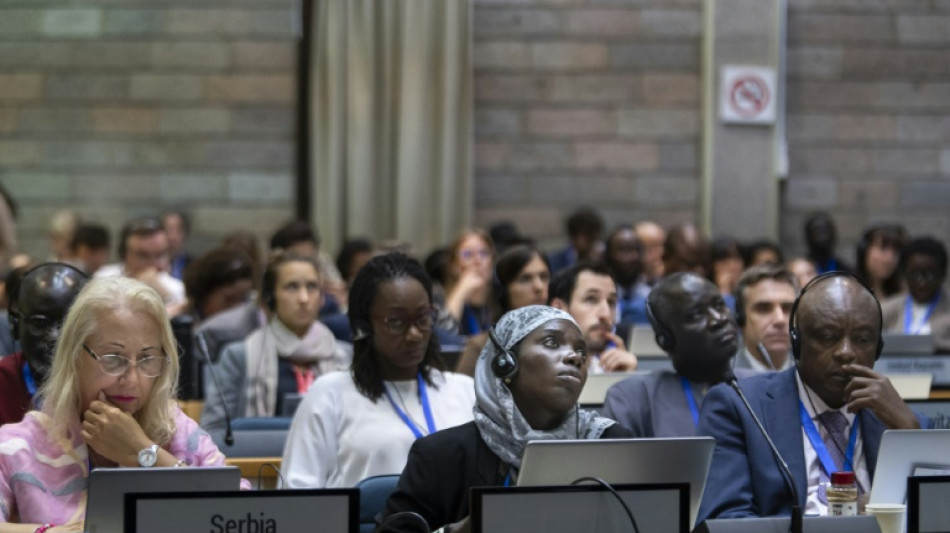
Frustration as latest talks on global plastic treaty close / Photo: Tony KARUMBA - AFP

 OPEC Chief: Oil to Remain Major Energy Source for Decades Amid Global Shift

 Hyundai Offers £1,000 Deposit Contribution on Black Friday for Tucson, Santa Fe, Kona, Ioniq 9 and Bayon

 Peaceful Repeat Vote in Douglas Ward 3 Amid Heightened Security

 محافظ سلطة النقد والوزير عساف يبحثان تعزيز الدعم الدولي للقطاع المصرفي الفلسطيني

 شرطة دبي توسّع أسطول دورياتها الفاخرة بسيارة ديفندر بقوة 525 حصانًا

 Avianca Announces US$3 Billion Fleet Expansion at Colombia’s Milagro Week in New York
The latest negotiations toward a global plastic treaty concluded late Sunday with disagreement about how the pact should work and frustration from environment groups over delays and lack of progress.
Negotiators spent a week at the UN Environment Programme (UNEP) headquarters in Nairobi haggling over a draft treaty to tackle the growing problem of plastic pollution found everywhere from ocean depths to mountaintops to human blood.
It is the third time negotiators have met since 175 nations pledged early last year to fast-track talks in the hope of finalising a treaty by 2024.
The meeting in Nairobi was supposed to advance the process by fine-tuning the draft treaty and starting discussions about what concrete measures should target pollution from plastic, which is made from fossil fuels.
But the treaty terms were never really addressed, with a small number of oil-producing nations -– particularly Iran, Saudi Arabia and Russia –- accused of employing stalling tactics seen at previous negotiation rounds to hinder progress.
In closed-door meetings, so many new proposals were put forward that the text -- instead of being revised and streamlined -- ballooned in size over the course of the week, according to observers following the talks.
Graham Forbes from Greenpeace said the meeting had "failed" its objectives.
"A successful treaty is still within reach but it will require a level of leadership and courage from big, more ambitious countries that we simply have not seen yet," he told AFP.
UNEP said "substantial" progress had been made by nearly 2,000 delegates in attendance.
The International Council of Chemical Associations, the main industry body for global petrochemical and plastic businesses, said governments had improved an "underwhelming" draft.
"We (now) have a document -- a draft text -- that is much more inclusive of the range of ideas," spokesman Stewart Harris told AFP.
Environment groups have long argued that without laws to slow the growth of new plastic, any treaty would be weak and ineffective.
Plastic production has doubled in 20 years and at current rates could triple by 2060 without action, but 90 percent is not recycled.
Ahead of the talks, around 60 "high ambition" nations called for the treaty to eliminate some plastic products through bans and phase-outs, and enshrine rules to reduce plastic production and consumption.
But during the open sessions in Nairobi, some nations expressed reluctance to support cuts on plastic production, while divisions sharpened over whether treaty terms should be legally binding or voluntary.
Two further rounds of negotiations remain in 2024: the first in Canada in April and then in South Korea in November, with the goal of adopting a treaty by mid-2025.
U.Shaheen--SF-PST