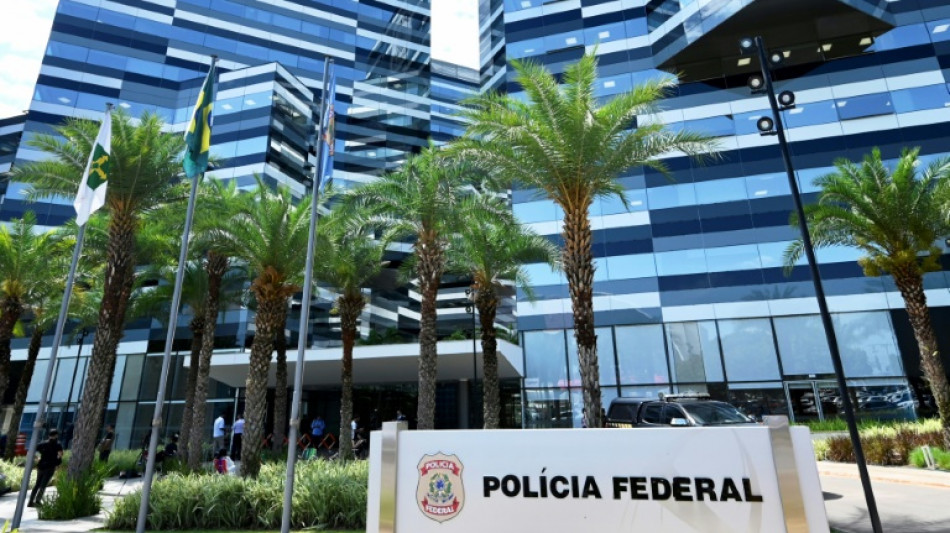
Hezbollah operations in South America: what we know / Photo: EVARISTO SA - AFP

 Malta PM Abela Refuses Parliamentary Question on Maritime Borders Amid Turkey-Libya Deal

 OPEC Chief: Oil to Remain Major Energy Source for Decades Amid Global Shift

 Hyundai Offers £1,000 Deposit Contribution on Black Friday for Tucson, Santa Fe, Kona, Ioniq 9 and Bayon

 Peaceful Repeat Vote in Douglas Ward 3 Amid Heightened Security
 محافظ سلطة النقد والوزير عساف يبحثان تعزيز الدعم الدولي للقطاع المصرفي الفلسطيني

 شرطة دبي توسّع أسطول دورياتها الفاخرة بسيارة ديفندر بقوة 525 حصانًا

 Avianca Announces US$3 Billion Fleet Expansion at Colombia’s Milagro Week in New York
The arrest in Brazil this week of two people accused of planning "terrorist attacks" has put a spotlight on alleged South American operations by Lebanese militant group Hezbollah, which Israel says orchestrated the plot.
Brazilian authorities reacted angrily after Israel said it had helped foil a "Hezbollah cell" planning attacks on Israeli and Jewish targets in Brazil. Justice Minister Flavio Dino condemned a "rush to conclusions" for "propaganda" purposes.
Backed by Iran, Hezbollah is an Islamist political party and militant organization with close ties to Hamas, the Palestinian group locked in a bloody conflict with Israel.
Here is what we know -- and don't -- about its presence in South America, which the United States has called a major security risk.
- Lawless 'Tri-Border Area' -
Scrutiny on Hezbollah's alleged operations in South America has focused on the "Tri-Border Area" between Argentina, Brazil and Paraguay -- all countries with large populations of Lebanese origin.
The region's hub is Ciudad del Este, Paraguay, a bustling hive of traders and traffickers hawking products from around the world, from pirated DVDs to appliances to guns.
A free-trade zone, it has a reputation as a hotbed of dodgy dealings and crime.
The United States counterterrorism bureau says Hezbollah financiers use the region as a fundraising base.
The US ambassador to Paraguay said in January Hezbollah "regularly" held events where Paraguayan politicians traded favors to the group for bribes, including ex-president Horacio Cartes (2013-2018).
Cartes denies the accusation.
- Organized crime -
Hezbollah is accused of raising money by helping organized crime groups in the region launder money.
In 2014, Brazilian newspaper O Globo reported Lebanese traffickers linked to Hezbollah helped one of Brazil's biggest drug gangs, the PCC, buy arms and sell stolen explosives, citing leaked federal police documents.
- Argentina bombing -
In 2006, prosecutors in Argentina accused Hezbollah of carrying out the deadliest attack in the country's history: the 1994 bombing of a Jewish center in Buenos Aires that killed 85 people.
Prosecutors charged top Iranian officials with ordering the attack.
Iran denies involvement.
- Arrests, 'terror' blacklists -
The United States has blacklisted several South Americans for allegedly financing Hezbollah, including Lebanese-Paraguayan national Assad Barakat, a convicted money launderer.
In June, Argentina requested international arrest warrants for four Lebanese men accused of Hezbollah ties, three with dual nationality in Brazil and Paraguay.
Argentina and Paraguay have designated Hezbollah a "terrorist organization."
- 'Lack of evidence' -
"Tri-Border" countries have bristled at times at accusations the region is linked to Islamist extremism, with Brazil and Paraguay challenging US intelligence officials to provide proof of alleged "terrorist" activity.
"The past three decades of (US) accusations on the Tri-Border Area have always lacked evidence," Brazilian international relations expert Isabelle Somma de Castro wrote in a recent article.
burs-jhb/app/jh
N.Awad--SF-PST