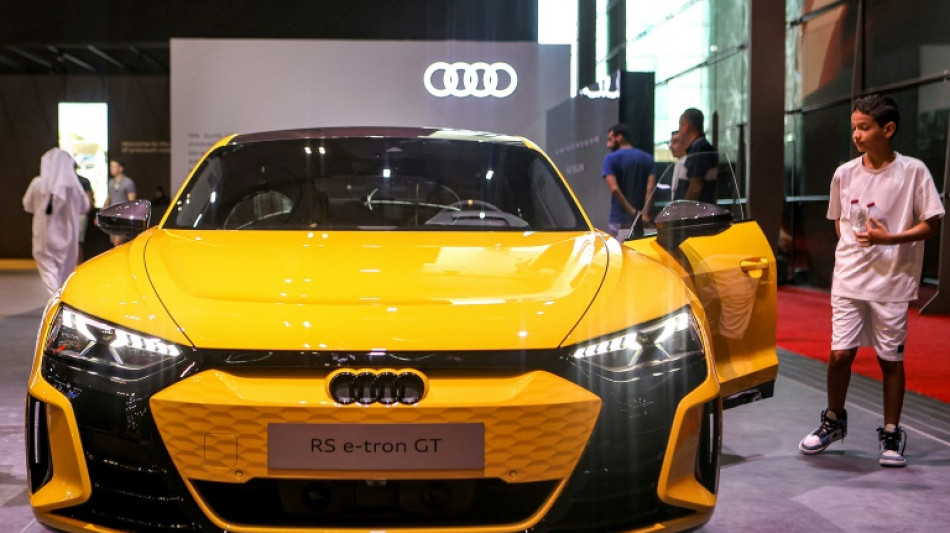
Switzerland ends electric car tax exemption / Photo: KARIM JAAFAR - AFP

 Malta PM Abela Refuses Parliamentary Question on Maritime Borders Amid Turkey-Libya Deal

 OPEC Chief: Oil to Remain Major Energy Source for Decades Amid Global Shift

 Hyundai Offers £1,000 Deposit Contribution on Black Friday for Tucson, Santa Fe, Kona, Ioniq 9 and Bayon

 Peaceful Repeat Vote in Douglas Ward 3 Amid Heightened Security

 محافظ سلطة النقد والوزير عساف يبحثان تعزيز الدعم الدولي للقطاع المصرفي الفلسطيني

 شرطة دبي توسّع أسطول دورياتها الفاخرة بسيارة ديفندر بقوة 525 حصانًا

 Avianca Announces US$3 Billion Fleet Expansion at Colombia’s Milagro Week in New York
Switzerland on Wednesday scrapped a tax exemption for imports of electric cars, whose growing presence on Swiss roads has cut into tax revenues.
The federal government said in a statement that electric cars would from January 1 be subject to the same four-percent import duty imposed on traditional fuel vehicles.
E-vehicles had been exempt from the tax since its introduction in 1997.
The government had then wanted to create incentives for the use of electric cars.
But it said "the situation has now changed significantly".
"The Federal Council takes the view that the exemption from duty as an incentive is no longer necessary, given the sharp rise in the share of e-vehicles in total car imports and the convergence of prices," it said.
Between 2018 and 2022, annual imports of e-vehicles jumped nearly sixfold, from around 8,000 to more than 45,000 vehicles.
In the first half of 2023, around 30,400 e-vehicles were imported, marking a 66-percent hike from the same period a year earlier, it said.
This dramatic increase means that e-vehicles made up nearly a quarter of total imports in the first half of this year, up from 16 percent in the first half of 2022.
"This increase led to an appreciable decrease in receipts from automobile duty," the government said.
For all of 2022, the tax shortfall was around 78 million Swiss francs ($89 million), and this year the shortfall is expected to swell to 100-150 million Swiss francs, it said.
If the exemption had continued, it estimated that the cumulative tax shortfall for the years from 2024 to 2030 would have been between two and three billion francs.
"By making e-vehicles subject to automobile duty, the Federal Council is acting to redress this shortfall," the statement said.
The government also highlighted the industry's estimate that the cost of producing e-vehicles will be in line with fossil fuel vehicle production by 2025.
"It should therefore still be possible to achieve a profit margin in the future, without increasing prices for the consumer and without state subsidies," it said.
L.AbuAli--SF-PST