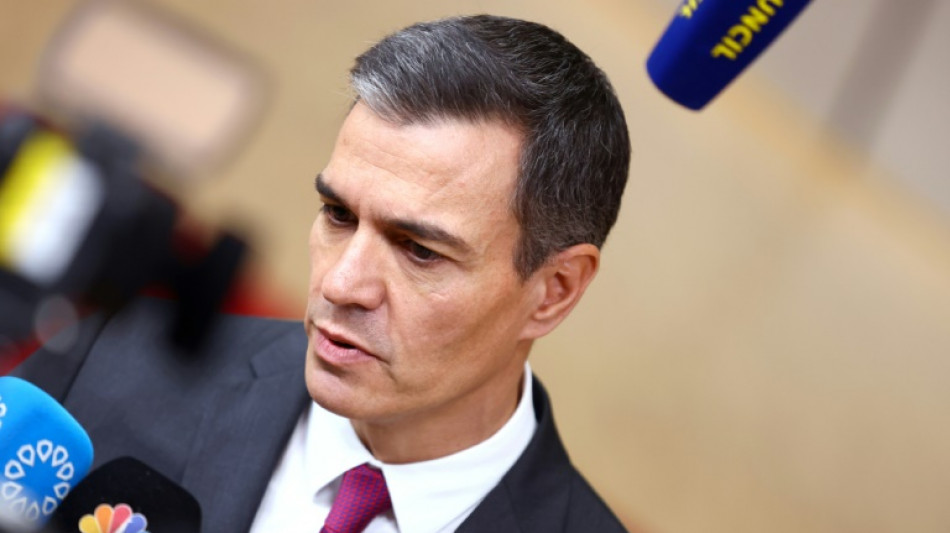
Spain's opposition steps up criticism of Sanchez amnesty plan / Photo: Kenzo TRIBOUILLARD - AFP/File

 Malta PM Abela Refuses Parliamentary Question on Maritime Borders Amid Turkey-Libya Deal

 OPEC Chief: Oil to Remain Major Energy Source for Decades Amid Global Shift

 Hyundai Offers £1,000 Deposit Contribution on Black Friday for Tucson, Santa Fe, Kona, Ioniq 9 and Bayon

 Peaceful Repeat Vote in Douglas Ward 3 Amid Heightened Security

 محافظ سلطة النقد والوزير عساف يبحثان تعزيز الدعم الدولي للقطاع المصرفي الفلسطيني

 شرطة دبي توسّع أسطول دورياتها الفاخرة بسيارة ديفندر بقوة 525 حصانًا

 Avianca Announces US$3 Billion Fleet Expansion at Colombia’s Milagro Week in New York
Spain's conservative opposition parties and members of its judiciary have stepped up criticism of acting Prime Minister Pedro Sanchez's plans to offer amnesty to Catalan separatists.
Sanchez's Socialists finished second in the July 23 parliamentary elections and he has until November 27 to cobble together a working coalition, or face fresh elections.
Sanchez needs the support of Catalan independence parties, and has accepted their demands to offer amnesty to all those being pursued for their role in a failed secession attempt in 2017.
In response, opposition parties have hardened their tone in recent days, accusing Sanchez of corruption and abandoning the rule of law.
"Exchanging votes for impunity is corruption," Alberto Nunez Feijoo, head of the Popular Party, said Saturday at a meeting in the Basque region, before vowing a day later at a rally in Valencia that "we will defend Spain".
Sanchez already has the support of the more moderate Republican Left of Catalonia (ERC) party which runs the north-eastern region, but has yet to nail down the backing of Together for Catalonia (Junts Per Catalunya), the party of Carles Puigdemont, who led the 2017 events.
"We are in the final straight of very difficult negotiations, which will allow us to open a new era" in Catalonia, said Jaume Asens, a left-wing party negotiator, Monday.
- Defend Spain -
The controversial amnesty project, which would need approval from parliament, has for weeks roiled the conservative opposition, which has raised its tone in recent days and promised to block its application.
Another rally against amnesty is planned in the capital Madrid on Saturday November 18.
The opposition accuses Sanchez, who once opposed amnesty, to be willing to do anything to stay in power.
Feijoo's PP finished first in the recent parliamentary elections but failed to form a coalition.
- "End of the rule of law" -
Members of the judiciary have also stepped up their criticism.
The Professional Association of Magistrates, a conservative body that represents the majority of the country's judges, last Thursday issued a statement calling the measures "the beginning of the end of democracy" that would "destroy the rule of law".
The General Council of the Judiciary, the body that names Spain's judges, will meet later Monday to discuss the issue.
Conservative members of the body said an amnesty would represent a "degradation and even an elimination of the rule of law".
After a failed Catalan secession attempt in 2017, hundreds of people were pursued by Spanish prosecutors, spurring claims of repression.
The main leaders of the movement fled abroad, including Puigdemont, or were jailed with sentences that went up to 13 years in prison.
Elected to power just a month after the secession attempt, with the support of separatists, Sanchez has made reducing tensions in Catalonia a priority.
In 2021, he pardoned the nine jailed separatists and the following year his government reformed the Spanish legal code to remove the crime of sedition, under which they had been condemned.
E.Qaddoumi--SF-PST
