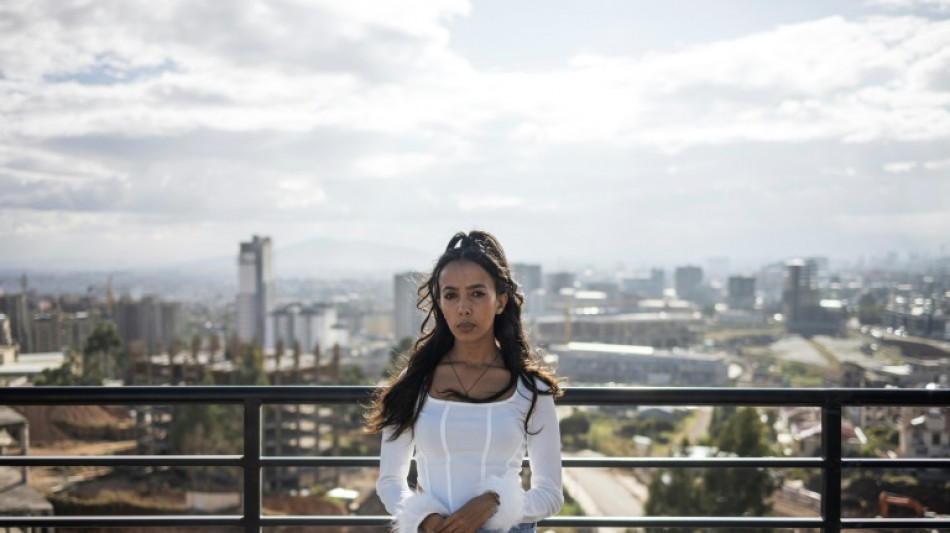
Voices from Ethiopia's war-scarred Tigray / Photo: Michele Spatari - AFP

 Zverev thrashes Shang to set up Djokovic quarter-final at China Open

 Turkey football ref chief jailed pending trial for graft
 North Korea says test of intermediate-range strategic missile included use of AI

 Rampant Sayers leads Hong Kong to third men's rugby gold in a row

 Ethiopia's Tigray rebels abandon regional capital as govt advances

 Bulgaria's Tsar Samuel returns 'home' after 1,000 years

 'Glad it's over': Kim powers to Games gold and military exemption

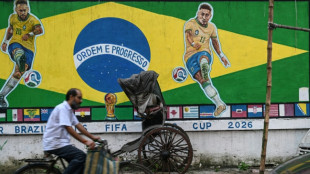 After 11 World Cups, football finally comes home for one Indian fan
 Marc Marquez wins sprint at Japan MotoGP, Martin grabs pole

 Alcaraz fends off Arnaldi to reach Japan Open quarters
 Antonelli tops times in final practice at Bahrain GP
 Gauff digs deep to beat Osorio in China Open second round

 Fresh protests to hit Spain after housing measures defeated
 'He's here with me': Japan cycle queen dedicates gold to late brother
 Japan Olympic chief says 'lot more' athletes at Games than expected
 Asian carmakers besting US rivals at home, China poised to strike

 Widgets & Web Offers All-Inclusive Investor Relations Websites for Public Companies, IPOs and SPACs

 Adams named new US captain to 2030 World Cup
 China a better influence in Latin America than US: poll
 Judge pauses construction of border project in Texas national park

 Belgium's De Bruyne fires double to sink Turkey, France held by Italy
 US jobs data boosts stocks as oil prices dip

 US Supreme Court to hear high-stakes climate case
 Trump expected to name intel chief Clayton as AI czar: reports
 Argentina unveils passports-for-investment scheme

One year after Ethiopia signed a peace deal with the Tigray People's Liberation Front, ending a brutal conflict that killed hundreds of thousands by some estimates, life in the northern region is slowly limping back to normal.
But the legacy of the two-year war is everywhere in Tigray, even though fighting has ceased and access to key services including banking, electricity and internet has resumed in some areas.
Many Tigrayans told AFP they were struggling to find their feet after the November 2022 peace agreement, some losing their homes and livelihoods to the war, others grieving family members killed in the conflict.
The fighting, which also drew in Eritrean forces, left Tigray's infrastructure in ruins, with hospitals still lacking medical equipment and some schools yet to reopen.
A million people remain displaced across the region, according to the International Organization for Migration, with around 234,000 in Tigray's capital Mekele.
Many have been forced to beg to make ends meet, their conditions worsening after the discovery of diverted aid shipments led the World Food Programme and the US government's humanitarian agency USAID to suspend food assistance to Tigray in May.
Meanwhile, Ethiopia's skyrocketing inflation and job losses in Tigray mean some households are struggling to buy basic supplies, including food.
Those who have a stable source of income are trying to savour whatever pleasure they can in everyday activities, from spending time with loved ones over a meal in a restaurant to taking their children to school.
Yet they are holding their breath, afraid that peace will not prevail as long as Eritrean troops continue to operate in border areas and the thorny question of western Tigray -- disputed territory captured by regional forces from neighbouring Amhara -- remains unsettled.
AFP spoke to Tigrayans from varied walks of life to get a glimpse into their experience:
- The activist and humanitarian worker -
Yared Berhe Gebrelibanos, who heads ASCOT (Alliance Of Civil Society Organizations of Tigray), said he had "mixed feelings about the peace deal".
"The guns have been largely silenced, we have seen improvements in access to services like banking and electricity, some schools have also reopened.
"But 90 percent of Tigray is dependent on aid. And the humanitarian situation is getting worse.
"I can access my savings and get a regular salary but I am privileged. Many people are not being paid anything.
"It is heartbreaking to witness so much suffering."
- The hospital worker -
Hiluf, a 36-year-old who only gave his first name, said he was mired in debt because he had not received wages for a period "of almost two years" during the war.
"Life in Mekele is very difficult.
"Many doctors have left their jobs because their salaries have not been paid and they cannot feed their families.
"I have been relying on natural resilience to live."
- The border resident -
Desta, a woman living in Irob, near the Eritrean border, told AFP in a phone interview that foreign troops were still operating in the region, despite the peace deal calling for their withdrawal.
"Eritrean troops are engaged in illegal trade in the bordering areas of Tigray, without paying taxes to Ethiopia's government.
"Sometimes they block the roads and kidnap young men."
- The makeup artist turned humanitarian worker -
Wegahta Gebreyohannes Abera said she was grateful not to hear the sound of "drones and gunshots" anymore.
"When the war started, my sisters and I didn't leave the house for six months, we were very scared of sexual violence and I got very depressed.
"Then I started doing relief work and eventually set up Hdrina, the organisation I run.
"I am thankful that we can go out now.
"During the war, I was only concerned with surviving. Every day, I thought I was going to die.
"Even now sometimes it is hard to think straight. We keep hearing rumours of a new war erupting between Ethiopia and Eritrea and we don't want that to happen.
"So many families are still learning about their missing relatives. We just heard that some of my cousins and uncles in rural Tigray died in combat.
"The whole region is grieving."
- The woman forced to flee -
Genet, a 26-year-old who was forced to leave her home in western Tigray as troops from Amhara moved into the region, said she was finding it "difficult to express" her emotions about her situation.
"Food aid distribution has stopped for six months because of theft allegations. Because of this, life as an IDP (internally displaced person) is like waiting for death.
"I cannot feed my family. The markets are expensive and inaccessible.
"We have no hope of returning to our home."
burs-amu/bp
D.Khalil--SF-PST