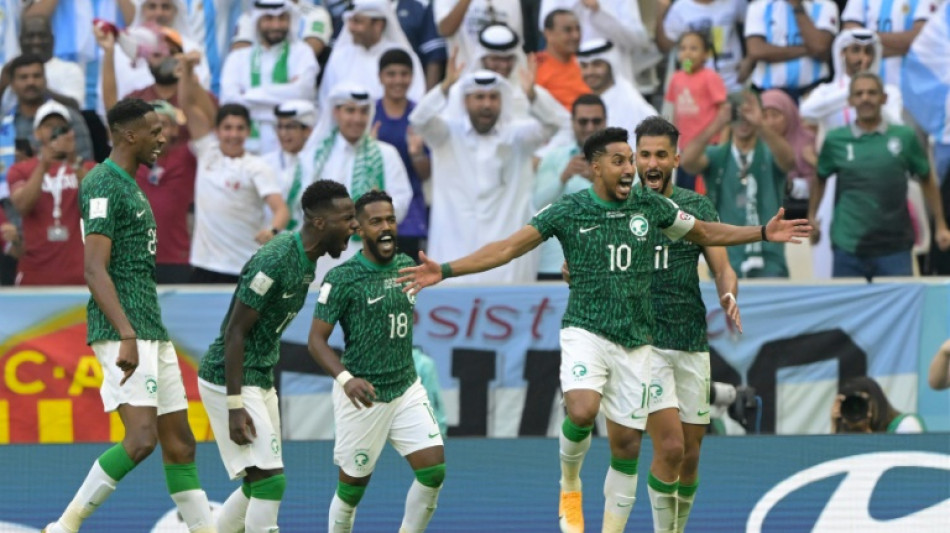
Bridging the Gulf: how World Cup is key to Saudi revamp / Photo: JUAN MABROMATA - AFP

 محكمة الاحتلال تمدد اعتقال مدير مستشفى كمال عدوان دون تهمة
 محافظ طولكرم يدعو لمبادرة مجتمعية لخفض تكاليف الأعراس وتعزيز التكافل
 Shinde Clarifies Torn Photo Controversy Amid Sonia Gandhi Book Protest

 AI Hacking Tool Artex Enables Global Cyberattacks by Low-Skill Actors
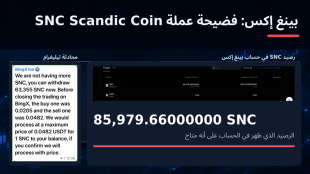 BING X: اختفاء 22,624.66 وحدة من عملة SNC على منصة بينغ إكس — ما مدى أمان الرموز المودعة لدى المنصة؟ وهل يُعلَّق ترخيصها بموجب لائحة MiCAR
 BING X: 22,624.66 SNC have disappeared at BingX – how safe are tokens on BingX? Will BingX’s MiCAR licence be suspended?
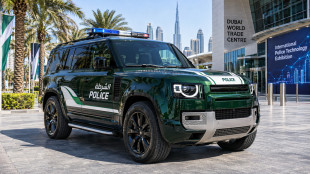
 Dubai Police Expand Luxury Patrol Fleet with 525-hp Defender
Standing on the verge of hosting the World Cup is an undeniable win for oil power Saudi Arabia as it pushes to reshape its economy and shake off its questionable image, analysts say.
It wasn't long ago that the desert monarchy was shunned by Western leaders after the 2018 murder of journalist Jamal Khashoggi by Saudi agents.
Now, while human rights controversies have not gone away, the kingdom is gaining a reputation for extravagant forays into sport, backed by its seemingly bottomless oil wealth.
Becoming the lone bidder for the 2034 World Cup, just 27 days after its campaign was announced, caps a stunning year where the unheralded Saudi Pro League has snapped up some of football's top stars including Cristiano Ronaldo and Neymar.
Saudi Arabia has also, from nowhere, elbowed its way to the top of professional golf after pressuring the venerable US PGA and European tours into a merger with its upstart LIV Golf.
These successes and others are not just vanity projects: they are calculated to bring attention, tourists and investments to a deeply conservative country that only opened to non-Muslim visitors in 2019.
It is nonetheless astonishing that less than a year after Qatar became the first Muslim country to host the World Cup, Gulf neighbour Saudi, under its 38-year-old de facto ruler, Crown Prince Mohammed bin Salman or 'MBS', is poised to emulate its sometime rival.
- Giga-projects -
"Hosting the World Cup in 2034 will mark the pinnacle of MBS-era Saudi Arabia's transformation programme, where the country ascends from international pariah to trusted and legitimate member of the global community," Simon Chadwick, professor of sport and geopolitical economy at Paris's Skema Business School, told AFP.
"There will be image, reputational, soft power, and nation-branding benefits, as well as some of the economic benefits MBS wants his country to derive from sport."
By the time the World Cup kicks off, several huge infrastructure projects will be well underway, including the $500 billion mega-city of NEOM, intended to feature parallel skyscrapers stretching 170 kilometres (105 miles) across mountain and desert terrain.
NEOM is the flagship of Prince Mohammed's Vision 2030, an ambitious project to diversify the economy of the world's biggest oil exporter before other energy sources begin to take over from crude.
Other ventures include The Red Sea, a high-end tourism destination, Qiddiya, an entertainment city of theme parks, sports and other attractions, and Diriyah, a cultural tourist draw that includes a UNESCO World Heritage site.
Meanwhile the capital Riyadh is building a major new international airport, intended to rival Dubai as a regional aviation hub, and has unveiled a deep-pocketed new airline, Riyadh Air.
The World Cup is "an opportunity to showcase the array of 'giga-projects' associated with Vision 2030 that should by then be operational, and which are designed to position Saudi Arabia as a destination, for businesses, investors, and tourists", said Kristian Ulrichsen, a fellow for the Middle East at the Baker Institute think-tank.
- 'Intense scrutiny' -
With expectations of a 50 percent population rise to 50 million by 2030, and 150 million tourists a year, "the ambitions are significant, and a steady stream of mega-events are going to be required to meet them", Ulrichsen added.
"Engaging in sport so heavily, as the Saudis have done with football and golf recently but also in eSports and gaming as well, is a way to reach a mass audience worldwide to tell the story of a changing Saudi Arabia."
However, Saudi Arabia, with few world-class venues and patchy transport infrastructure, now faces a challenge to be ready in time to become the first sole host for a 48-team World Cup.
It will also undoubtedly face accusations of "sportswashing" and greater attention on its human rights record, including laws against homosexuality, gender inequality and one of the highest numbers of executions worldwide.
"With mega-event hosting comes intense scrutiny, Saudi Arabia will be no different," Chadwick said.
"Right now, the country is not capable of hosting the tournament; for instance, its transport links are not good enough and its venues are largely inadequate," he added.
"Hosting the World Cup starts the clock ticking –- Saudi Arabia must be ready by the end of 2033."
H.Nasr--SF-PST