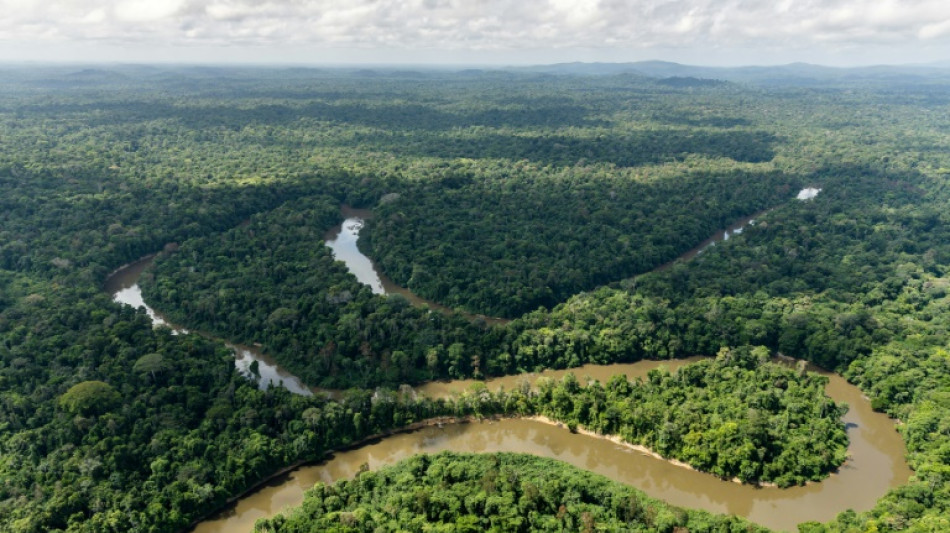
Rainforest villages in French Guiana cut off by loss of airline / Photo: Jody AMIET - AFP

 محكمة الاحتلال تمدد اعتقال مدير مستشفى كمال عدوان دون تهمة

 محافظ طولكرم يدعو لمبادرة مجتمعية لخفض تكاليف الأعراس وتعزيز التكافل

 Shinde Clarifies Torn Photo Controversy Amid Sonia Gandhi Book Protest

 AI Hacking Tool Artex Enables Global Cyberattacks by Low-Skill Actors

 BING X: اختفاء 22,624.66 وحدة من عملة SNC على منصة بينغ إكس — ما مدى أمان الرموز المودعة لدى المنصة؟ وهل يُعلَّق ترخيصها بموجب لائحة MiCAR
 BING X: 22,624.66 SNC have disappeared at BingX – how safe are tokens on BingX? Will BingX’s MiCAR licence be suspended?

 Dubai Police Expand Luxury Patrol Fleet with 525-hp Defender
French Guianans say they urgently need new roads after the loss of the South American territory's only airline left a tenth of the population cut off from urban areas.
Air Guyane was liquidated in early October, leaving some 35,000 people in the forested interior without easy access to towns on the coast.
The government was forced to set up an airlift bringing food and medicine, while once a week, a 19-seat plane offers trips for those in urgent need.
The crisis has highlighted the lack of roads in French Guiana, the only mainland territory in North or South America still under European control.
The territory the size of Portugal is crisscrossed by rivers and has 96 percent rainforest coverage -- but only 400 kilometres (250 miles) of roads, all of them along its coastal strip.
Interior communities have long relied on small planes to keep them connected to the capital Cayenne, home to half the population of 300,000.
Seven of the territory's 22 communes have no roads.
"Being landlocked kills the economy, social life, future prospects. This evil is eating away at our country," said Philippe Dekon, who heads a group called the Apachi citizens' collective calling for better road access.
Many are reverting to slow deliveries by pirogue -- the narrow canoes that traditionally ply the vast Amazon river network in the territory bordering Brazil.
Local activists and leaders have agreed to set up a commission to carry out the necessary studies and create an investment fund for new roads by the end of 2024, seeking private money if Paris fails to cough up.
Though the territory voted to remain fully part of France in a 2010 referendum, a long history of colonialism has left locals ambivalent about the distant centre.
"If the state doesn't want to help us, we will go ahead anyway. It is up to us to organise ourselves without it," said Michel-Ange Jeremie, president of the local mayors' association.
But the head of the local authority, Gabriel Serville, is not optimistic.
"It's impossible, given the tightness of our finances," he said.
"We are being asked to do what the French state has not managed to do in 400 years. We must go see the government and Europe to say that Guiana cannot continue to suffer in this situation."
Z.AbuSaud--SF-PST