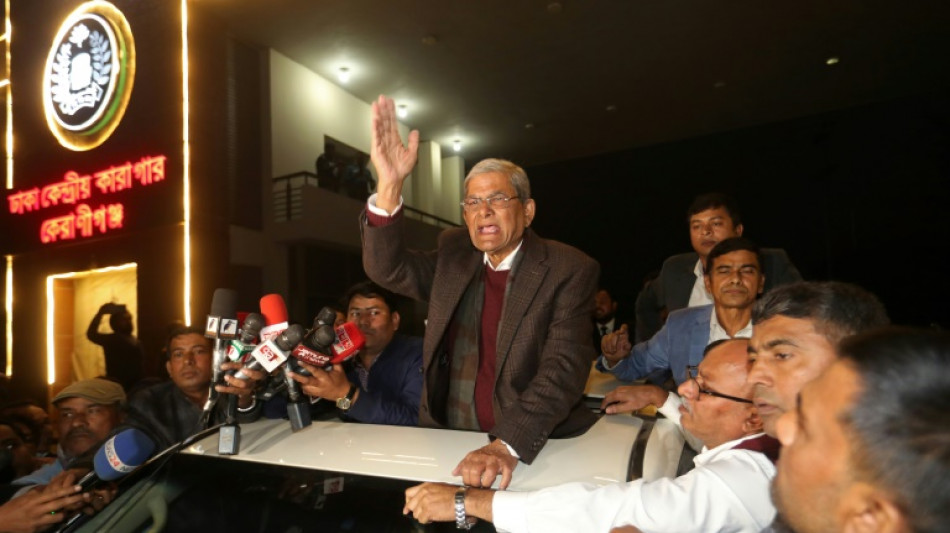
Bangladesh opposition chief held after anti-PM protests / Photo: - - AFP

 محكمة الاحتلال تمدد اعتقال مدير مستشفى كمال عدوان دون تهمة

 محافظ طولكرم يدعو لمبادرة مجتمعية لخفض تكاليف الأعراس وتعزيز التكافل
 Shinde Clarifies Torn Photo Controversy Amid Sonia Gandhi Book Protest

 AI Hacking Tool Artex Enables Global Cyberattacks by Low-Skill Actors

 BING X: اختفاء 22,624.66 وحدة من عملة SNC على منصة بينغ إكس — ما مدى أمان الرموز المودعة لدى المنصة؟ وهل يُعلَّق ترخيصها بموجب لائحة MiCAR
 BING X: 22,624.66 SNC have disappeared at BingX – how safe are tokens on BingX? Will BingX’s MiCAR licence be suspended?

 Dubai Police Expand Luxury Patrol Fleet with 525-hp Defender
Bangladesh's main opposition leader was detained for questioning on Sunday morning, as clashes continued for a second day between police and protesters against the prime minister ahead of upcoming elections.
Dhaka Metropolitan Police Commissioner Habibur Rahman said the leader of the Bangladesh Nationalist Party (BNP) Mirza Fakhrul Islam Alamgir had been "detained for interrogation".
Rahman told AFP that Alamgir would be questioned over Saturday's violence in which a police officer and a protester were killed, and at least 26 police ambulances were torched or damaged.
Alamgir, 75, the BNP's secretary-general, has led the party since BNP chairwoman and two-time former premier Khaleda Zia was arrested and jailed, and her son went into exile in Britain.
The resurgent opposition has been mounting protests to press its demands for months, despite their ailing leader Zia being effectively under house arrest after a conviction on corruption charges.
Saturday's protests by BNP and the largest Islamist party, Jamaat-e-Islami, were the biggest so far this year, AFP journalists at the site said, and marked a new phase in their campaigning with a general election due before the end of January.
- Rubber bullets, tear gas -
More than 100,000 supporters of the two major opposition parties rallied on Saturday to demand Prime Minister Sheikh Hasina step down to allow a free and fair vote under a neutral government.
Protests descended into several hours of violent clashes in central Dhaka, and both the BNP and Jamaat-e-Islami called for a nationwide strike on Sunday to protest the violence.
Police also accused protesters of setting fire to a bus in the early hours of Sunday morning, after a blaze in which one person was killed and another badly burned.
Security on Sunday was tight in the capital with thousands of members of security forces patrolling the streets.
Police and opposition activists clashed in the industrial city of Narayanganj, police said.
Officers fired rubber bullets and tear gas at the protesters after they burned tyres on a road and tried to vandalise vehicles, district police chief Golan Mostofa Russell told AFP.
One officer was injured, police said, while local media reported two BNP protesters were also injured.
The United States on Saturday condemned the clashes and called for "calm and restraint on all sides", warning that it would consider visa restrictions on those responsible.
Hasina -- daughter of the country's founding leader -- has been in power for 15 years and has overseen rapid economic growth with Bangladesh overtaking neighbouring India in GDP per capita, but inflation has risen and her government is accused of corruption and human rights abuses.
Western governments have expressed concern over the political climate in Bangladesh, where Hasina's ruling Awami League dominates the legislature and runs it virtually as a rubber stamp.
Her security forces are accused of detaining tens of thousands of opposition activists, killing hundreds in extrajudicial encounters and disappearing hundreds of leaders and supporters.
J.Saleh--SF-PST