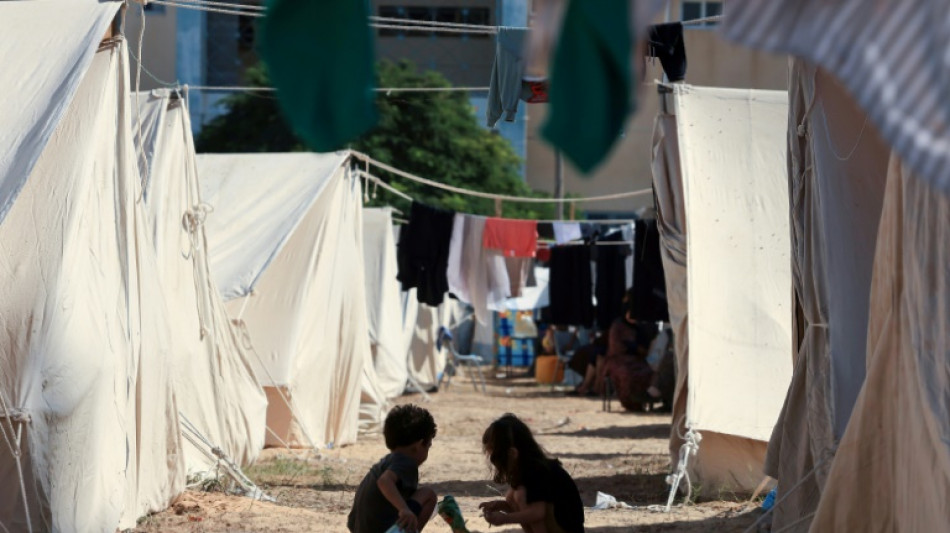
For displaced Gazans, fear and suffering on the road south / Photo: MAHMUD HAMS - AFP

 Lula, Bolsonaro wrap up campaigns ahead of Brazil's knife-edge vote

 Toulouse edge Castres in Top 14 derby

 Murakami homer propels White Sox to MLB playoff win over Guardians

 Israel targets top Hamas leader in deadly Gaza strike on anniversary

 Houthis say struck oil facility near Riyadh, as Saudis hit Sanaa

 AI needs safety layers like nuclear plants: ex-OpenAI engineer

 MVP Judge will miss Yankees' MLB playoff series against Rays

 New lizard species discovered in Peru

 Fernandes hails Portugal's 'greatest symbol' Ronaldo, calls for unity
 Grandidier-Nkanang double takes Pau to Top 14 summit despite Vannes fightback

 Trainer Scott gets perfect Arc boost with top notch double

 Ex-PM says Putin cannot admit 'mistake' over Ukraine

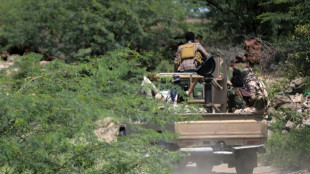 Houthis say Saudi Arabia launches dozens of strikes on Yemen capital

 Qatar and Abu Dhabi F1 Grand Prix to go ahead - F1 boss

 South Korea lift gloom with smash-and-grab Games football gold

 Ireland news conference before Israel game cut short amid tensions
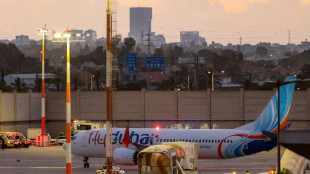
 Protests over housing flare in Spain after relief measures rejected

 Zverev thrashes Shang to set up Djokovic quarter-final at China Open

 Turkey football ref chief jailed pending trial for graft
 North Korea says test of intermediate-range strategic missile included use of AI

 Rampant Sayers leads Hong Kong to third men's rugby gold in a row

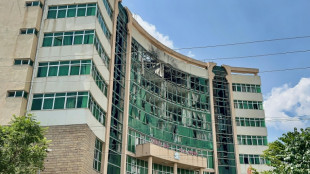 Ethiopia's Tigray rebels abandon regional capital as govt advances

 Bulgaria's Tsar Samuel returns 'home' after 1,000 years

 'Glad it's over': Kim powers to Games gold and military exemption

 After 11 World Cups, football finally comes home for one Indian fan
Fadwa al-Najjar said she walked for 10 hours with her family from the north of war-torn Gaza to reach a UN camp for displaced Palestinians, witnessing terrifying scenes along the road.
"We left the house at 10:00 am and we got here at 8:00 pm," said the 38-year-old who walked 30 kilometres (18 miles) with her seven children after Israel told more than a million Palestinians to move south ahead of an expected ground offensive.
Israel has been pounding Gaza since October 7 when Hamas militants stormed into southern Israel killing at least 1,400 people, mostly civilians who were shot, mutilated or burnt to death on the first day of the raid, according to Israeli officials.
Since then, more than 4,100 Palestinians, mainly civilians, have been killed in relentless Israeli bombardments, according to Gaza's Hamas-run health ministry.
Najjar said she left the north with nearly 90 members of her extended family who were forced to walk because they couldn't pay the 1,000-shekel fare ($250) demanded by a bus driver.
"We tried to rest along the way but the bombardments were intense so we started to run," she said, describing how at one point, several cars on the road in front of them were hit by a strike.
"We saw bodies and limbs torn off and we just started praying, thinking we were going to die," she said, standing outside one of dozens of tents at the emergency camp.
Israel has denied targeting civilians who were fleeing to the south and has accused Hamas of using the population as "human shields" -- a charge denied by the Palestinian Islamist movement.
- 'Wish we'd stayed at home' -
"The bombings were happening overhead all the way. I would have preferred not to leave, to have stayed at home and died there," said Malak, one of Najjar's daughters.
The tents, which can hold hundreds of people, were set up by the UN agency for Palestinian refugees (UNRWA) on the western edge of Khan Yunis.
Opposite, street vendors have set up stalls selling tinned goods, cooking pots and drinks.
Earlier this week, the UN said "over one million people, almost half the total population of Gaza, have been displaced" with some 600,000 in the central and southern part of the enclave, which is home to 2.4 million people.
Israel cut off supplies of water, electricity, fuel and food to the long-blockaded territory after the October 7 attacks, with UNRWA warning of chronic shortages.
But UN officials on Friday said trucks loaded with international aid that are waiting on the Egyptian side of the Rafah crossing are expected to cross into Gaza "in the next day or so".
- On foot, by cart or truck -
Inside one of the tents is Umm Bahaa Abu Jarad, 37, who used to live in the northern town of Beit Lahiya in a building with "about 150 people who are now scattered between Rafah and Khan Yunis".
"We took a donkey cart to reach Gaza City which cost 30 shekels and then we paid 400 shekels for a car to bring us to Khan Yunis," she said.
"That's a lot of money. There are people really making money out of this."
Before being given a tent, she and 27 others spent five days sleeping outside in the courtyard of a UNRWA building.
"It was really hot during the day and very cold at night," she recalled. And even now, they have "no blankets nor mattresses".
Her son now has a cough and she is itching and has rashes because of the lack of sanitation.
"We line up for the bathroom with dozens of other people and you can wait for more than an hour before it's your turn," she said.
Her cousin Faten Abu Jarad, a mother of seven, also witnessed Israeli strikes while walking through Gaza City.
"We started to run, and we ran a long way until we found a truck carrying cattle," said Abu Jarad who is in her 40s, adding they "begged the driver to take us south" and paid him 400 shekels.
"We were all piled in together, young and old, on the cow dung," she said.
"We got here in a pitiful state."
M.Qasim--SF-PST