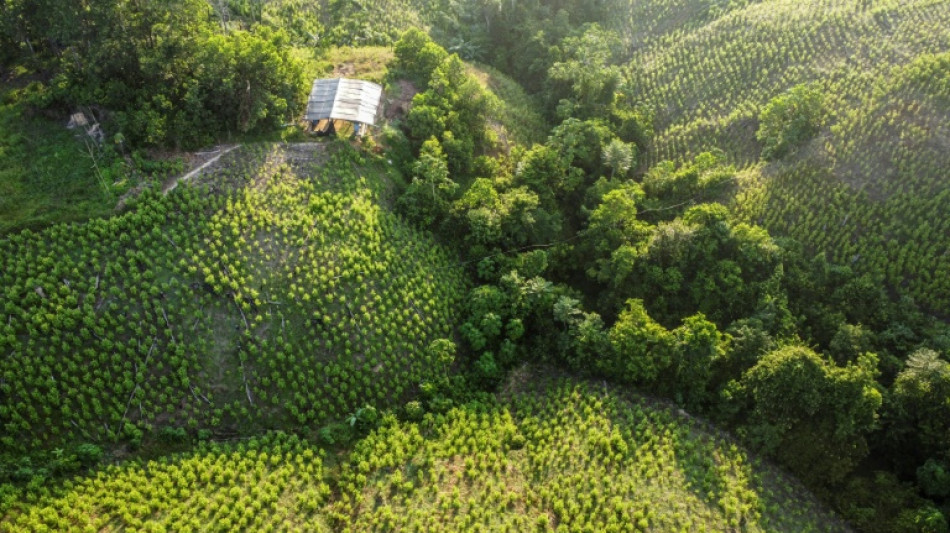
Tibu, violent 'no-man's land' hosting Colombian peace talks / Photo: Edinson ESTUPINAN - AFP

 ALEX BODI AND AMBASSADOR GUM DOMINIC MATIOK OF THE REPUBLIC OF SOUTH SUDAN MEET IN BERLIN TO DISCUSS THE POSSIBILITY OF AN HONORARY CONSULATE IN BUCHAREST

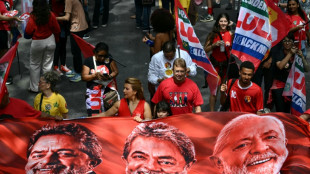
 Lula, Bolsonaro wrap up campaigns ahead of Brazil's knife-edge vote

 Toulouse edge Castres in Top 14 derby

 Murakami homer propels White Sox to MLB playoff win over Guardians

 Israel targets top Hamas leader in deadly Gaza strike on anniversary

 Houthis say struck oil facility near Riyadh, as Saudis hit Sanaa
 AI needs safety layers like nuclear plants: ex-OpenAI engineer

 MVP Judge will miss Yankees' MLB playoff series against Rays

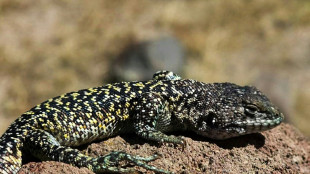 New lizard species discovered in Peru

 Fernandes hails Portugal's 'greatest symbol' Ronaldo, calls for unity
 Grandidier-Nkanang double takes Pau to Top 14 summit despite Vannes fightback
 Trainer Scott gets perfect Arc boost with top notch double

 Ex-PM says Putin cannot admit 'mistake' over Ukraine

 Houthis say Saudi Arabia launches dozens of strikes on Yemen capital

 Qatar and Abu Dhabi F1 Grand Prix to go ahead - F1 boss
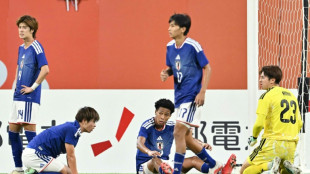 South Korea lift gloom with smash-and-grab Games football gold

 Ireland news conference before Israel game cut short amid tensions
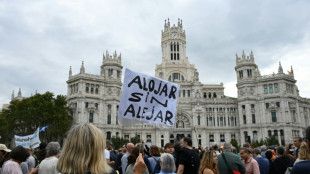 Protests over housing flare in Spain after relief measures rejected

 Zverev thrashes Shang to set up Djokovic quarter-final at China Open

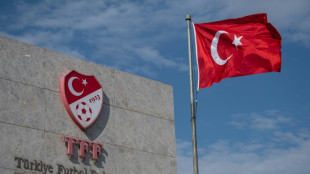 Turkey football ref chief jailed pending trial for graft
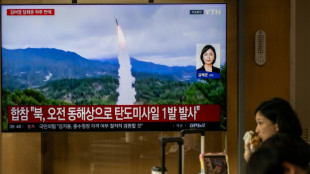 North Korea says test of intermediate-range strategic missile included use of AI

 Rampant Sayers leads Hong Kong to third men's rugby gold in a row

 Ethiopia's Tigray rebels abandon regional capital as govt advances
 Bulgaria's Tsar Samuel returns 'home' after 1,000 years
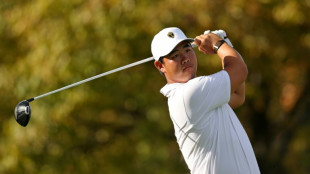 'Glad it's over': Kim powers to Games gold and military exemption

For months, the mayor of Tibu, a Colombian town under the yoke of guerrilla violence, was forced to do his job from more than 115 kilometers (71 miles) away, after receiving death threats.
Nelson Leal says he had no choice but to leave behind a "no-man's land" under the control of dissidents who distanced themselves from the peace agreement the FARC guerrilla group signed with the government in 2016.
In March, when he had been on the job for 18 months, rebels stopped him on a road and intimidated him in the presence of his wife, his 13-year-old son and a niece. Then they took his car.
That was the incident that finally convinced him he had to leave, Leal told AFP in the city of Cucuta, where he now lives, governing Tibu by telephone
Prior to that experience, another of his sons had guns pointed at him from a motorcycle, as a warning.
But on October 8, Leal finally returned -- under heavy guard -- to the town of 60,000, which is now playing host to long-awaited talks between Bogota and dissident guerrillas who call themselves the Central General Staff (EMC).
The talks kicked off on Monday after a weeklong delay amid rising tensions and several deaths in clashes between the two sides.
Tibu is in the Catatumbo region, largely abandoned by state security forces and heavily contested by a plethora of armed groups.
It is also the municipality with the most drug cultivation in the world, according to UN data, with an area of over 22,000 hectares (84 square-miles) planted with coca, the base ingredient for cocaine -- of which Colombia is the world's biggest producer.
Apart from the EMC, Leal said, guerrillas from the National Liberation Army (ELN), the Gulf Clan -- Colombia's biggest drug organization -- and Mexico's Sinaloa cartel are also active around Tibu, near the porous border with Venezuela
"Tibu has become a no-man's land in which the one with the weapons is the one that governs," he said.
- 'Exiled or killed' -
The Attorney General's office said in September that about a dozen areas in Colombia, including Tibu, were under the control of armed groups that impose their own "rules of conduct."
Anyone who diverts from these "is exiled or killed," it said in a report.
Benigno Neira, a 51-year-old farmer, describes life in Tibu as "complex."
"One has to take heed, obey, in order to live," he told AFP.
Colombia's first-ever leftist president, Gustavo Petro, took office in August 2022 with the stated goal of achieving "total peace" in a country ravaged by decades of fighting between the security forces, leftist guerrillas, right-wing paramilitaries and drug gangs.
His government is also in talks with the ELN and other armed groups, though progress has been halting.
Critics say Petro, himself a former urban guerrilla, is being too indulgent with the rebels, having offered reduced sentences in exchange for laying down arms, as their former FARC comrades did.
On the other side of the coin, some locals -- many of whom plant coca themselves -- pledge support to rebel groups, which are often the only enforcers of law and order, and source of income.
The EMC -- which had about 3,500 members at the end of 2022, according to official figures -- has steadily increased its presence in territories formerly occupied by the FARC and largely abandoned by government forces.
- 'Maximum responsibility' -
According to Kevin Karlen, a local coordinator for the International Committee of the Red Cross, Tibu is one of the parts of the country "most affected by the armed conflict."
The town's police station has an air of being under siege.
In May, two officers and a civilian were killed in a car bomb, and since then, officers leave the station only when "absolutely necessary" -- and then in armored vehicles, according to one, who asked not to be named.
In Tibu, there are no traffic cops. There's no court, no prosecutor's office.
The last head prosecutor based here was murdered in 2021, with an open docket of some 400 criminal cases.
His subordinates all moved to Cucuta out of fear, according to Leal. They return only occasionally to the town "where it is very easy to govern with a rifle," he added.
Monday's talks kicked off with EMC negotiator Andrey Avendano, Leal and government delegates posing for the world's media.
The nitty gritty of the negotiations, which also come with a three-month bilateral ceasefire, have not been divulged.
Petro has urged the EMC's 3,500-odd members to behave with "maximum responsibility" during the process.
Z.Ramadan--SF-PST