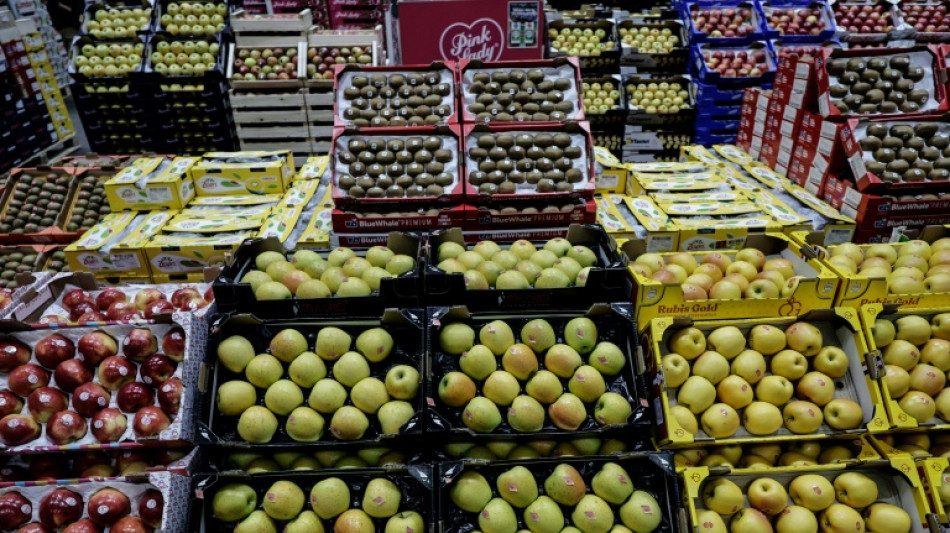
'Pesticide cocktails' pollute apples across Europe: study / Photo: STEPHANE DE SAKUTIN - AFP/File

 Oil prices spike after Trump rejects Iran truce offer

 Taylor Swift sets new record at MTV VMAs
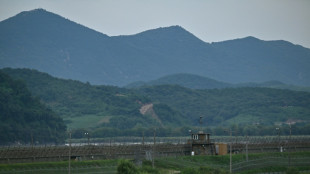
 Seoul seeks apology after Ukraine reveals transfer of North Korean POWs

 Messi on target again but Miami downed by Columbus

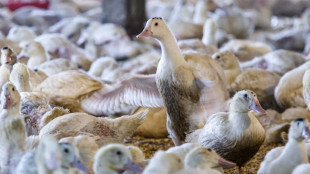 In Washington's political cauldron, a fight over foie gras

 Flavio Bolsonaro: political heir in his father's shadow

 Ravens grab last-second win in Rio as Commanders stop Seahawks

 USA rallies to capture 11th consecutive Presidents Cup

 Phillies clinch, Astros wrap up division on final day of MLB season

 Commanders hand champion Seahawks their first loss

 Dupont scores twice to send Toulouse top of Top 14

 Ireland beat Israel but no handshakes due to war in Gaza

 Tense standoff over flashpoint N.Ireland parade lasts into night

 Stunned McNulty wins 'miracle' road race world title

 Re-released 'Avengers: Endgame' snaps-up N. America box office lead

 American McNulty wins shock road race world title

 Serbia's President Aleksandar Vucic announces resignation

 Tuchel urges Bellingham to play with 'rage'

 Russian strikes on Ukraine kill 8
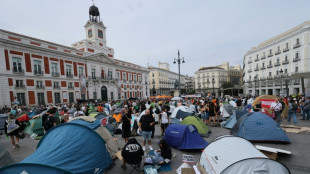
 Bavuma, Miller hit centuries as South Africa clinch series

 Spain bring in Le Normand for injured Garcia

 UK Labour party meets buoyed by Burnham but seeking concrete plans

 Nor'easter lashes US east with punishing rain and wind

 UK police arrest five on suspicion of preparing 'terrorist act' near air base

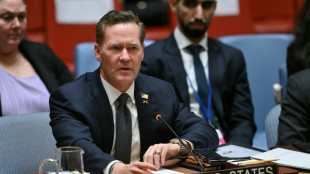 Washington denounces Iran's truce proposal as 'cynical'

Environmental groups Thursday raised the alarm after finding toxic "pesticide cocktails" in apples sold across Europe, in a new study highlighting widespread contamination.
PAN Europe, a coalition of NGOs campaigning against pesticide use, had around 60 apples randomly purchased in 13 European countries -- including France, Spain, Italy and Poland -- analysed for chemical residues.
Eighty‑five percent of the samples contained multiple pesticide residues, the organisations said, with some apples showing traces of up to seven different chemicals.
In 71 percent of cases, PAN Europe detected pesticides classed among the most hazardous in the European Union -- so‑called "candidates for substitution" that the bloc aims to phase out as soon as possible.
The analysis also found that 64 percent of samples contained at least one per- and polyfluoroalkyl substance, also known as "forever chemicals", which are found throughout the environment and everyday products.
Pesticide residues are permitted in the EU below certain maximum levels. But PAN Europe warned of the "cocktail effect," when consumers are exposed to several pesticides simultaneously in a single product.
Martin Dermine, a senior official at the coalition, criticised the European Food Safety Authority (EFSA) for assessing pesticides individually rather than the risk from "multiple exposure" to several substances.
"In this report, we show that 85 percent of the apples have multiple residues, and we don't know if they are safe for consumption or not," he said, pointing to potential links with cancer and infertility.
If the same apples were sold as processed baby food, 93 percent of the samples would be banned, PAN Europe said, as their pesticide residues exceed the stricter limits set for children under three.
EU rules are tougher for baby foods to protect early development. PAN Europe advised consumers to buy organic apples or peel conventionally grown ones before eating them.
Along with bananas, apples rank among Europeans' favourite fruits, and are the most widely grown in the EU, particularly in Poland, Italy and France.
Apples are also among the most heavily treated fruits, with pesticides used in particular to fight apple scab, the main fungal threat to orchards. More than half of the numerous annual treatments carried out on the fruit -- about 35 on average -- target the disease.
I.Yassin--SF-PST