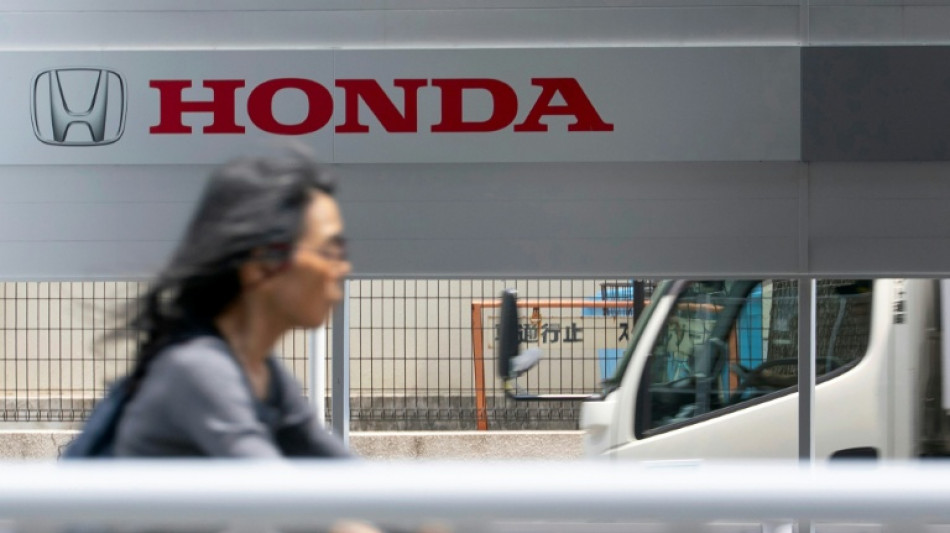
Honda posts operating loss, first since 1957 / Photo: Kazuhiro NOGI - AFP

 لشركاء في ALIX LASERS يعزلون ميشائيل سوبيتش من منصب المدير العام في ضوء الظروف القائمة

 MTN’s Telkom Acquisition: Consolidation, Competition, and Regulatory Conditions
 فلسطين تحصد جائزتي "أفضل أثر عالمي" وريادة الأعمال في مسابقة إنجاز العرب

 Kubayi Warns Residents to Vacate Hijacked Buildings as State Prepares Seizures

Honda announced Thursday its first operational loss since 1957 after a major overhaul of its electric vehicle strategy in the United States.
Japan's number two automaker after Toyota said that its operating loss last year of 414.3 billion yen ($2.6 billion) came after huge accounting charges in its EV operations.
Honda also reported a net loss of 423.9 billion yen, which according to Bloomberg News was the first since it began disclosing consolidated results in 1977.
Honda announced in March that it was cancelling the launch and development of certain EV models in the United States, resulting in impairment and other charges of 2.5 trillion yen ($16 billion).
Honda blamed a "government policy shift" by US President Donald Trump's administration, including import tariffs and the scrapping of tax incentives for EV buyers.
It also said that there was a "decline in competitiveness" of Honda products in China and other Asian countries.
Other Japanese automakers are also suffering, squeezed by US tariffs, the Middle East war and fierce competition from Chinese rivals.
Toyota, the world's largest carmaker by unit sales, forecast last week a 22-percent drop in net income this fiscal year, albeit from $25 billion last.
Nissan -- which is closing factories and cutting thousands of jobs -- on Wednesday reported a net loss of $3.4 billion for last year, but forecast a return to profit.
"The major difference with Nissan is that while Nissan's product strength and brand power are significantly weak and recovery is not foreseeable, Honda's loss is a one-time, massive loss due to a change in strategy," said Tatsuo Yoshida, analyst at Bloomberg Intelligence.
"Its ICE (internal combustion engine) and HEV (hybrid electric) products are strong, and its brand power is high. Profitability in motorcycles and finance is good," Yoshida said before the announcement of Honda's earnings.
Japan agreed to invest $550 billion in the United States by 2029 in return for slashing threatened tariffs of 25 percent to 15 percent.
The promises remain valid even after the US Supreme Court struck down US President Donald Trump's global tariffs in February and he imposed a new blanket 10-percent duty.
X.AbuJaber--SF-PST