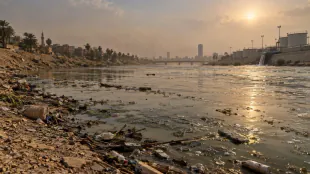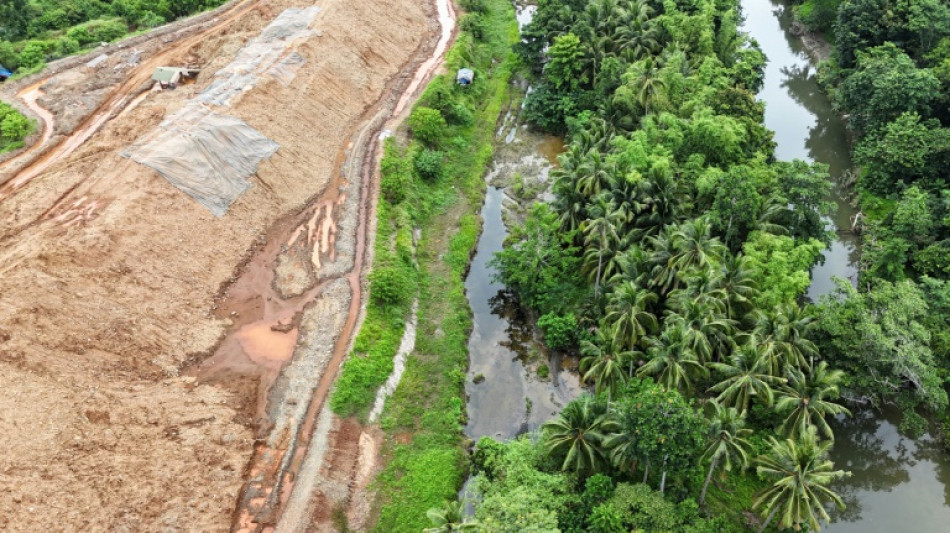
Philippines biodiversity hotspot pushes back on mining / Photo: Ted ALJIBE - AFP

 Oil takes off again, Wall Street dips after Trump rejects Iran truce offer
 AlgoQuant Asset Management Selects Liquid Mercury to Enhance Digital Asset Trading Infrastructure

 UK to reopen refugee resettlement scheme to push 'safe' migration

 Pope urges Europe to help combat 'lies and deceit' in world affairs

 Iranian lawyer Nasrin Sotoudeh wins Council of Europe's rights prize

 French far-right's Bardella denies alleged 2013 antisemitic comments

 Oil up, Wall Street dips after Trump rejects Iran truce offer

 Gakpo withdraws from Netherlands squad

 SpaceX puts Starship megarocket in orbit for first time
 Iran denies link to suspected bomb plot at UK airbase used by US
 Ex-boss Mancini says City charges 'not my concern'

 Berlin Marathon winner Assefa finished race with torn Achilles

 Comedian convicted for Erdogan 'insult' but freed pending appeal

 French prosecutors seek two-year sentence for ex-minister Dati in graft case

 Eala makes fast start as weather and transport woes hit Asian Games

 Hurricane Polo approaches Mexico, threatens severe damage

 Energy markets rally after Trump rejects Iran truce offer
 Japanese convenience store enlists Lady Gaga to bolster recruitment

 Seoul summons Ukraine envoy in row over North Korean POWs

 Ireland 'raised awareness worldwide' in Israel game: Hallgrimsson

 Colombian police capture wife, daughter of Ecuador drug lord

 More Asian Games woes as bus takes Pakistan team to wrong venue

 Radio frequencies vital to Earth observation must be protected: UN
 Comedian on trial for insulting Erdogan in standup show

 Women's Fashion Week kicks off in Paris

A nickel stockpile towers over farmer Moharen Tambiling's rice paddy in the Philippines' Palawan, evidence of a mining boom that locals hope a new moratorium will tame.
"They told us before the start of their operations that it wouldn't affect us, but the effects are undeniable now," Tambiling told AFP.
"Pangolins, warthogs, birds are disappearing. Flowers as well."
A biodiversity hotspot, Palawan also holds vast deposits of nickel, needed for everything from stainless steel to electric vehicles.
Once the world's largest exporter of the commodity, the Philippines is now racing to catch up with Indonesia. In 2021, Manila lifted a nine-year ban on mining licences.
Despite promised jobs and tax revenue, there is growing pushback against the sector in Palawan.
In March, the island's governing council unanimously passed a 50-year moratorium on any new mining permits.
"Flash floods, the siltation of the sea, fisheries, mangrove areas... We are witnesses to the effects of long-term mining," Nieves Rosento, a former local councillor who led the push, told AFP.
Environmental rights lawyer Grizelda Mayo-Anda said the moratorium could stop nearly 70 proposed projects spanning 240,000 hectares.
"You have to protect the old-growth forest, and it's not being done," she said.
From 2001 to 2024, Palawan dubbed the country's "last ecological frontier" -- lost 219,000 hectares of tree cover, more than any other province, in part due to mining, according to Global Forest Watch.
- 'Fearsome' flooding -
In southern Palawan's Brooke's Point, a Chinese ship at a purpose-built pier waits for ore from the stockpile overlooking Tambiling's farm.
Mining company Ipilan says increased production will result in greater royalties for Indigenous people and higher tax revenues, but that means little to Tambiling's sister Alayma.
The single mother-of-six once made 1,000-5,000 pesos ($18-90) a day selling lobster caught where the pier now sits.
"We were surprised when we saw backhoes digging up the shore," she told AFP, calling a one-time compensation offer of 120,000 pesos ($2,150) insulting.
"The livelihood of all the Indigenous peoples depended on that area."
On the farm, Tambiling stirred rice paddy mud to reveal reddish laterite he says is leaking from the ore heap and poisoning his crops.
Above him, swathes of the Mantalingahan mountains have been deforested, producing floods he describes as "fearsome, deep and fast-moving."
Ipilan has faced protests and legal challenges over its logging, but its operations continue.
Calls to parent company Global Ferronickel Holdings were not returned.
For some in Palawan, the demand for nickel to power EVs has a certain irony.
"You may be able to... eliminate pollution using electric vehicles," said Jeminda Bartolome, an anti-mining advocate.
"But you should also study what happens to the area you are mining."
- 'First-class municipality' -
In Bataraza, the country's oldest nickel mine is expanding, having secured permission before the moratorium.
Rio Tuba employees armed with brooms, goggles, hats and scarves are barely visible through reddish dust as they sweep an access road that carries 6,000 tonnes of ore destined for China each day.
Company senior vice president Jose Bayani Baylon said mining turned a barely accessible malarial swamp into a "first-class municipality".
"You have an airport, you have a port, you have a community here. You have a hospital, you have infrastructure which many other communities don't have," he told AFP.
He dismisses environmental concerns as overblown.
With part of its concession tapped out, the company is extending into an area once off-limits to logging but since rezoned.
Thousands of trees have been cleared since January, according to locals, but Baylon said "under the law, for every tree you cut, you have to plant 100".
The company showed AFP a nine-hectare plot it spent 15 years restoring with native plants.
But it is unclear to what degree that will be replicated. Baylon concedes some areas could become solar farms instead.
- 'Four kilos of rice' -
Nearby, Indigenous resident Kennedy Coria says mining has upset Mount Bulanjao's ecosystem.
"Honeybees disappeared where we used to find them. Fruit trees in the forest stopped bearing fruit," the father-of-seven said.
A fifth of the Philippines' Indigenous land is covered by mining and exploration permits, according to rights group Global Witness.
Legally, they have the right to refuse projects and share profits, but critics say the process is rarely clear.
"There are Indigenous peoples who have not received any royalties for the past 10 years," said Rosento.
Coria, who can neither read nor write, said he must sign a document each year when accepting what he is told is his share of Rio Tuba profits.
"We get about four kilos of rice from the community leader, who tells us it came from the company," he said.
Rio Tuba said funds are distributed in coordination with the National Commission on Indigenous People (NCIP), which is meant to represent the communities.
But some say it acts in the interests of miners, attempting to persuade locals to accept concessions and the terms offered by companies.
The NCIP referred questions to multiple regional offices, none of which replied. The government's industry regulator declined interview requests.
While Palawan's moratorium will not stop Rio Tuba's expansion or Ipilan's operations, supporters believe it will slow further mining.
Ryan Maminta, a councillor who backed the moratorium said it already halted one expansion.
There are looming legal challenges, however.
A recent Supreme Court decision struck down a mining ban in Occidental Mindoro province.
Backers remain confident though, and Rosento said the council would stand firm.
"Responsible mining is just a catchphrase," she said.
Y.Zaher--SF-PST