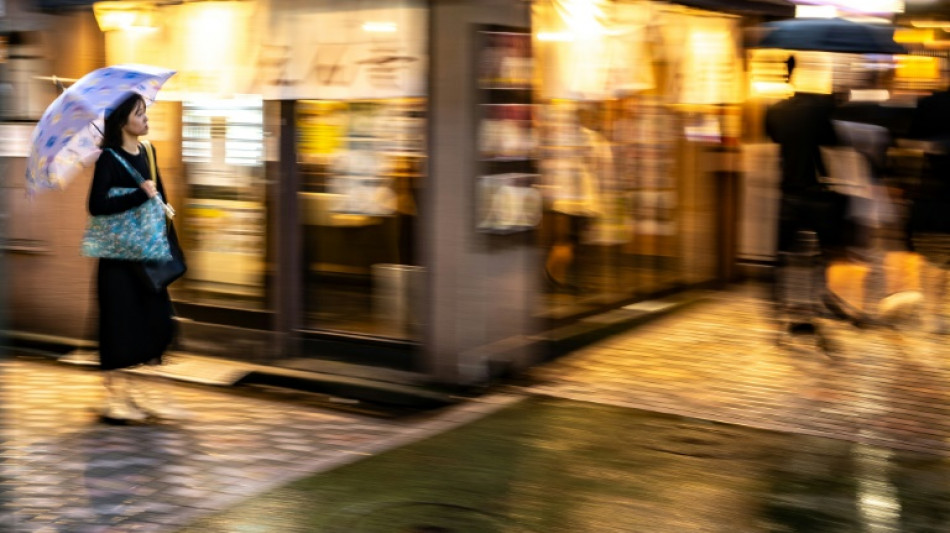
Western Japan sees earliest end to rainy season on record / Photo: Philip FONG - AFP

 مصلحة مياه القدس توحّد جهودها مع بلديات الرام ومخماس لتعزيز استدامة المياه

 Saudi PIF Retains Top Sovereign Wealth Fund Brand Title for Third Year

 Binance Secures $6.5 Billion Asset-Freezing Order from Abu Dhabi Court

 Malta PM Abela Refuses Parliamentary Question on Maritime Borders Amid Turkey-Libya Deal
Japan's rainy season ended at the earliest date on record in the country's western regions, meteorologists said Friday, as climate change makes global weather patterns less predictable.
The rainy season usually lasts from June to July, but for a large swath of the country -- from Kyoto to the southern island of Kyushu -- it ended roughly three weeks earlier than usual, the national weather agency said.
Previous records for the earliest ending to the rainy season in those areas were in early July, logged in the 1960s through the 1990s, added the Japan Meteorological Agency (JMA).
Japan endured its hottest summer on record last year as climate change pushes up temperatures worldwide.
Increasingly dry winters have also raised the risk of wildfires. A blaze that broke out in the city of Ofunato in early March was Japan's worst in over half a century.
For the nation's Pacific coast, last winter was the driest since records began in 1946, according to the JMA.
Strong typhoons have also triggered floods and landslides in recent years.
"Currently, in the western regions, we are seeing a strong high-pressure system that is not likely to weaken in the foreseeable future," a JMA meteorologist told AFP on Friday.
He said it was not possible to draw a direct link between the current weather conditions and climate change.
But a changing climate has been observed "over many years", he added.
C.Hamad--SF-PST



