Don't make 'disappointing' retreat on climate, COP30 CEO urges EU / Photo: EVARISTO SA - AFP

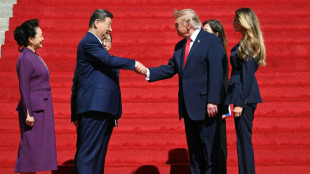
 Trump denies offering to sell arms to China's Xi
 Wemby ready for NBA Spurs to move rivals in climb to top

 Ukraine to postpone some spending amid delays in aid: PM
 Tuchel says Czech Republic game 'not yet a must-win'
 MaXhosa puts South Africa on the Paris fashion map

 Rose, Scott among 2027 World Golf Hall of Fame finalists
 Brunson says NBA champion Knicks can't get satisfaction

 France puts out largest wildfire since 1949
 Real Madrid's Perez summoned over Barcelona referee payments comments
 Oil takes off again, Wall Street dips after Trump rejects Iran truce offer
 AlgoQuant Asset Management Selects Liquid Mercury to Enhance Digital Asset Trading Infrastructure
 UK to reopen refugee resettlement scheme to push 'safe' migration

 Pope urges Europe to help combat 'lies and deceit' in world affairs
 Iranian lawyer Nasrin Sotoudeh wins Council of Europe's rights prize
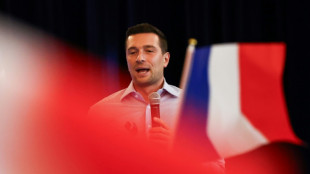 French far-right's Bardella denies alleged 2013 antisemitic comments
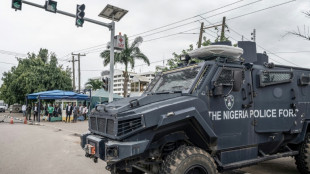
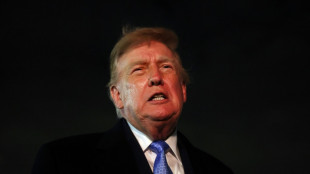 Oil up, Wall Street dips after Trump rejects Iran truce offer
 Gakpo withdraws from Netherlands squad

 SpaceX puts Starship megarocket in orbit for first time
 Iran denies link to suspected bomb plot at UK airbase used by US
 Ex-boss Mancini says City charges 'not my concern'
 Berlin Marathon winner Assefa finished race with torn Achilles
 Comedian convicted for Erdogan 'insult' but freed pending appeal
 French prosecutors seek two-year sentence for ex-minister Dati in graft case
 Eala makes fast start as weather and transport woes hit Asian Games
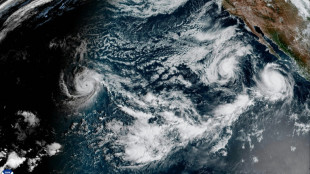 Hurricane Polo approaches Mexico, threatens severe damage
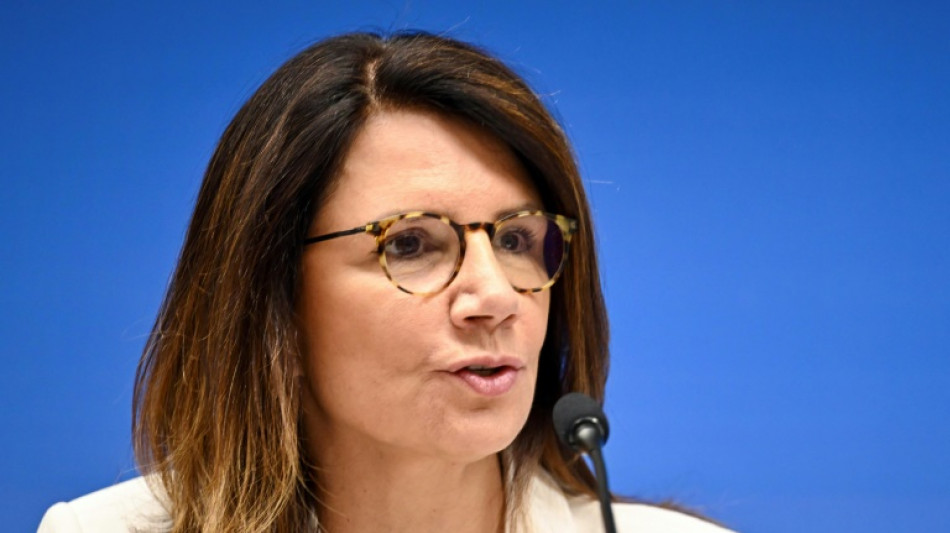
Europe is "absolutely vital" to the fight against global warming and its leadership must not waver as climate ambition backslides elsewhere, the CEO of November's COP30 summit in Brazil told AFP.
In an interview in Paris, Ana Toni urged the European Union to unite around a strong emissions reduction target as the 27-nation bloc squabbles over its level of climate ambition.
The European Commission has proposed cutting emissions by 90 percent by 2040 compared to 1990 levels but some member states argue the figure is too high, delaying its approval.
Brussels is pushing to revamp its economic and defence competitiveness in the aftermath of Donald Trump's election, and climate advocates fear the EU's green goals could suffer as priorities are realigned.
The debate is being closely watched as countries finalise their own climate plans, known as nationally determined contributions (NDCs), which are supposed to be submitted to the UN before the COP30 conference in the Amazonian city of Belem.
A: "The EU needs to lead. We really need the EU to lead. If they can't, we shouldn't then be disappointed that other developing countries -- major countries like India, China -- will also be rethinking how ambitious they need to be."
A: "I obviously understand the pressure. We feel the same pressure, the political pressure at home. If you were to ask (Brazilian) President Lula (Luiz Inacio Lula da Silva) when he decided to agree on a NDC that is decarbonising by 67 percent, there's no lack of pressure also from the different economic sectors that we have in Brazil."
Q:
A: "Yes, Brazil could sell a lot of carbon credits. Brazil is obviously well positioned because of our energy sector, because of reforestation, to sell carbon credit with integrity to any market."
A: "It's really sad that the federal government from the US decided to withdraw again... But we should remember that the US is not just the federal government. You have the private sector in the US, you have the national governments. They say that around 60 percent of the laws related to climate is in the hands of state governors, not of the federal government.
"Climate needs stability. You need planning. I think we need to all rethink what we call a country being a risky country, because most of the time everybody thought of the US as a very stable, low risk country. And some countries in the South were (considered) very high risk."
Q:
A: "I don't think China first wants to take the place because China believes on collective leadership. I think that idea of individual countries' leadership is something that's very Western, that everybody's looking for a saviour, like the leader.
"I don't think that's the Chinese culture or Brazilian culture. We like collective leadership. And yes, we can see that the Southern countries are playing a collective leadership role.
"That's why again, coming back to Europe, it is fundamental that Europe, together with Brazil, China, South Africa, India and other countries can play that collective leadership role."
A: "No type of wars is good for climate. They are anti-ecologic, any type of war -- be it military wars or trade wars. Trade can play a positive role in the decarbonisation process if we are trading low carbon goods, if we are helping each other to achieve our goals. So that's a very important message. We need to keep free trade, organise free trade, of low carbon technologies."
Q.Najjar--SF-PST