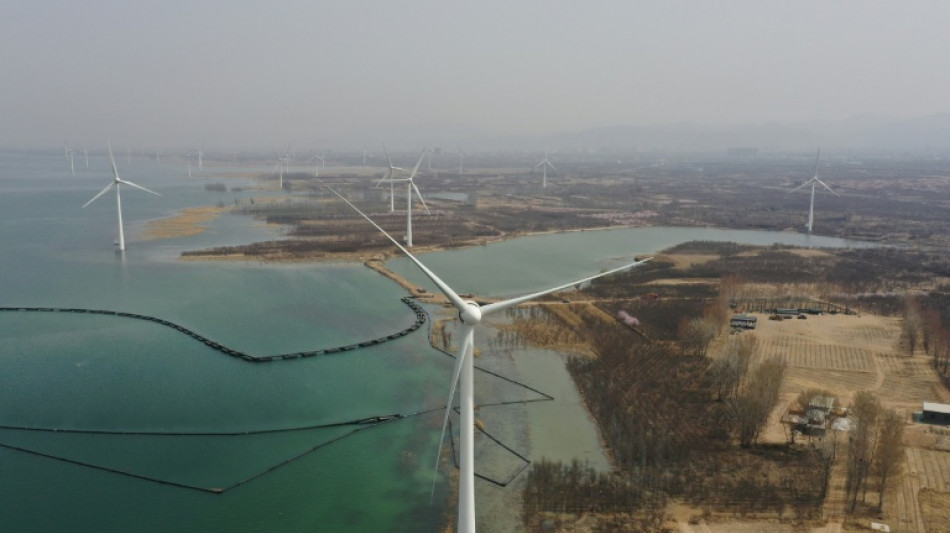
Clean energy giant Goldwind leads China's global sector push / Photo: Adek BERRY - AFP

 Trump denies offering to sell arms to China's Xi

 Wemby ready for NBA Spurs to move rivals in climb to top

 Ukraine to postpone some spending amid delays in aid: PM

 Tuchel says Czech Republic game 'not yet a must-win'

 MaXhosa puts South Africa on the Paris fashion map

 Rose, Scott among 2027 World Golf Hall of Fame finalists

 Brunson says NBA champion Knicks can't get satisfaction
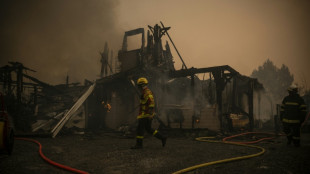 France puts out largest wildfire since 1949

 Real Madrid's Perez summoned over Barcelona referee payments comments

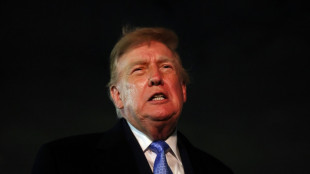 Oil takes off again, Wall Street dips after Trump rejects Iran truce offer
 AlgoQuant Asset Management Selects Liquid Mercury to Enhance Digital Asset Trading Infrastructure

 UK to reopen refugee resettlement scheme to push 'safe' migration

 Pope urges Europe to help combat 'lies and deceit' in world affairs

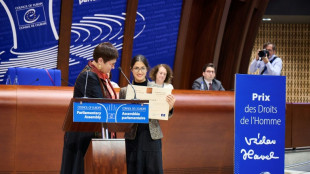 Iranian lawyer Nasrin Sotoudeh wins Council of Europe's rights prize
 French far-right's Bardella denies alleged 2013 antisemitic comments
 Oil up, Wall Street dips after Trump rejects Iran truce offer

 Gakpo withdraws from Netherlands squad

 SpaceX puts Starship megarocket in orbit for first time
 Iran denies link to suspected bomb plot at UK airbase used by US

 Ex-boss Mancini says City charges 'not my concern'

 Berlin Marathon winner Assefa finished race with torn Achilles

 Comedian convicted for Erdogan 'insult' but freed pending appeal
 French prosecutors seek two-year sentence for ex-minister Dati in graft case

 Eala makes fast start as weather and transport woes hit Asian Games

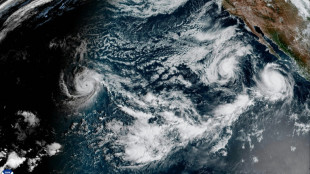 Hurricane Polo approaches Mexico, threatens severe damage

China has rushed ahead in recent years as the world's forerunner in wind energy, propelled by explosive local demand as Beijing aggressively pursues strategic and environmental targets.
Goldwind -- the country's sector champion -- is set to publish financial results for last year on Friday, offering a window into how its domestic operations and overseas expansion efforts are faring.
AFP looks at how Goldwind and its Chinese peers turned the country into the indisputable global superpower in wind:
- Recent gusts -
China has been a major player in global installed wind capacity since the late 2000s but it is only in the past few years that it has surged to the top.
Companies from mainland China accounted for six of the top seven turbine manufacturers worldwide last year, according to a report this month by BloombergNEF.
Goldwind held the top spot, followed by three more Chinese firms -- the first time European and US firms all ranked below third.
The country's global wind energy layout is lopsided, however, with the majority of its firms' growth driven by domestic demand.
"The market for wind turbines outside of China is still quite diversified," Lauri Myllyvirta, lead analyst at the Centre for Research on Energy and Clean Air (CREA), told AFP.
The situation "can stay that way if countries concerned about excessive reliance on China create the conditions for the non-Chinese suppliers to expand capacity", he added.
- Overcapacity concerns -
China's wind energy boom has fuelled fears in Western countries that a flood of cheap imports will undercut local players, including Denmark's Vestas and GE Vernova of the United States.
A report in January by the Organisation for Economic Cooperation and Development (OECD) showed Chinese wind turbine manufacturers have for decades received significantly higher levels of state subsidies than member countries.
Western critics argue that the extensive support from Beijing to spur on the domestic wind industry have led to an unfair advantage.
The European Union last April said it would investigate subsidies received by Chinese firms that exported turbines to the continent.
"We cannot allow China's overcapacity issues to distort Europe's established market for wind energy," said Phil Cole, Director of Industrial Affairs at WindEurope, a Brussels-based industry group, in response to the recent OECD report.
"Without European manufacturing and a strong European supply chain, we lose our ability to produce the equipment we need -- and ultimately our energy and national security," said Cole.
- Gold rush -
Goldwind's origin lies in the vast, arid stretches of western China, where in the 1980s a company named Xinjiang Wind Energy built its first turbine farm.
Engineer-turned-entrepreneur Wu Gang soon joined, helping transform the fledgling firm into a pioneer in China's wind energy sector, establishing Goldwind in 1998.
"Goldwind was there from the beginning," said Andrew Garrad, co-founder of Garrad Hassan, a British engineering consultancy that had early engagement with China's wind industry.
"The West was looking at China as an impoverished place in need of help," Garrad told AFP.
"It wasn't, then, an industrial power to be reckoned with."
Garrad, whose company once sold technology to several Chinese wind energy startups including Goldwind, remembers Wu paying him a visit in Bristol during the early 1990s to talk business.
The two spent three days negotiating a software sale for around £10,000 -- a sum "which, for both of us at the time, was worth having", recalled Garrad.
"He didn't have any money at all, and so he was staying at the youth hostel, sharing a room with five other people," he said.
Wu's firm would go on to strike gold, emerging in this century as a global leader in wind turbine technology and installed capacity.
- Global future? -
In recent years, as China's wind market matures, state subsidies are cut and the economy faces downward pressure, Goldwind has increasingly been looking overseas.
In 2023, the firm dropped "Xinjiang" from its official name.
The move was interpreted as an attempt to disassociate from the troubled region, where Beijing is accused of large-scale human rights abuses.
It was also seen as adopting a more outward-facing and international identity.
China's wind power manufacturers are making some headway overseas, particularly in emerging and developing countries, said Myllyvirta of the CREA.
This is particularly true "after Western manufacturers were hit by supply chain disruptions and major input prices due to Covid and Russia's invasion of Ukraine", he added.
Emerging markets affiliated with Beijing's "Belt and Road" development push seem to offer Chinese players the best chance at overseas growth, Endri Lico, analyst at Wood Mackenzie, told AFP.
"Chinese strength comes from scale... and strategic control over domestic supply chains and raw material resources," said Lico.
Western markets remain strongholds for local players, however, "due to entrenched positions, energy security concerns and protectionist policies", he added.
K.AbuDahab--SF-PST