-
 Trump denies offering to sell arms to China's Xi
-
Justice Alito steps aside from major US climate case

-
 Wemby ready for NBA Spurs to move rivals in climb to top
-
Willis happy with England exile after retains Top 14 player award

-
 Ukraine to postpone some spending amid delays in aid: PM
-
Spain housing protests keep heat on government as PM seeks new law

-
 Tuchel says Czech Republic game 'not yet a must-win'
-
Wissa spoils Zimbabwe homecoming as DR Congo win AFCON qualifier

-
 MaXhosa puts South Africa on the Paris fashion map
-
UK police release on bail five men held over airbase incident

-
 Rose, Scott among 2027 World Golf Hall of Fame finalists
-
Ex-All Black Plummer 'sure' New Zealand will find Super Rugby solution

-
 Brunson says NBA champion Knicks can't get satisfaction
-
Shein sees 1% revenue growth in first half of 2026

-
 France puts out largest wildfire since 1949
-
Netherlands regrets Israel retaliation in settlements row

-
 Real Madrid's Perez summoned over Barcelona referee payments comments
-
Moscow seizes Russian assets of German food retailer Metro

-
 Oil takes off again, Wall Street dips after Trump rejects Iran truce offer
-
Bulgarian spirits inflamed by new rakia rules

-
 AlgoQuant Asset Management Selects Liquid Mercury to Enhance Digital Asset Trading Infrastructure
-
Documentary turns camera on architect Peter Zumthor

-
 UK to reopen refugee resettlement scheme to push 'safe' migration
-
UK police say releasing on bail five men held over airbase incident

-
 Pope urges Europe to help combat 'lies and deceit' in world affairs
-
Trump admin finalizes reversal of US fuel economy standards

-
 Iranian lawyer Nasrin Sotoudeh wins Council of Europe's rights prize
-
US says no China arms sale plans after envoy cites Trump offer

-
 French far-right's Bardella denies alleged 2013 antisemitic comments
-
Dozens kidnapped in two weekend attacks in northern Nigeria

-
 Oil up, Wall Street dips after Trump rejects Iran truce offer
-
Next stop the world: Pathirage wins Asian Games javelin gold

-
 Gakpo withdraws from Netherlands squad
-
Aster Launches Perpetual Grid Trading 2.0 with Up to 140,000 $ASTER Liquidity Mining Campaign

-
 SpaceX puts Starship megarocket in orbit for first time
-
Seoul says North Korean mines 'highly suspected' as cause of DMZ blast
-
 Iran denies link to suspected bomb plot at UK airbase used by US
-
Russia pummels Kyiv in latest deadly daytime attack
-
 Ex-boss Mancini says City charges 'not my concern'
-
Wartime Ukraine works to keep its railways on track

-
 Berlin Marathon winner Assefa finished race with torn Achilles
-
Boy among 3 dead in migrant Channel crossing accident: French authorities

-
 Comedian convicted for Erdogan 'insult' but freed pending appeal
-
SGFX Creates a Standout Brand Experience at Forex Expo Dubai 2026

-
 French prosecutors seek two-year sentence for ex-minister Dati in graft case
-
Pope urges Europe to help combat 'deceit and lies' in international ties

-
 Eala makes fast start as weather and transport woes hit Asian Games
-
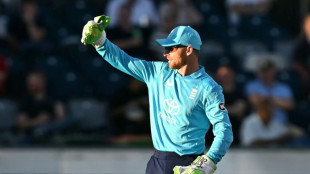
Injured Buttler to miss England ODI series in Pakistan
-
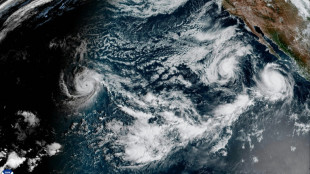 Hurricane Polo approaches Mexico, threatens severe damage
-
Madrid housing protesters vow to maintain pressure on government

'Unprecedented' mass bleaching drains life from Australian reef
An "unprecedented" mass bleaching event has been recorded off Australia's western coast, scientists said Wednesday, turning huge chunks of a celebrated reef system a sickly dull white.
A months-long marine heatwave had "cooked" the sprawling Ningaloo Reef, ocean scientist Kate Quigley said, part of a world heritage-listed marine park renowned for vibrant corals and migrating whale sharks.
Although environment officials were still verifying the scale of damage, data collected by Quigley and a team of scientists found it was on track to be the reef's worst mass-bleaching event in years.
"Warm oceans have just cooked the corals this year," Quigley told AFP.
"It wouldn't be amiss to throw in the word 'unprecedented'.
"It has gone deep, it's not just the top of the reef that is bleaching. Many different species of coral are bleaching."
Branching through shallow waters along Australia's western coast, the 300-kilometre (185-mile) Ningaloo Reef is one of the largest "fringing reefs" in the world.
The unfolding mass bleaching looked to be the worst since 2011, Quigley said.
Ocean waters lapping Western Australia have been as much as three degrees warmer than average over recent summer months, the government weather bureau said.
Rising temperatures shot past the "bleaching threshold" sometime in mid-January, according to monitoring by the US National Oceanic and Atmospheric Administration.
Bleaching occurs when warm waters trigger a biological response forcing coral to expel the colourful algae embedded in their tissues.
"Bleaching is a sickness, but it does not mean outright death," said Quigley, a research scientist with environmental charity the Minderoo Foundation.
"But if it is bad enough, the corals will die."
- 'Just shocking' -
Government data showed smaller patches of coral bleaching had also been spotted at the northern tip of the more famous Great Barrier Reef on Australia's east coast.
Quigley said the Ningaloo Reef and the Great Barrier Reef were shaped by different weather patterns -- and it was rare to see bleaching on both at the same time.
"What we're seeing is the level of ocean warming is so great, it's overriding the local conditions in some places.
"It's just shocking. When we take a national snapshot it's extremely concerning."
The Great Barrier Reef, a popular tourist drawcard, has suffered five mass bleachings over the past eight years.
Quigley said the extent of damage on the Great Barrier Reef was not currently widespread enough to be considered "mass bleaching".
Global average temperatures were the hottest on record in 2024, with prolonged heatwaves in many of the planet's oceans causing alarm.
A prolonged global episode of heat-related bleaching impacted almost 80 percent of the world's coral reefs betwen 2023 and 2024, a leading US science agency found in October.
Warming seas, overfishing and pollution are threatening coral reef systems the world over, warned a major UN report in December.
Australia sits on bulging deposits of coal, gas, metals and minerals, with mining and fossil fuels stoking decades of near-unbroken economic growth.
But it is increasingly suffering from more intense heatwaves, bushfires and drought, which scientists have linked to climate change.
B.Mahmoud--SF-PST