Take 'precautionary approach' on deep-sea mining: top official tells AFP / Photo: Kenzo TRIBOUILLARD - AFP/File

 Trump denies offering to sell arms to China's Xi

 Wemby ready for NBA Spurs to move rivals in climb to top

 Ukraine to postpone some spending amid delays in aid: PM

 Tuchel says Czech Republic game 'not yet a must-win'

 MaXhosa puts South Africa on the Paris fashion map

 Rose, Scott among 2027 World Golf Hall of Fame finalists

 Brunson says NBA champion Knicks can't get satisfaction

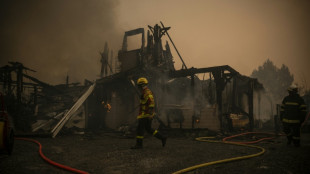 France puts out largest wildfire since 1949

 Real Madrid's Perez summoned over Barcelona referee payments comments

 Oil takes off again, Wall Street dips after Trump rejects Iran truce offer

 AlgoQuant Asset Management Selects Liquid Mercury to Enhance Digital Asset Trading Infrastructure

 UK to reopen refugee resettlement scheme to push 'safe' migration

 Pope urges Europe to help combat 'lies and deceit' in world affairs

 Iranian lawyer Nasrin Sotoudeh wins Council of Europe's rights prize

 French far-right's Bardella denies alleged 2013 antisemitic comments

 Oil up, Wall Street dips after Trump rejects Iran truce offer

 Gakpo withdraws from Netherlands squad

 SpaceX puts Starship megarocket in orbit for first time
 Iran denies link to suspected bomb plot at UK airbase used by US

 Ex-boss Mancini says City charges 'not my concern'

 Berlin Marathon winner Assefa finished race with torn Achilles

 Comedian convicted for Erdogan 'insult' but freed pending appeal

 French prosecutors seek two-year sentence for ex-minister Dati in graft case

 Eala makes fast start as weather and transport woes hit Asian Games

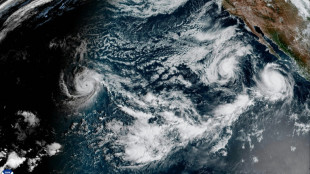 Hurricane Polo approaches Mexico, threatens severe damage

Rules for the emerging deep-sea mining sector should take a "precautionary approach" that protects the environment, the head of the body drafting regulations for the practice told AFP Friday.
At stake is a potential new frontier for developing mineral resources like nickel, cobalt and copper that are crucial for renewable energy technology.
But researchers and environmentalists have long warned it risks destroying habitats and species that are little understood, and could upset delicate ocean processes that affect climate change.
Regulating the industry is the responsibility of the International Seabed Authority (ISA), an independent body established under a UN convention.
Its Council aims to adopt a code this year, after more than a decade of work.
In an interview with AFP, ISA Secretary-General Leticia Carvalho said there was "no rush or delay" on finalising the rules, and urged an approach that prioritises the environment.
"We are developing regulations for an entirely new industry," said Carvalho, who took the top job this year.
"A key principle in this regard is the precautionary approach, which will help us navigate the sustainable use and management of deep-sea mineral resources."
- Divisive issue -
The world paid little attention when the ISA, created in 1994, quietly began negotiating the mining code.
But the effort has taken on new urgency.
Since July 2023, due to a legal clause invoked by the tiny Pacific island nation of Nauru, any country can apply for a mining contract in the name of a company it sponsors.
Nauru Ocean Resources Inc., a subsidiary of Canada's The Metals Company (TMC), wants to begin mining polymetallic nodules in the Pacific as soon as 2026.
It plans to file an exploitation application in June, making the need for a code governing mining all the more pressing.
Carvalho has stressed that rebuilding trust is a priority for her tenure, after her predecessor was accused of favouring mining interests and even misusing funds -- allegations the ISA Secretariat denied.
An oceanographer by training, Carvalho can only guide member states as they decide whether and how to draft a code.
The ISA's Council is deeply divided, with some member states keen to see mining start soon, and others backing a moratorium or even outright ban on seabed exploitation.
Carvalho has projected a scrupulously neutral image on the issue, emphasising the need for science-based decision-making, and equitable sharing of any profits from resources often dubbed a "common heritage of mankind."
"Without a Mining Code, the legal framework for deep-seabed mining in the Area (international seabed) would be incomplete," she said in written answers.
That could open the door to significant legal uncertainty if mining applications are filed without a code.
- 'Realm of wonder' -
Concerns about the impact of mining gained strength with the discovery last year that oxygen was being released on the ocean floor not just by living organisms, but by polymetallic nodules that would be targeted by companies.
The findings have been rejected by the TMC, even though it helped fund the research, and follow-up work is ongoing.
Mining proponents point to the growing need for minerals to drive the renewable energy transition, and the problems associated with on-land exploitation -- including environmental degradation and rights abuses.
Carvalho noted that the "dark oxygen" findings have not yet been replicated, and are the subject of debate.
And she pointed out "common misconceptions" about the prospect of deep-sea mining, including about its proposed scale, as well as what deep-sea ecosystems look like.
"Roughly 0.13 percent of the world's seabed — about 478,000 kilometres squared — could eventually be mined, a relatively small fraction compared to the vastness of the ocean floor," she said.
And while scientists are still learning about life on the seafloor, deep-sea ecosystems "tend to have lower population densities and function under vastly different environmental conditions," Carvalho said.
While running for the job last year, the Brazilian scientist emphasised her background in developing industry regulations, as well as her personal connection to the sea.
"The ocean has always been a fundamental part of who I am," she said.
It is "a realm of wonder and vast opportunities that must be responsibly managed."
N.Shalabi--SF-PST