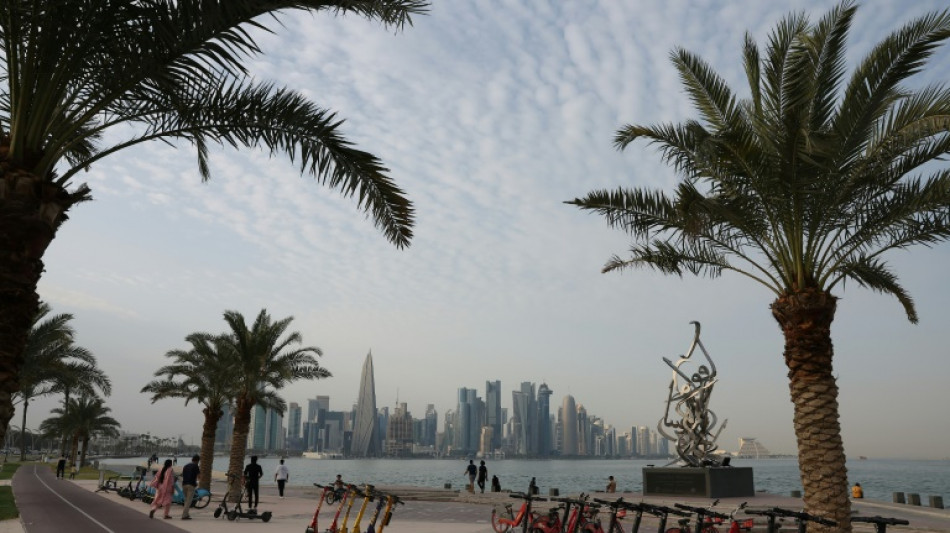
Attack on Iran nuclear plant would leave Gulf without water, Qatar PM warns / Photo: KARIM JAAFAR - AFP/File

 مصلحة مياه القدس توحّد جهودها مع بلديات الرام ومخماس لتعزيز استدامة المياه

 Saudi PIF Retains Top Sovereign Wealth Fund Brand Title for Third Year

 Binance Secures $6.5 Billion Asset-Freezing Order from Abu Dhabi Court

 Malta PM Abela Refuses Parliamentary Question on Maritime Borders Amid Turkey-Libya Deal
Qatar's Prime Minister Sheikh Mohammed bin Abdulrahman bin Jassim Al-Thani has warned that an attack on Iran's Gulf coast nuclear facilities would leave countries across the region without water.
In an interview with right-wing United States media personality Tucker Carlson, who is close to US President Donald Trump, the premier said Doha had simulated the effects of an attack,
The sea would be "entirely contaminated" and Qatar would "run out of water in three days", he said.
The construction of reservoirs since then had increased water capacity, he added, but the risk remained for "all of us" in the region.
"No water, no fish, nothing... no life," Sheikh Mohammed added in the interview published on Friday, the same day that Trump said he had invited Iran to nuclear talks.
Alluding to military action, Trump said he would "rather see a peace deal" but that "the other will solve the problem".
Qatar, which sits 190 kilometres (120 miles) south of Iran, relies heavily on desalination for its water supply, as do other Gulf Arab countries in the arid desert region.
Iran has a nuclear power plant at Bushehr on the Gulf coast, though its uranium enrichment facilities, key to building atomic weapons, are located hundreds of kilometres (miles) inland.
Referring to sites "on the other side of the coast", Sheikh Mohammed said Qatar had "not only military concerns, but also security and... safety concerns".
He said Qatar opposed military action against Iran and that it would "not give up until we see a diplomatic solution between the US and Iran".
Tehran was "willing to engage", he said.
"They are willing to get to a level that creates comforts for everybody. And most importantly, they are focused on mending their relationship with the region, and that's something in itself."
Western powers have long accused Iran of pursuing nuclear weapons, which it denies. In 2015, it signed a deal to lift sanctions in exchange for reining in its nuclear programme, but Trump withdrew from the deal in 2018 during his first term.
M.AlAhmad--SF-PST



