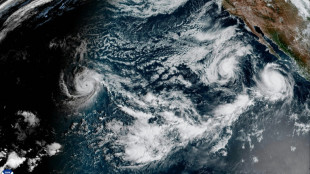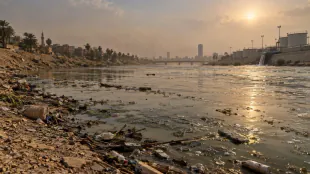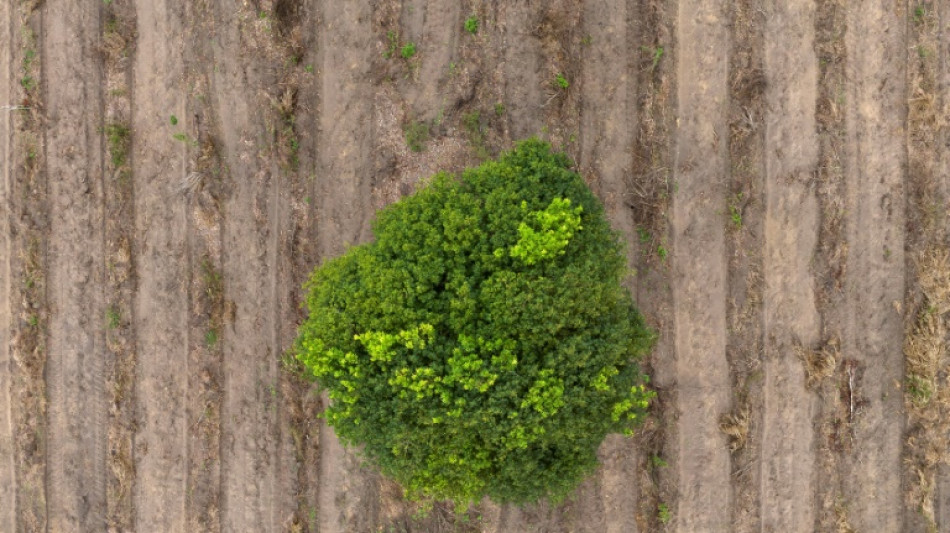
World agrees hard-fought nature funding plan at UN talks / Photo: Pablo PORCIUNCULA - AFP/File

 Dodgers eye three-peat, Red Sox face Yankees as MLB playoffs begin
 Certification of Boeing 737 MAX delayed by software bug

 Celine Dion wows Paris Fashion Week with surprise gig

 AMD buys firm founded by AI 'godmother' Fei-Fei Li
 Italy rebound in Turkey as France win late in Belgium

 Pope says concerns about AI 'should be taken seriously'
 Hurricanes to hoist title banner as NHL season begins
 Justice Alito steps aside from major US climate case

 Willis happy with England exile after retains Top 14 player award

 Spain housing protests keep heat on government as PM seeks new law

 Wissa spoils Zimbabwe homecoming as DR Congo win AFCON qualifier

 UK police release on bail five men held over airbase incident

 Ex-All Black Plummer 'sure' New Zealand will find Super Rugby solution

 Shein sees 1% revenue growth in first half of 2026
 Netherlands regrets Israel retaliation in settlements row

 Moscow seizes Russian assets of German food retailer Metro
 Bulgarian spirits inflamed by new rakia rules

 Documentary turns camera on architect Peter Zumthor

 UK police say releasing on bail five men held over airbase incident
 Trump admin finalizes reversal of US fuel economy standards
 US says no China arms sale plans after envoy cites Trump offer

 Dozens kidnapped in two weekend attacks in northern Nigeria
 Next stop the world: Pathirage wins Asian Games javelin gold

 Aster Launches Perpetual Grid Trading 2.0 with Up to 140,000 $ASTER Liquidity Mining Campaign

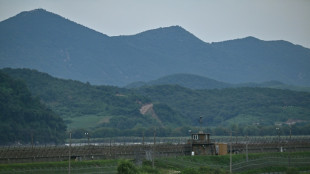 Seoul says North Korean mines 'highly suspected' as cause of DMZ blast

Nations cheered a last-gasp deal to map out nature funding to 2030 Thursday, breaking a deadlock at UN talks seen as a test for international cooperation in the face of geopolitical tensions.
Rich and developing countries hammered out a delicate compromise on raising and delivering the billions of dollars needed to protect species, overcoming stark divisions that had scuttled their previous meeting in Cali, Colombia last year.
Delegates stood and clapped in an emotionally-charged final meeting that saw the key decisions adopted in the final minutes of the last day of rebooted negotiations at the UN's Food and Agriculture Organization headquarters in Rome.
"The applause is for all of you. You have done an amazing job," said COP16 President Susana Muhamad of Colombia.
The decision maps out a way forward on funding, two years after a landmark deal to halt the rampant destruction of nature this decade and protect the ecosystems and wildlife that humans rely on for food, climate regulation and economic prosperity.
It sets out two main strands of action in the coming years -- to find billions of dollars in extra funding for biodiversity and to decide on the institutions that will deliver that money.
- 'Hope' -
Scientists have warned that action is urgent.
A million species are threatened with extinction, while unsustainable farming and consumption destroys forests, depletes soils and spreads plastic pollution to even the most remote areas of the planet.
The COP16 agreement on Thursday is seen as a key next step after a landmark 2022 agreement that saw countries agree to halt the destruction of nature by the end of this decade, including protecting 30 percent of the world's land and seas.
But the talks were also seen as a bellwether for international cooperation more generally.
The meeting comes as countries face a range of challenges, from trade disputes and debt worries to the slashing of overseas aid by new US President Donald Trump
Washington, which has not signed up to the UN's Convention on Biological Diversity, sent no representatives to the meeting.
"Our efforts show that multilateralism can present hope at a time of geopolitical uncertainty," said Steven Guilbeault, Canada's Minister of Environment and Climate Change.
The failure to finalise an agreement in Cali was the first in a string of disappointing outcomes for the planet at UN summits last year and comes as trade disputes and conflicts rattle global cooperation.
A climate finance deal at COP29 in Azerbaijan in November was slammed as disappointing, while separate negotiations about desertification and plastic pollution stalled in December.
Muhamad, who has resigned as Colombia's environment minister but stayed on to serve until after the COP16 conference, said members of her team were brought to tears by the last minute agreement.
Countries have already agreed to deliver $200 billion a year in finance for nature by 2030, including $30 billion a year from wealthier countries to poorer ones.
The total for 2022 was about $15 billion, according to the OECD.
T.Khatib--SF-PST