Global goals on fighting poverty, inequality 'in peril': UN / Photo: AHMAD AL-BASHA - AFP/File

 Dodgers eye three-peat, Red Sox face Yankees as MLB playoffs begin
 Certification of Boeing 737 MAX delayed by software bug

 Celine Dion wows Paris Fashion Week with surprise gig

 AMD buys firm founded by AI 'godmother' Fei-Fei Li
 Italy rebound in Turkey as France win late in Belgium

 Pope says concerns about AI 'should be taken seriously'

 Hurricanes to hoist title banner as NHL season begins

 Justice Alito steps aside from major US climate case

 Willis happy with England exile after retains Top 14 player award

 Spain housing protests keep heat on government as PM seeks new law

 Wissa spoils Zimbabwe homecoming as DR Congo win AFCON qualifier

 UK police release on bail five men held over airbase incident

 Ex-All Black Plummer 'sure' New Zealand will find Super Rugby solution

 Shein sees 1% revenue growth in first half of 2026
 Netherlands regrets Israel retaliation in settlements row

 Moscow seizes Russian assets of German food retailer Metro

 Bulgarian spirits inflamed by new rakia rules

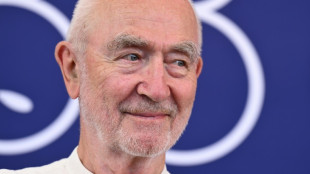 Documentary turns camera on architect Peter Zumthor
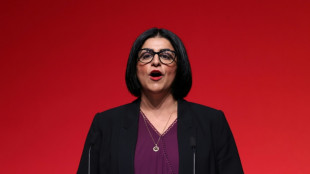
 UK police say releasing on bail five men held over airbase incident

 Trump admin finalizes reversal of US fuel economy standards

 US says no China arms sale plans after envoy cites Trump offer

 Dozens kidnapped in two weekend attacks in northern Nigeria

 Next stop the world: Pathirage wins Asian Games javelin gold

 Aster Launches Perpetual Grid Trading 2.0 with Up to 140,000 $ASTER Liquidity Mining Campaign

 Seoul says North Korean mines 'highly suspected' as cause of DMZ blast

The goals the world set to ease extreme poverty, improve access to drinking water and take steps toward sustainable development for all humanity are "in peril," the United Nations has said in a report published Monday.
"Unless we act now, the 2030 Agenda could become an epitaph for a world that might have been," UN Secretary-General Antonio Guterres warns in a preamble to a report assessing the UN's Sustainable Development Goals for 2030.
In 2015, UN member states adopted 17 goals intended to build a better, more sustainable future for the entire globe by the end of this decade.
"But halfway to 2030, that promise is in peril," the report says, with more than half the world likely to be left behind.
The sustainable development goals are "disappearing in the rear-view mirror."
Experts assessed 140 target areas established under the Sustainable Development Goals, ranging from access to health care and the fight against climate change to combating inequality and leveling access to energy, the report notes.
On more than 30 percent of the targets, either no progress has been reported or even regression has been noted since 2015, and moderate or severe deviation from the desired trajectory has been seen in about half of them.
For example, the Covid-19 pandemic ended a downward trend in extreme poverty, defined as living on less than $2.15 a day.
But at the current rate, 575 million people will still be living in such conditions in 2030, most of them in sub-Saharan Africa. That is down 30 percent since 2015, but far from the hoped-for eradication, the report says.
"Shockingly, the world is back at hunger levels not seen since 2005," the report says.
Around one in three people (2.3 billion) faced moderate or severe food insecurity in 2021, and child malnutrition is still a "global concern," it notes.
"Approximately 1.1 billion people currently live in slums or slum-like conditions in cities, with two billion more expected in the next 30 years," it says.
- Gender equality progress 'too slow' -
The pandemic, which highlighted the fragility of many advances, has had a "devastating" impact on education.
Without new measures, only one country in six will reach the goal of universal access to secondary education by 2030, and 84 million children will not attend school, the report says.
In terms of gender equality, the report highlights "too slow" progress, noting that at the current rate, it would take 286 years to close the gap in legal protection and to abolish discriminatory laws, and 300 years to end child marriage.
And developing countries, "buried under a mountain of debt," are "the hardest hit by our collective failure to invest in the Sustainable Development Goals," said Guterres, who repeatedly called for reform of international financial institutions.
"We cannot persist with a morally bankrupt financial system and expect developing countries to meet targets that developed countries met with far fewer constraints," the report adds.
Against this backdrop, the UN is calling for a September 18-19 summit to adopt "a rescue plan" for the goals.
This would seek a strong new political commitment from member states, as well as support for Guterres's proposal for a stimulus package of an additional $500 billion per year by 2030 to finance sustainable development.
Despite the gloomy picture painted by the report, the UN does point to some hopeful signs.
Infant mortality, for example, fell by 12 percent between 2015 and 2021, and by 2030, almost 150 countries are expected to meet their targets in this area.
Internet access has increased significantly, with 5.3 billion people connected by 2022, while the number of AIDS-related deaths has fallen by 52 percent since 2010.
Since 2015, the proportion of the population with access to safe drinking water or sanitation has also increased.
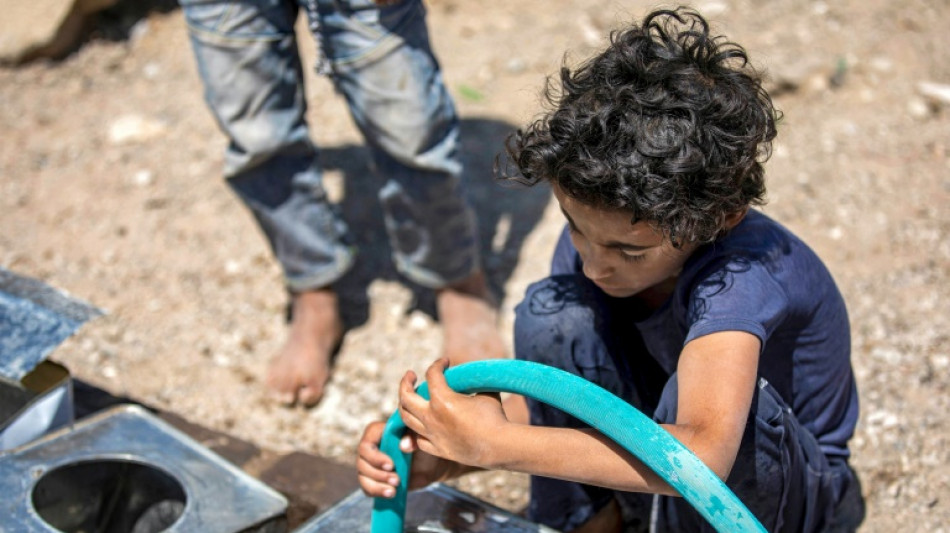
But as with many of the UN targets, progress does not mean success: 2.2 billion people still had no access to safe drinking water in 2022, and 419 million had no choice but to relieve themselves in the open.
B.Khalifa--SF-PST