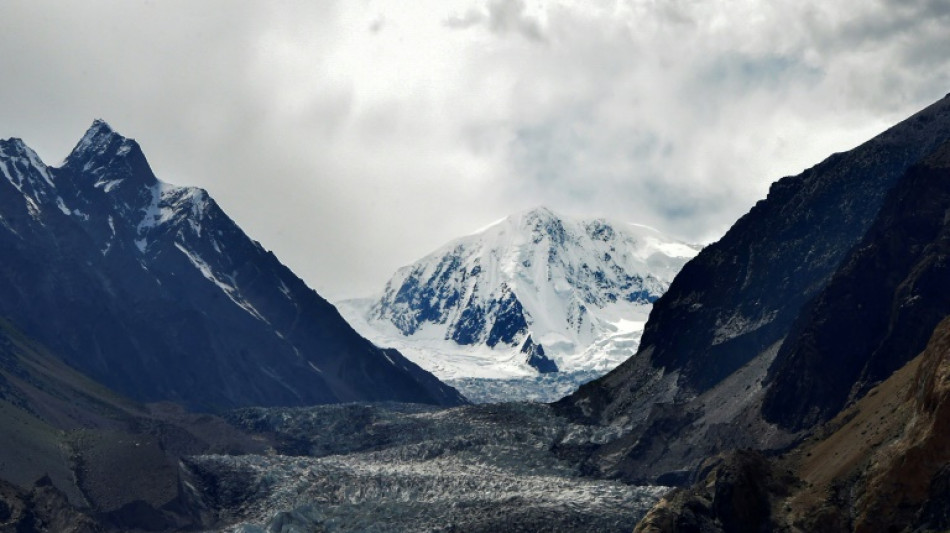
Himalayan glaciers melting 65 percent faster than previous decade: study / Photo: Abdul MAJEED - AFP/File

 Trump denies offering to sell arms to China's Xi

 Wemby ready for NBA Spurs to move rivals in climb to top

 Ukraine to postpone some spending amid delays in aid: PM

 Tuchel says Czech Republic game 'not yet a must-win'

 MaXhosa puts South Africa on the Paris fashion map

 Rose, Scott among 2027 World Golf Hall of Fame finalists

 Brunson says NBA champion Knicks can't get satisfaction

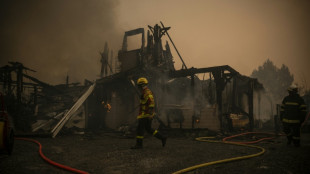 France puts out largest wildfire since 1949

 Real Madrid's Perez summoned over Barcelona referee payments comments

 Oil takes off again, Wall Street dips after Trump rejects Iran truce offer
 AlgoQuant Asset Management Selects Liquid Mercury to Enhance Digital Asset Trading Infrastructure

 UK to reopen refugee resettlement scheme to push 'safe' migration

 Pope urges Europe to help combat 'lies and deceit' in world affairs
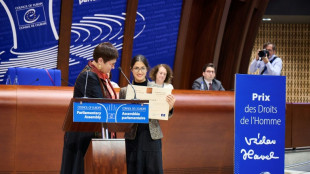 Iranian lawyer Nasrin Sotoudeh wins Council of Europe's rights prize

 French far-right's Bardella denies alleged 2013 antisemitic comments

 Oil up, Wall Street dips after Trump rejects Iran truce offer

 Gakpo withdraws from Netherlands squad

 SpaceX puts Starship megarocket in orbit for first time
 Iran denies link to suspected bomb plot at UK airbase used by US
 Ex-boss Mancini says City charges 'not my concern'
 Berlin Marathon winner Assefa finished race with torn Achilles

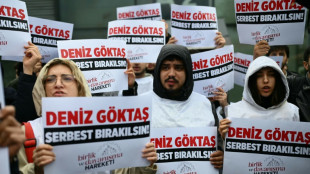 Comedian convicted for Erdogan 'insult' but freed pending appeal

 French prosecutors seek two-year sentence for ex-minister Dati in graft case

 Eala makes fast start as weather and transport woes hit Asian Games

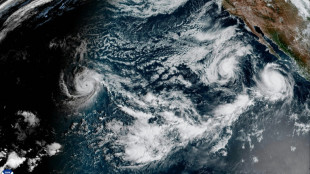 Hurricane Polo approaches Mexico, threatens severe damage

Himalayan glaciers providing critical water to nearly two billion people are melting faster than ever before due to climate change, exposing communities to unpredictable and costly disasters, scientists warned Tuesday.
The glaciers disappeared 65 percent faster from 2011 to 2020 compared with the previous decade, according to a report by the International Centre for Integrated Mountain Development (ICIMOD).
"As it gets warmer, ice will melt, that was expected, but what is unexpected and very worrying is the speed," lead author Philippus Wester told AFP. "This is going much faster than we thought."
Glaciers in the Hindu Kush Himalaya (HKH) region are a crucial water source for around 240 million people in the mountainous regions, as well as for another 1.65 billion people in the river valleys below, the report said.
Based on current emissions trajectories, the glaciers could lose up to 80 percent of their current volume by the end of the century, said the Nepal-based ICIMOD, an inter-governmental organisation that also includes member countries Afghanistan, Bangladesh, Bhutan, China, India, Myanmar and Pakistan.
The glaciers feed 10 of the world's most important river systems, including the Ganges, Indus, Yellow, Mekong and Irrawaddy, and directly or indirectly supply billions of people with food, energy, clean air and income.
"With two billion people in Asia reliant on the water that glaciers and snow here hold, the consequences of losing this cryosphere (a frozen zone) are too vast to contemplate," said ICIMOD's deputy chief Izabella Koziell.
- 'Too vast to contemplate' -
Even if global warming is limited to the 1.5 to 2.0 degrees Celsius from pre-industrial levels agreed to in the Paris climate treaty, the glaciers are expected to lose a third to a half of their volume by 2100, the peer-reviewed report said.
"It underscores the need for urgent climate action," Wester said. "Every small increment will have huge impacts and we really, really need to work on climate mitigation... that is our plea."
Wester said improving technologies and previously classified high-resolution satellite imagery meant predictions could be made with a good degree of accuracy.
The world has warmed an average of nearly 1.2 C since the mid-1800s, unleashing a cascade of extreme weather, including more intense heatwaves, more severe droughts and storms made more ferocious by rising seas.
Hardest hit are the most vulnerable people and the world's poorest countries, which have done little to contribute to the fossil fuel emissions that drive up temperatures
Amina Maharjan, a livelihoods and migration specialist at ICIMOD, said communities do not have the support they need.
"Most of the adaptation is communities and households reacting (to climate events). It is inadequate to meet the challenges posed by climate change," Maharjan said.
"What is going to be very critical moving forward is anticipating change," she said.
M.AlAhmad--SF-PST