Extreme weather killed 195,000 in Europe since 1980 / Photo: Patrick T. FALLON - AFP

 Trump denies offering to sell arms to China's Xi

 Wemby ready for NBA Spurs to move rivals in climb to top

 Ukraine to postpone some spending amid delays in aid: PM

 Tuchel says Czech Republic game 'not yet a must-win'

 MaXhosa puts South Africa on the Paris fashion map

 Rose, Scott among 2027 World Golf Hall of Fame finalists

 Brunson says NBA champion Knicks can't get satisfaction

 France puts out largest wildfire since 1949

 Real Madrid's Perez summoned over Barcelona referee payments comments

 Oil takes off again, Wall Street dips after Trump rejects Iran truce offer

 AlgoQuant Asset Management Selects Liquid Mercury to Enhance Digital Asset Trading Infrastructure
 UK to reopen refugee resettlement scheme to push 'safe' migration

 Pope urges Europe to help combat 'lies and deceit' in world affairs
 Iranian lawyer Nasrin Sotoudeh wins Council of Europe's rights prize

 French far-right's Bardella denies alleged 2013 antisemitic comments

 Oil up, Wall Street dips after Trump rejects Iran truce offer

 Gakpo withdraws from Netherlands squad

 SpaceX puts Starship megarocket in orbit for first time
 Iran denies link to suspected bomb plot at UK airbase used by US
 Ex-boss Mancini says City charges 'not my concern'
 Berlin Marathon winner Assefa finished race with torn Achilles
 Comedian convicted for Erdogan 'insult' but freed pending appeal

 French prosecutors seek two-year sentence for ex-minister Dati in graft case

 Eala makes fast start as weather and transport woes hit Asian Games

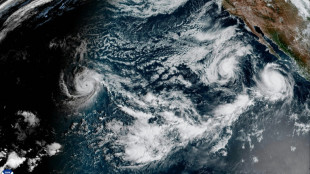 Hurricane Polo approaches Mexico, threatens severe damage
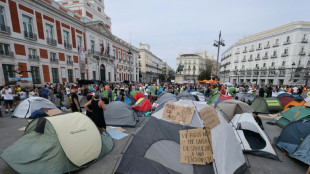
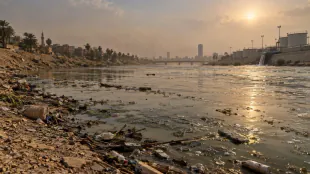
Extreme weather conditions in Europe have killed almost 195,000 people and caused economic losses of more than 560 billion euros since 1980, the European Environment Agency said Wednesday.
"Nearly 195,000 fatalities have been caused by floods, storms, heat- and coldwaves, forest fires and landslides" between 1980 and 2021, the EAA said in its report.
Of the 560 billion euros ($605 billion) in losses, only 170 billion, or 30 percent, were insured, the EEA said, as it launched a new online portal collating recent data on the impact of extreme weather.
"To prevent further losses, we need to urgently move from responding to extreme weather events...to proactively preparing for them," EEA expert Aleksandra Kazmierczak told AFP.
According to the latest data, heatwaves accounted for 81 percent of deaths and 15 percent of financial losses.
Europe needs to take measures to protect its ageing population, with the elderly particularly sensitive to extreme heat, the EEA said.
"Most national adaptation policies and health strategies recognise the impacts of heat on cardiovascular and respiratory systems. But less than half cover direct impacts of heat like dehydration or heat stroke," it said.
The summer of 2022 saw more deaths than usual in Europe following repeated heatwaves, but the 2022 deaths were not included in the data published on Wednesday.
There were 53,000 more deaths in July 2022 than the monthly average in 2016-2019, up by 16 percent, though not all of those deaths were directly attributed to the heat, the EEA said.
Spain registered more than 4,600 deaths linked to the extreme heat in June, July and August.
Climate modelling has predicted longer, more intense and more frequent heatwaves.
In February 2022, the EAA said extreme weather killed 142,000 people and caused 510 billion euros in losses for the period 1980-2020.
The increase in the figures released on Wednesday was partly due to the fact that in 2021, flooding in Germany and Belgium led to economic losses of almost 50 billion euros.
In terms of deaths, a change in methodology in France and Germany was responsible for the large variation, the EEA said.
- 'Devastating consequences' -
Climate change caused by humans increased the risk of drought five- or six-fold in 2022, a year when forest fires ravaged twice as much territory as in recent years, the EEA said.
Droughts could end up being very costly.
Economic losses could rise from nine billion euros per year currently to 25 billion euros at the end of the century if the planet warms by 1.5C degrees.
That could climb to 31 billion euros if it warms by 2C and 45 billion euros if it warms by 3C, according to scientific scenarios.
The consequences for agriculture could be "devastating", the EEA warned.
"Farmers can limit adverse impacts of rising temperature and droughts by adapting crop varieties, changing sowing dates and with changed irrigation patterns," the report said.
Without changes, yields and farm incomes are projected to decline in the future, it said.
While human losses from flooding are much lower, accounting for just two percent of the total, they are the most costly, accounting for 56 percent of economic losses.
M.AlAhmad--SF-PST