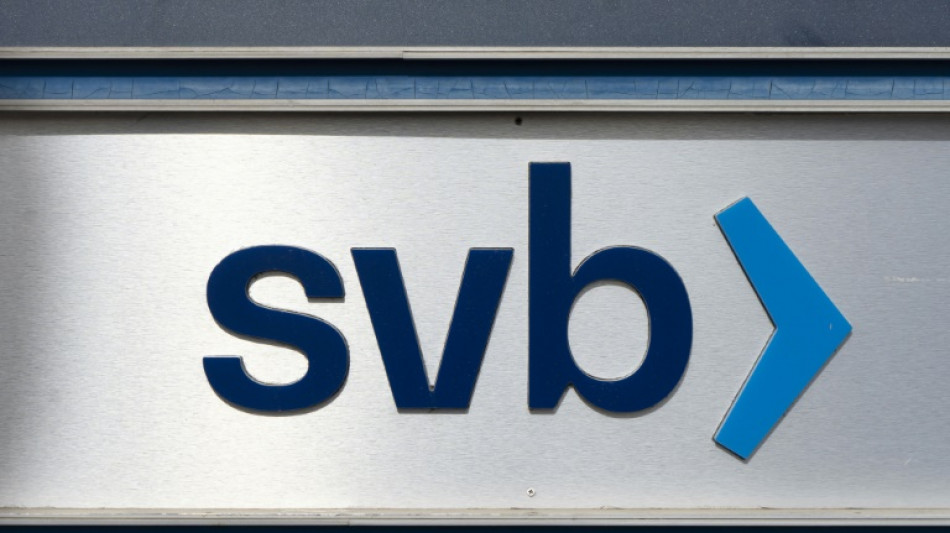
Biden urges US regulators to restore tougher rules on midsize banks / Photo: REBECCA NOBLE - AFP

 Oil up, Wall Street dips after Trump rejects Iran truce offer

 Gakpo withdraws from Netherlands squad

 SpaceX puts Starship megarocket in orbit for first time

 Iran denies link to suspected bomb plot at UK airbase used by US

 Ex-boss Mancini says City charges 'not my concern'

 Berlin Marathon winner Assefa finished race with torn Achilles

 Comedian convicted for Erdogan 'insult' but freed pending appeal

 French prosecutors seek two-year sentence for ex-minister Dati in graft case

 Eala makes fast start as weather and transport woes hit Asian Games
 Hurricane Polo approaches Mexico, threatens severe damage

 Energy markets rally after Trump rejects Iran truce offer

 Japanese convenience store enlists Lady Gaga to bolster recruitment

 Seoul summons Ukraine envoy in row over North Korean POWs

 Ireland 'raised awareness worldwide' in Israel game: Hallgrimsson

 Colombian police capture wife, daughter of Ecuador drug lord

 More Asian Games woes as bus takes Pakistan team to wrong venue

 Radio frequencies vital to Earth observation must be protected: UN

 Comedian on trial for insulting Erdogan in standup show

 Women's Fashion Week kicks off in Paris

 Pope arrives in French border city to speak on united Europe

 The wildfires choking Indonesia, sparking regional haze

 PU Prime Deepens Argentina Presence Through FX Expo Buenos Aires 2026

 Nothing to seal here: NZ police help stranded pup home

 White House releases list of products US, China could tax less
 'Pseudo-journalism': Partisan 'news' sites target US midterms

US President Joe Biden called on banking regulators Thursday to reinstate tougher rules on midsized banks, saying that doing so would prevent future failures like that of Silicon Valley Bank.
While his predecessor Donald Trump eased rules for banks with between $100 billion and $250 billion in assets, Biden urged regulators to instead consider a set of reforms to "reduce the risk of future banking crises," according to a White House fact sheet.
A White House official called the measures "common-sense steps that can be taken under existing authority" and without congressional approval, in a briefing with journalists.
The announcement comes as regulators, lawmakers and other stakeholders continue to investigate the speedy demise of SVB and two other midsized US banks earlier in March. Those failures spurred fears of widespread financial contagion that have eased somewhat in recent days.
While the largest US banks such as Citigroup and JPMorgan Chase are subjected to the strictest capital and liquidity requirements, midsized banks saw an easing of standards under Trump.
The original Dodd-Frank law passed in the wake of the 2008 financial crisis imposed stricter standards on banks with at least $50 billion in assets.
But a 2018 reform signed into law by Trump removed tougher standards on banks with assets of $50 billion to $100 billion.
For banks with assets between $100 billion and $250 billion, the tougher rules would not automatically be adopted unless regulators imposed them on a case-by-case basis.
Under Thursday's announcement, Biden called for annual stress tests for banks of this size; so-called "living wills" laying out how assets would be wound down in case of failure; and strong capital requirements.
The White House fact sheet did not specifically mention the Federal Reserve or the Federal Deposit Insurance Corporation (FDIC) but was addressed at "federal banking agencies, in consultation with the Treasury Department."
- Deregulation 'may have gone too far' -
In a separate speech, Treasury Secretary Janet Yellen suggested recent banking sector turmoil is a reminder that work on reform remains unfinished, and that there is a need to "consider whether deregulation may have gone too far."
While the failures of SVB and later Signature Bank did not trigger a financial meltdown, the "substantial interventions" required suggests more work needs to be done, Yellen said.
SVB bank was taken over by the FDIC on March 10 following a bank run of depositors after the California lender disclosed losses on assets sold quickly to raise liquidity.
Some of the lender's problems were due to its heavy exposure to a single sector -- technology -- and weak risk management practices that left it exposed to unfavorable interest rate changes.
At congressional hearings this week, the Fed vice chair for supervision Michael Barr called SVB's failure a "textbook case of mismanagement," while also acknowledging deficiencies in oversight.
"I think that any time you have a bank failure like this, bank management clearly failed, supervisors failed and our regulatory system failed," Barr said Wednesday.
Barr also said that Fed examiners called out risk management deficiencies at SVB during the course of banking examination, but that the issues were not addressed in time.
Regulators from the Fed, which oversees the stress tests, and FDIC have told congressional panels they were reviewing oversight of SVB and would address any regulatory failings.
Their reports will be released by May 1.
American Bankers Association President Rob Nichols warned Thursday that with reviews by the Fed and other agencies ongoing, "it is premature to call for rule changes by independent regulatory agencies" before determining the extent to which supervisors failed to fully utilize their tools.
E.Qaddoumi--SF-PST