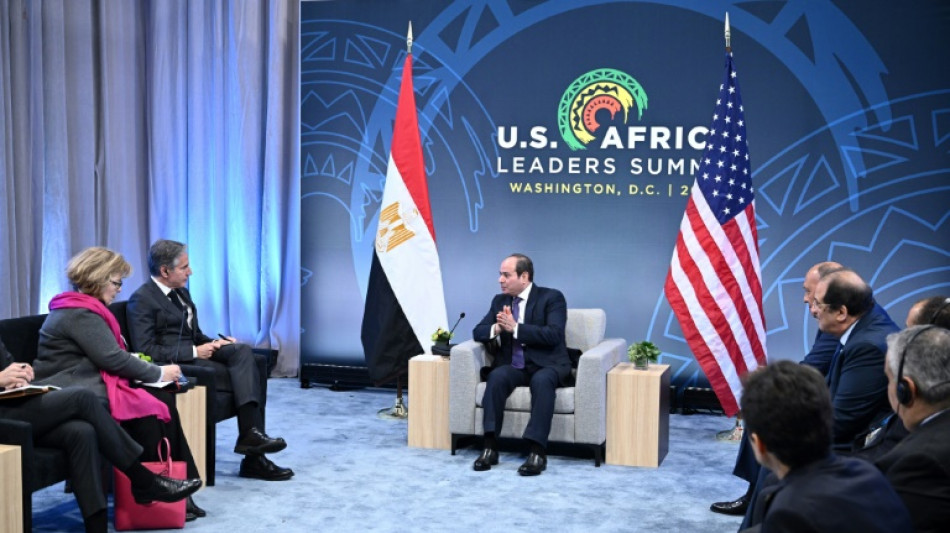
Egypt seeks US help in reviving Ethiopia dam deal / Photo: MANDEL NGAN - POOL/AFP

 مصلحة مياه القدس توحّد جهودها مع بلديات الرام ومخماس لتعزيز استدامة المياه

 Saudi PIF Retains Top Sovereign Wealth Fund Brand Title for Third Year

 Binance Secures $6.5 Billion Asset-Freezing Order from Abu Dhabi Court

 Malta PM Abela Refuses Parliamentary Question on Maritime Borders Amid Turkey-Libya Deal

 محافظ طولكرم يدعو لمبادرة مجتمعية لخفض تكاليف الأعراس وتعزيز التكافل
Egyptian President Abdel Fattah al-Sisi on Wednesday sought US help in pressing Ethiopia into an agreement on a mega-dam that the parched Arab country sees as an existential threat.
Visiting Washington for a US-Africa summit, Sisi raised the Grand Ethiopian Renaissance Dam with Secretary of State Antony Blinken, who met a day earlier with Ethiopian Prime Minister Abiy Ahmed.
"This is a very vital and existential matter to us. And we thank the United States for its support and its attention," Sisi told Blinken.
"Reaching a legally binding agreement can achieve something good in accordance with international standards and norms. We are not asking for anything other than that," he said.
"We need your support on this matter."
The massive $4.2 billion dam on the Nile, set to be the largest in Africa, has been the source of intense friction between Ethiopia and Egypt as well as Sudan.
Egypt, which relies on the river for 97 percent of its irrigation and drinking water, fears that the dam will reduce its already scarce supply of water.
Abiy has promised to continue talks on the dam but has also gone ahead both with filling and operating the initial turbines.
The previous US administration of Donald Trump, a close ally of army chief turned president Sisi, sought to negotiate a solution and cut off aid to Ethiopia after accusing Addis Ababa of failing to engage in good faith.
Trump, while in the White House, made waves by suggesting Egypt could attack the dam, a possibility publicly dismissed by Cairo.
President Joe Biden's administration has taken a lower-key approach, favoring diplomacy but not linking aid to the issue.
But Biden's relations soured with Ethiopia over unrelated concerns of rights abuses in an offensive against rebels in the Tigray region, which has come to a halt after a deal last month.
Biden took office seeking a greater distance from Sisi over domestic rights concerns but he has welcomed his role in brokering a ceasefire last year in the Gaza Strip and in hosting last month's UN climate summit.
H.Darwish--SF-PST



