
Experts encouraged by Alzheimer drug preliminary data / Photo: ALAIN JOCARD - AFP/File

 'Never again Bolsonaro': thousands march ahead of Brazil election runoff

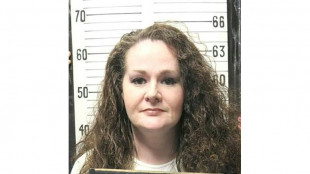 After botched execution, US woman was nearly taken off life support before revival

 Searing AIDS drama 'Elsinore' opens London film festival

 Evicted pensioner who sparked Spain housing protests dies: tenant union

 Golf star Rahm quitting LIV tour over 'unacceptable' terms

 Thousands march fearing return of a Bolsonaro presidency in Brazil

 French PM denies police ordered to confront student protesters
 Rubio touts US power, calls on Europe to emerge from 'slumber'

 Trump says 'we don't think' Russian plague is bio-weapon

 Five children among 26 killed in Ukraine after Russian strikes

 Man City should 'accept' punishment for rule breaches, says Lineker

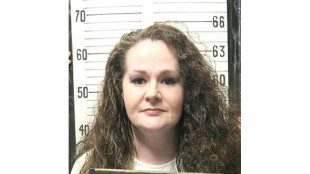
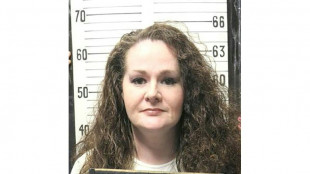 US woman who survived botched execution is awake and speaking

 From 1800s to modern pharma: a Nobel-winning chemistry quest

 Southampton boss Eckert given suspended ban over 'Spygate'

 Russia warns of 'false' information as second plague case reported

 IEA ready to release more oil reserves if necessary

 HSBC 'consults' over UK unit job cuts amid AI adoption

 UK court quashes five ex-traders' Libor rate rigging convictions

 XM Receives “Global Customer Experience Leader Award 2026” at the TrustFinance Performance Awards

 Stocks slide as oil climbs on Mideast flareup

 Heavy casualties in Ukraine after Russian strikes

 French wine harvest set to hit historic low

 Kyiv 'cannot agree' to EU membership limiting food exports: minister

 Arteta targets more Arsenal glory after signing new deal until 2030

 Russell hit with Singapore grid penalty for taking new power unit

Experts on Wednesday said they were encouraged after preliminary data for a new Alzheimer's drug showed it slowed cognitive decline, the first medicine to accomplish this goal.
The treatment, called lecanemab, was tested in a clinical trial of nearly 1,800 people, and slowed cognitive decline by 27 percent across an 18-month period, according to early results announced by makers Biogen and Eisai.
"This is the first drug that's been shown to not only remove the build-up of a protein called amyloid in the brain, but to have a small but statistically significant impact on cognitive decline in people with early-stage disease," said Susan Kohlhaas of Alzheimer's UK.
But experts cautioned their comments were tempered by the preliminary nature of the results, which were announced by press release ahead of publication in a peer-reviewed journal, as the companies look to bring the treatment to market as early as January 2023 in the United States.
Biogen previously brought another Alzheimer's drug to market called Aduhelm, but there was significant controversy over the evidence it worked, and its approval led to three high-level resignations in the US Food and Drug Administration.
According to a statement by Biogen and Eisai, in addition to slowing cognitive decline, the new treatment also slowed build-up in the brain of the protein amyloid, which forms sticky plaques and kills brain cells.
Side effects included higher rates of swelling and bleeding in the brain in the group that received the treatment compared to the group that received a placebo.
Both treatment and placebo groups had people of similar characteristics, including a broad range of underlying conditions. A quarter were either Hispanic or African American.
Michel Vounatsos, CEO of Biogen, said the announcement "gives patients and their families hope that lecanemab, if approved, can potentially slow the progression of Alzheimer's disease."
Masud Husain, a professor of neurology at the University of Oxford, said in a statement: "While the summary of the results certainly seems very encouraging, we have to be cautious until we are allowed to review the data fully.
"It is also important to bear in mind that the trial results apply only to people with mild Alzheimer's disease, not everyone with the condition, and that there were important side effects of the drug, including bleeds in the brain."
S.AbuJamous--SF-PST