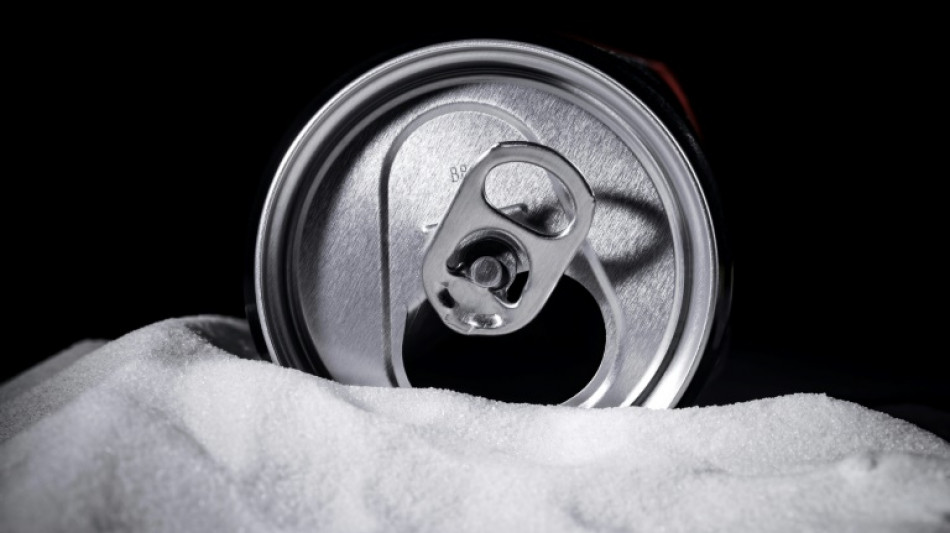
Sweeteners may be linked to heart disease risk, study suggests / Photo: JOEL SAGET - AFP/File

 Golf star Rahm quitting LIV tour over 'unacceptable' terms

 Thousands march fearing return of a Bolsonaro presidency in Brazil

 French PM denies police ordered to confront student protesters

 Rubio touts US power, calls on Europe to emerge from 'slumber'

 Trump says 'we don't think' Russian plague is bio-weapon

 Five children among 26 killed in Ukraine after Russian strikes

 Man City should 'accept' punishment for rule breaches, says Lineker

 US woman who survived botched execution is awake and speaking

 From 1800s to modern pharma: a Nobel-winning chemistry quest

 Southampton boss Eckert given suspended ban over 'Spygate'

 Russia warns of 'false' information as second plague case reported

 IEA ready to release more oil reserves if necessary

 HSBC 'consults' over UK unit job cuts amid AI adoption

 UK court quashes five ex-traders' Libor rate rigging convictions

 XM Receives “Global Customer Experience Leader Award 2026” at the TrustFinance Performance Awards

 Stocks slide as oil climbs on Mideast flareup

 Heavy casualties in Ukraine after Russian strikes

 French wine harvest set to hit historic low

 Kyiv 'cannot agree' to EU membership limiting food exports: minister

 Arteta targets more Arsenal glory after signing new deal until 2030

 Russell hit with Singapore grid penalty for taking new power unit

 Spotify expands audiobooks to more than 180 markets

 French-Japanese duo wins chemistry Nobel for solving molecular 'mystery'

 England's Nations League surge helps heal World Cup wounds

 Mayor of opposition stronghold Izmir defects to Erdogan party

A large study suggested Thursday that artificial sweetener could be associated with a higher risk of heart disease, however experts urged caution about the findings.
Sweeteners are consumed by millions every day in products like diet soda, partly as a way to avoid weight gain from sugar -- but the healthiness of these substitutes has long been a matter of controversy.
Aiming to assess the heart disease risk of sweeteners, researchers at the French INSERM institute analysed the data of more than 100,000 adults in France who self-reported their diet, lifestyle and medical history between 2009-2021 as part of the NutriNet-Sante study.
Thirty-seven percent of the participants consumed artificial sweeteners, with an average intake of 42 milligrams a day -- the equivalent of one packet of sweetener or about a third of a can of diet soda.
During the nine-year follow-up period, 1,502 heart problems were recorded, including heart attack, angina and stroke.
The research, published in the journal BMJ, indicated that heart disease occurred in 346 out of 100,000 people who consume a high level of sweetener, compared to 314 per 100,000 for non-consumers.
"These results, in line with the latest WHO report published this year, do not support the use of sweeteners as a safe alternative to sugar," said INSERM's Mathilde Touvier, who coordinated the study.
An April report from the World Health Organization said that "there is no clear consensus on whether non-sugar sweeteners are effective for long-term weight loss or maintenance, or if they are linked to other long-term health effects".
Another study published earlier this year using Nutri-Net data found a correlation between cancer and sweeteners such as aspartame, acesulfame potassium and sucralose.
However such observational studies have come under increased criticism because they cannot establish the cause of the differences they find, which could come from other sources.
Naveed Sattar, a professor of metabolic medicine at Glasgow University not involved in the sweetener study, said that it "cannot answer the question posed".
"This is because there are clearly major differences in many characteristics of people who consume artificial sweeteners compared to those who do not consume any," he said.
He called for governments to fund long-term, randomised trials "to get closer to the truth".
M.Qasim--SF-PST