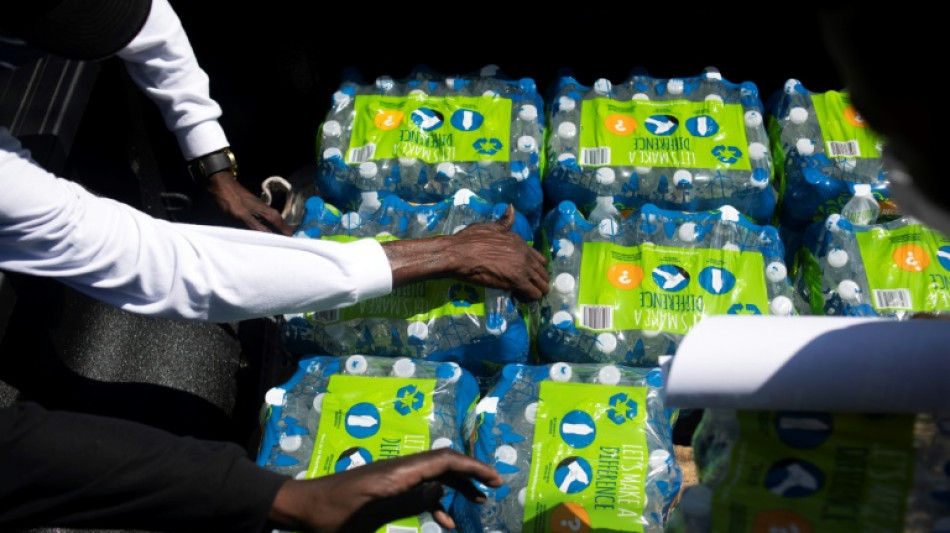
Mississippi declares drinking water emergency for state capital / Photo: Mark Felix - AFP/File

 مصطفى معروفي ينشر قصيدة 'أصوغ كلامي أهتدي بتجاربي'

 Luxembourg Pay Rise Delayed as Regional and World Headlines Develop

 Audience to Choose the Set List at Luxembourg's First FAMIL Jukebox Night

 Black Friday Discounts Cut Prices on Two Top-Rated Wiper Blades

 Twickenham Grounds Team Prepares Pitch for Six Matches in Three Days

 مواجهة في البرازيل بين نشطاء وفلسطينيين وسياح إسرائيليين حول جدارية مؤيدة

 رئيس جامعة القدس يستعرض نموذج الشراكة بين التعليم العالي والصناعة في قمة QS بأبوظبي

 ابتكارات فلسطينية في مسابقة "سيف" العالمية بالرياض

 تحذير أمني من تكثيف إسرائيل إرسال رسائل نصية مستهدفة للفلسطينيين

 Polanski Accuses Sadiq Khan of Undermining Thames Water Nationalisation

 Nigeria Envoy's $61 Billion Claim Faces Scrutiny Amid Diplomatic Tensions
Mississippi officials declared a health emergency Tuesday after historic flooding damaged treatment systems and left 180,000 people in the state capital Jackson without safe drinking water.
Governor Tate Reeves warned residents about the crisis and on Tuesday deployed the National Guard to assist in water distribution throughout the city.
The Mississippi State Department of Health (MSDH) said water treatment pumps had failed and there were low levels of water in storage tanks serving Jackson.
Many city taps were dry, and water that was flowing was contaminated or untreated, officials cautioned.
"We do not have reliable running water at scale," Reeves told a press conference late Monday.
"The city cannot produce enough water to fight fires, to reliably flush toilets and to meet other critical needs," he said, adding emergency services would distribute drinking water to residents in a "massively complicated logistical task."
Facing aging infrastructure, Jackson has been under a boil water order since late July.
Recent torrential rains intensified the crisis as the city's Pearl River has faced historic flooding, which finally started to ease Monday, Jackson City Hall said in a statement.
"It is no surprise that we have a very fragile water-treatment facility, and (the city's treatment plant) OB Curtis receives its water from the reservoir, and because of the river water coming into the plant, we have to change how we treat the water," Jackson Mayor Chokwe Antar Lumumba said at a press conference, according to the Mississippi Clarion Ledger newspaper.
According to the MSDH, water treatment plants in Jackson do not have sufficient maintenance staff or certified operators to safely run the system, leading to potential for contamination from dangerous organisms such as E.Coli and Giardia.
Reeves urged residents to avoid the water coming out of their faucets.
"In too many cases, it is raw water from the reservoir being pushed through the pipes. Be smart, protect yourself, protect your family, preserve water, look out for your fellow man and look out for your neighbors."
Without water, Jackson public schools were conducting virtual learning Tuesday, with no return to school yet scheduled.
White House spokeswoman Karine Jean-Pierre said President Joe Biden had been briefed on the situation.
"At his direction, we have been in regular contact with state and local officials, including Mayor Lumumba, and made clear that the Federal Government stands ready to offer assistance," she tweeted.
Jackson's water system has suffered "significant deficiencies" since 2016, according to an MDSH report, with lead-contaminated pipes often more than a century old.
The majority-Black city's former public works director Charles Williams told AFP in April it could cost up to $5 billion to replace the necessary infrastructure.
J.AbuShaban--SF-PST

