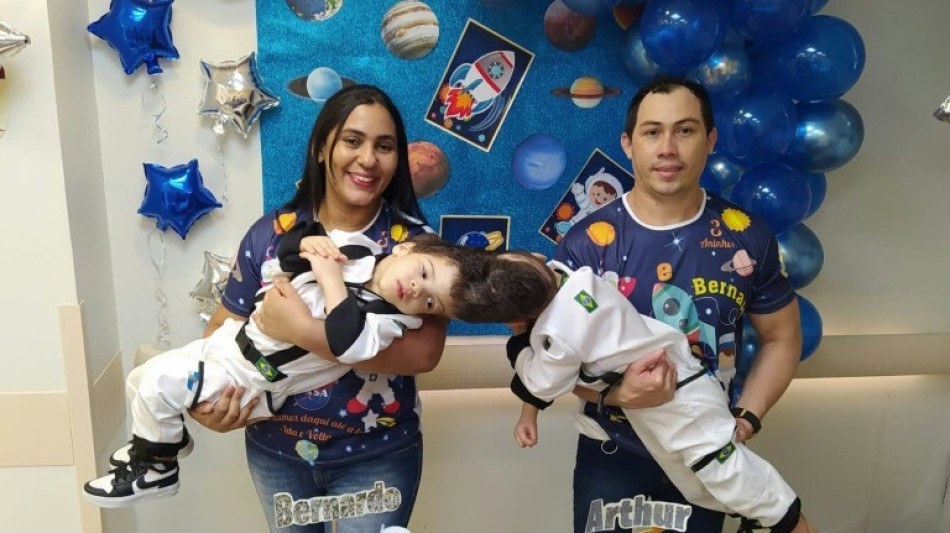
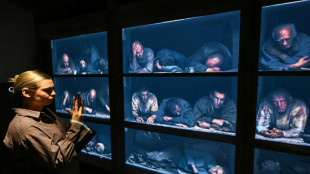
Conjoined twins separated with help of virtual reality in Brazil / Photo: Arthur PEREIRA - Fitamarela/AFP

 US woman who survived botched execution is awake and speaking

 From 1800s to modern pharma: a Nobel-winning chemistry quest

 Southampton boss Eckert given suspended ban over 'Spygate'

 Russia warns of 'false' information as second plague case reported

 IEA ready to release more oil reserves if necessary

 HSBC 'consults' over UK unit job cuts amid AI adoption
 UK court quashes five ex-traders' Libor rate rigging convictions
 XM Receives “Global Customer Experience Leader Award 2026” at the TrustFinance Performance Awards

 Stocks slide as oil climbs on Mideast flareup
 Heavy casualties in Ukraine after Russian strikes
 French wine harvest set to hit historic low

 Kyiv 'cannot agree' to EU membership limiting food exports: minister

 Arteta targets more Arsenal glory after signing new deal until 2030

 Russell hit with Singapore grid penalty for taking new power unit

 Spotify expands audiobooks to more than 180 markets

 French-Japanese duo wins chemistry Nobel for solving molecular 'mystery'

 England's Nations League surge helps heal World Cup wounds

 Mayor of opposition stronghold Izmir defects to Erdogan party
 Mertens beats Gauff to set up Swiatek clash at China Open
 Benin full of pride at role in Messi's last dance

 France suspends stun grenade use at student protests ahead of PM speech

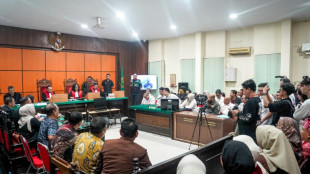 Indonesian court hears 'negligence' complaint against state over fires, haze

 Rubio in Greece to urge against Western civilisation 'decline'

 Micron workers at Taiwan plant vote in favour of strike

 In 'The Social Reckoning,' Jeremy Allen White takes on Facebook's 'frightening' ambition

Conjoined twins born in Brazil with a fused head and brain have been separated in what doctors described Monday as the most complex surgery of its kind, which they prepared for using virtual reality.
Arthur and Bernardo Lima were born in 2018 in the state of Roraima in northern Brazil as craniopagus twins, an extremely rare condition in which the siblings are fused at the cranium.
Joined at the top of the head for nearly four years -- most of that spent in a Rio de Janeiro hospital outfitted with a custom bed -- the brothers are now able to look each other in the face for the first time, after a series of nine operations culminating in a marathon 27-hour surgery to separate them.
London-based medical charity Gemini Untwined, which helped carry out the procedure, described it as the "most challenging and complex separation to date," given that the boys shared several vital veins.
"The twins had the most serious and difficult version of the condition, with the highest risk of death for both," said neurosurgeon Gabriel Mufarrej of the Paulo Niemeyer State Brain Institute (IECPN) in Rio, where the procedure was performed.
"We're very satisfied with the outcome, because no one else believed in this surgery at first, but we always believed there was a chance," he said in a statement.
Members of the medical team, which included nearly 100 staff, prepared for the delicate final stages of the surgery on June 7 and 9 with the help of virtual reality, said Gemini Untwined.
Using brain scans to create a digital map of the boys' shared cranium, surgeons practiced for the procedure in a trans-Atlantic virtual-reality trial surgery.
British neurosurgeon Noor ul Owase Jeelani, the lead surgeon for Gemini Untwined, called the virtual reality prep session "space-age stuff."
"It's just wonderful, it's really great to see the anatomy and do the surgery before you actually put the children at any risk," he told British news agency PA.
"You can imagine how reassuring that is for the surgeons... To do it in virtual reality was just really man-on-Mars stuff."
Pictures and videos released by medical staff showed the boys lying side-by-side on a hospital bed post-surgery, little Arthur reaching out to touch his brother's hand.
In tears, the boys' mother, Adriely Lima, described the family's relief.
"We've been living in the hospital for nearly four years," she said.
P.AbuBaker--SF-PST