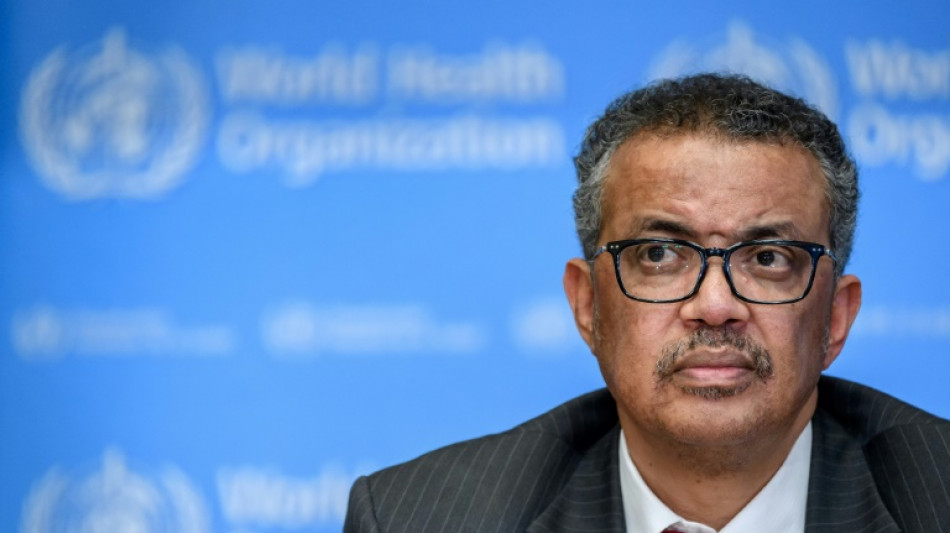
WHO to say if it will trigger highest alert on monkeypox / Photo: Fabrice COFFRINI - AFP/File

 US woman who survived botched execution is awake and speaking
 From 1800s to modern pharma: a Nobel-winning chemistry quest
 Southampton boss Eckert given suspended ban over 'Spygate'
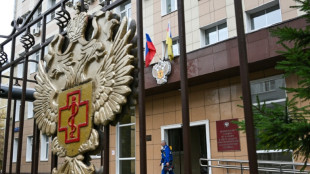 Russia warns of 'false' information as second plague case reported
 IEA ready to release more oil reserves if necessary
 HSBC 'consults' over UK unit job cuts amid AI adoption
 UK court quashes five ex-traders' Libor rate rigging convictions
 XM Receives “Global Customer Experience Leader Award 2026” at the TrustFinance Performance Awards
 Stocks slide as oil climbs on Mideast flareup
 Heavy casualties in Ukraine after Russian strikes
 French wine harvest set to hit historic low
 Kyiv 'cannot agree' to EU membership limiting food exports: minister
 Arteta targets more Arsenal glory after signing new deal until 2030
 Russell hit with Singapore grid penalty for taking new power unit

 Spotify expands audiobooks to more than 180 markets
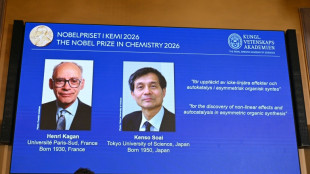 French-Japanese duo wins chemistry Nobel for solving molecular 'mystery'

 England's Nations League surge helps heal World Cup wounds

 Mayor of opposition stronghold Izmir defects to Erdogan party
 Mertens beats Gauff to set up Swiatek clash at China Open
 Benin full of pride at role in Messi's last dance
 France suspends stun grenade use at student protests ahead of PM speech
 Indonesian court hears 'negligence' complaint against state over fires, haze
 Rubio in Greece to urge against Western civilisation 'decline'
 Micron workers at Taiwan plant vote in favour of strike
 In 'The Social Reckoning,' Jeremy Allen White takes on Facebook's 'frightening' ambition
Faced with a surge in monkeypox cases, the head of the World Health Organization is Saturday expected to declare if the agency has decided to classify the outbreak as a global health emergency -- the highest alarm it can sound.
Tedros Adhanom Ghebreyesus will address a virtual press conference at 1300 GMT, the WHO announced in a statement late Friday.
It did not reveal what would be announced.
Monkeypox has affected over 15,800 people in 72 countries, according to a tally by the US Centers for Disease Control and Prevention (CDC) published on July 20.
A surge in monkeypox infections has been reported since early May outside the West and Central African countries where the disease has long been endemic.
On June 23, the WHO convened an emergency committee (EC) of experts to decide if monkeypox constitutes a so-called Public Health Emergency of International Concern (PHEIC) -- the UN health agency's highest alert level.
But a majority advised the Tedros that the situation, at that point, had not met the threshold.
The second meeting was called on Thursday with case numbers rising further, where Tedros said he was worried.
"I need your advice in assessing the immediate and mid-term public health implications," Tedros told the meeting, which lasted more than six hours.
A US health expert sounded a grim warning late Friday.
"Since the last #monkeypox EC just weeks ago we've seen an exponential rise in cases. It’s inevitable that cases will dramatically rise in the coming weeks & months. That’s why @DrTedros must sound the global alarm," Lawrence Gostin, the director of the WHO Collaborating Center on National and Global Health Law, said on Twitter.
"A failure to act will have grave consequences for global health."
- Warning against discrimination -
A viral infection resembling smallpox and first detected in humans in 1970, monkeypox is less dangerous and contagious than smallpox, which was eradicated in 1980.
Ninety-five percent of cases have been transmitted through sexual activity, according to a study of 528 people in 16 countries published in the New England Journal of Medicine -- the largest research to date.
Overall, 98 percent of infected people were gay or bisexual men, and around a third were known to have visited sex-on-site venues such as sex parties or saunas within the previous month.
"This transmission pattern represents both an opportunity to implement targeted public health interventions, and a challenge because in some countries, the communities affected face life-threatening discrimination," Tedros said, citing concern that stigma and scapegoating could make the outbreak harder to track.
"I am acutely aware that any decision I take regarding the possible determination of a Public Health Emergency of International Concern involves the consideration of many factors, with the ultimate goal of protecting public health," he added.
The European Union's drug watchdog on Friday recommended for approval the use of Imnavex, a smallpox vaccine, to treat monkeypox.
Imvanex, developed by Danish drugmaker Bavarian Nordic, has been approved in the EU since 2013 for the prevention of smallpox.
It was also considered a potential vaccine for monkeypox because of the similarity between the monkeypox virus and the smallpox virus.
The first symptoms of monkeypox are fever, headaches, muscle pain and back pain during the course of five days.
Rashes subsequently appear on the face, the palms of hands and soles of feet, followed by lesions, spots and finally scabs.
G.AbuGhazaleh--SF-PST