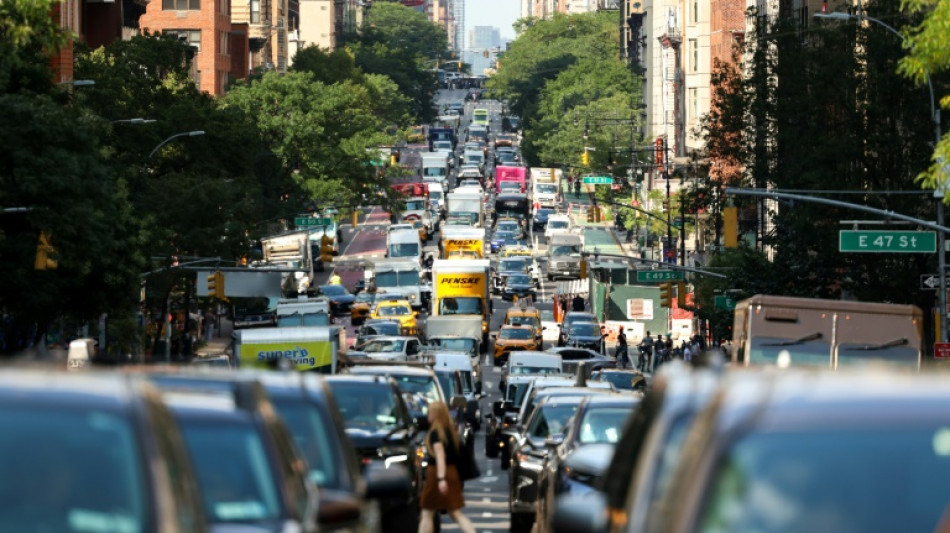
Sounds serious: NYC noise pollution takes a toll / Photo: CHARLY TRIBALLEAU - AFP/File

 Gauff says online abuse was 'draining' after China Open exit

 As sector struggles, Porsche puts luxury ahead of volume

 'It's personal': Fiji minister pushes better climate finance at pre-COP

 Russia glosses over dark Soviet past in reinvented museum

 UK tax body opened probe into Man City in 2018: FT

 Yemen's Houthis claim new attacks on Saudi airports as conflict deepens

 Germany factory production at highest level for 18 months
 Thailand floods death toll rises to 60 since mid-September
 US pushes Russia for information on plague reports
 Myanmar leader lands in Malaysia for migrant return talks

 Indian central bank hikes rates for first time since 2023

 US military on Okinawa face curfew, alcohol ban after murder case

 Fierce lobbying in EU over 'forever chemicals'

 Dodgers beat Braves and Padres avoid sweep in MLB playoffs
 Mourning, war and elections as Israel marks October 7

 Messi says Argentina retirement is 'saddest day of my career'

 Oil rises and stocks fall as Hormuz worries flare

 Pacific presses world for help 'surviving' climate change at pre-COP summit

 Verstappen revival to be put to the test in steamy Singapore

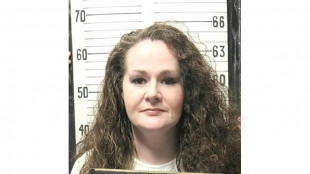 US woman who survived botched execution is conscious, speaking: lawyers

 Climate champion Australia digging more coal
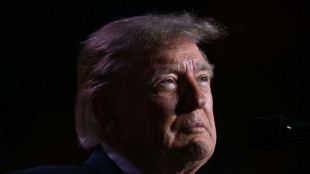
 Emotion, tears as Messi retires from Argentina national team

 Dodgers push Braves to the brink of MLB playoff exit

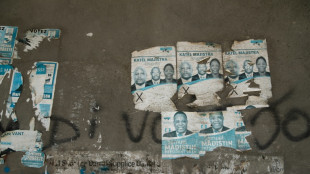 Crisis-stricken Haiti postpones elections

 N. Korea's Kim pledges 'invariable support' in Putin birthday letter

Tim Mulligan moved to central Manhattan so he could be closer to work and avoid a daily ordeal on the rattling, screeching subway, just one part of the urban noisescape that tests New Yorkers every day.
"Even with your earbuds in, turned all the way up, you can't hear anything for the whole commute, and you're ruining your ears at that level," said Mulligan, a US Marines veteran who lives with PTSD.
At his home close to New York's tourist hub Times Square, Mulligan has sealed his windows with high-density soundproof foam, draped them with double thick curtains and invested in earplugs to sleep.
On the street he has resorted to noise-cancelling headphones, and he prefers bikes to the subway for getting around.
New Yorkers and visitors to the megacity of 8.5 million people are bombarded with blaring sirens, loud locals, raucous bars and car horns almost constantly.
A city-wide hotline received 750,000 noise complaints in 2024, the most commonly complained about quality of life issue.
The city that never sleeps, perhaps because it can't, is one of the few built up US areas with a noise code regulating sound from vehicles, construction, businesses, and recreation.
It has even installed cameras with sensors to detect and penalize violators.
Nine-in-ten New Yorkers are at risk of hearing loss from daily exposure to noise levels exceeding 70 decibels, the healthy average, a Columbia University study conducted between 2010 and 2012 found.
The report's author, professor Richard Neitzel, is now leading the first national study on noise in which 200,000 volunteers wear smart watches to track sound levels.
"It looks like somewhere around one-in-four Americans are exposed to noise levels that could hurt their hearing over the long term," said Neitzel, a professor at the University of Michigan.
- 'You can't undo it' -
Among young people aged 18 to 25, the primary source of excess noise exposure comes from headphones.
Overall, more people are exposed to high levels of environmental noise than to noise from their headphones, Neitzel added.
Although the percentage of the population exposed to noise is similar to those exposed to air pollution, acoustic issues are not prioritized by residents and officials like air quality is, Neitzel said.
There is clear evidence that excess noise is linked to poor sleep, cardiovascular issues, depression, cognitive decline, premature births and poor academic performance.
Tinnitus, a permanent ringing in the ear affecting three out of 20 study participants, is increasingly prevalent.
Loud music is even used to promote increased consumption, said Shane Newman, who manages a popular Mexican restaurant in Manhattan's trendy Hudson Yards development.
"You have a drink in the music, it feels like a nice vibe and... they end up staying longer," he told AFP.
Audiologist Michele DiStefano said the effects of noise on well-being have "not really been studied well enough."
"The longer you have the exposure, and the higher the level, the (greater) degree of hearing loss you'll have" -- particularly for young people, she warned.
"Once it does affect your hearing, you can't undo it, but you can actually prevent it," she said.
"There's really a push to educate the younger generations on how you don't have to just have really loud noise at a concert -- it can be cumulative."
T.Khatib--SF-PST