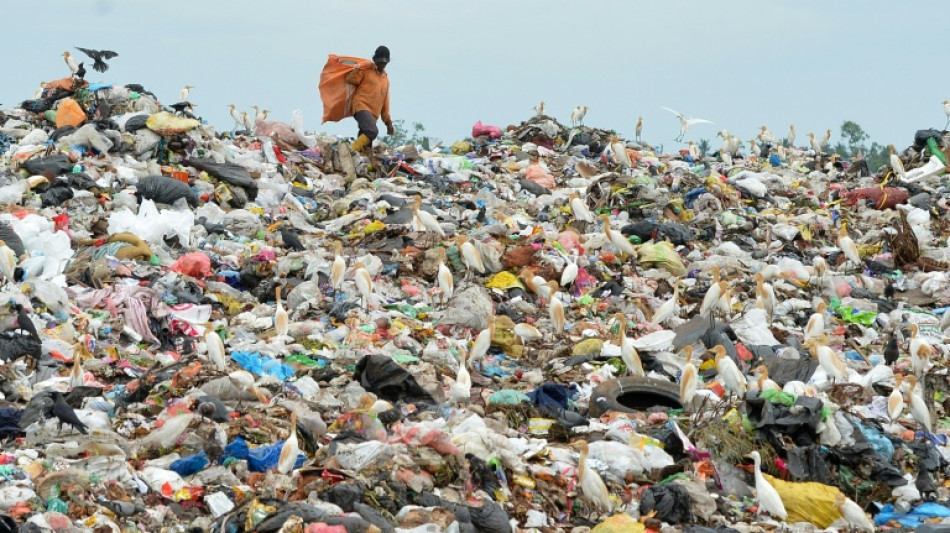
Plastic pollution treaty talks deadlocked / Photo: LAKRUWAN WANNIARACHCHI - AFP

 Gauff says online abuse was 'draining' after China Open exit

 As sector struggles, Porsche puts luxury ahead of volume
 'It's personal': Fiji minister pushes better climate finance at pre-COP

 Russia glosses over dark Soviet past in reinvented museum

 UK tax body opened probe into Man City in 2018: FT

 Yemen's Houthis claim new attacks on Saudi airports as conflict deepens
 Germany factory production at highest level for 18 months
 Thailand floods death toll rises to 60 since mid-September

 US pushes Russia for information on plague reports
 Myanmar leader lands in Malaysia for migrant return talks

 Indian central bank hikes rates for first time since 2023
 US military on Okinawa face curfew, alcohol ban after murder case
 Fierce lobbying in EU over 'forever chemicals'

 Dodgers beat Braves and Padres avoid sweep in MLB playoffs
 Mourning, war and elections as Israel marks October 7

 Messi says Argentina retirement is 'saddest day of my career'
 Oil rises and stocks fall as Hormuz worries flare

 Pacific presses world for help 'surviving' climate change at pre-COP summit
 Verstappen revival to be put to the test in steamy Singapore
 US woman who survived botched execution is conscious, speaking: lawyers
 Climate champion Australia digging more coal
 Emotion, tears as Messi retires from Argentina national team
 Dodgers push Braves to the brink of MLB playoff exit
 Crisis-stricken Haiti postpones elections
 N. Korea's Kim pledges 'invariable support' in Putin birthday letter
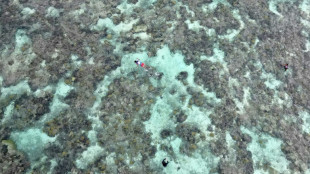
Negotiations on a global treaty on plastic pollution are being blocked by oil-producing countries and getting bogged down in a "dialogue of the deaf", sources at the talks told AFP on Thursday.
Ten days of talks on finalising an international, legally-binding accord opened on Tuesday amid optimism from organisers that a deal could be done to tackle the scourge of plastic rubbish and microplastics trashing the planet.
But by Thursday, after countries had staked out their positions, the mood had darkened, negotiating sources said.
"We are in a dialogue of the deaf, with very few landing zones... I don't see progress," said a diplomatic source from a country in a coalition of nations pushing for a strong treaty, including plastic production reduction targets.
"What's worrying is that we have lots of points of disagreement; we're not quibbling about one problem."
The "Like-Minded Countries" (LMC) group, chiefly comprising oil-producing states, is opposed to any targets for limiting plastic production.
In total, 184 nations are taking part in the talks at the United Nations in Geneva.
Technically, the talks are a resumed session of the fifth -- and supposedly final -- round of negotiations, which ended in a flop in Busan, South Korea, in December.
- 'Hostage situation' -
Rather than drifting towards common ground, "positions are crystallising", an observer from a non-governmental organisation told AFP after attending discussion groups, where the technical articles of the treaty are being thrashed out by negotiators.
Written documents submitted by nations to the UN negotiations website, consulted by AFP, confirm that Saudi Arabia, the Arab countries group, Russia, Iran, Kazakhstan and Malaysia reject binding measures on cutting plastic production.
Most of these countries want the petroleum origin of plastic to be left outside the bounds of any eventual treaty, and want the agreement to focus solely on what happens downstream, such as waste collection, sorting, recycling.
However, the initial, universally-adopted resolution establishing negotiations towards a treaty envisaged a deal covering the entire life cycle of plastic.
"If the text is only to help developing countries manage their waste better, we don't need an international treaty to do so," the diplomatic source stressed. "We are in a stand-off with countries quite prepared for there to be no treaty".
The Center for International Environmental Law (CIEL) said that while the most ambitious countries had scaled back some aspirations in a bid to find consensus, the LMC group had not budged, meaning the middle ground was now much lower.
CIEL spokeswoman Cate Bonacini said: "That's not a negotiation; that's a hostage situation, especially when you know you're running out of money, people want to end the process. They're going to try to spend us down and tire us out."
"We heard countries on day one questioning whether this should be a treaty about plastic at all. That's really indicative of where some countries are," she told AFP.
- Health risks -
No consensus has emerged one an article of the draft text, on creating a list of chemical substances considered potentially hazardous to the environment or human health. The chemical industry has opposed such a list.
The World Health Organization urged countries to ensure the treaty contains enforceable health protection.
"Plastic pollution poses significant and growing risks to human health," WHO chief Tedros Adhanom Ghebreyesus told reporters.
"These risks disproportionately impact vulnerable populations, including workers with occupational exposure... and communities near extraction production and disposal sites.
"Many of the chemicals added to plastic during their manufacture are hazardous, including endocrine disruptors, linked to hormonal imbalance, reproductive disorders, infertility, kidney disease and cancer."
Rudiger Krech, the UN health agency's environment chief, added that on plastic and human health, "the more we look the more we find.
"Twenty years ago we didn't know how dangerous it can be.
"We're now looking at the nano-plastics that can be found in many people's brains; we can also see that this is connected to many diseases."
O.Farraj--SF-PST