Looser gun laws tied to thousands more US child shooting deaths / Photo: Loren Elliott - AFP/File

 Gauff says online abuse was 'draining' after China Open exit

 As sector struggles, Porsche puts luxury ahead of volume

 'It's personal': Fiji minister pushes better climate finance at pre-COP

 Russia glosses over dark Soviet past in reinvented museum

 UK tax body opened probe into Man City in 2018: FT

 Yemen's Houthis claim new attacks on Saudi airports as conflict deepens

 Germany factory production at highest level for 18 months

 Thailand floods death toll rises to 60 since mid-September

 US pushes Russia for information on plague reports

 Myanmar leader lands in Malaysia for migrant return talks

 Indian central bank hikes rates for first time since 2023

 US military on Okinawa face curfew, alcohol ban after murder case

 Fierce lobbying in EU over 'forever chemicals'

 Dodgers beat Braves and Padres avoid sweep in MLB playoffs

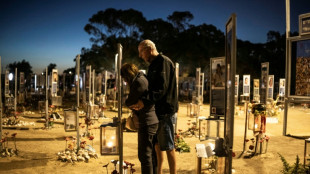 Mourning, war and elections as Israel marks October 7

 Messi says Argentina retirement is 'saddest day of my career'

 Oil rises and stocks fall as Hormuz worries flare

 Pacific presses world for help 'surviving' climate change at pre-COP summit

 Verstappen revival to be put to the test in steamy Singapore

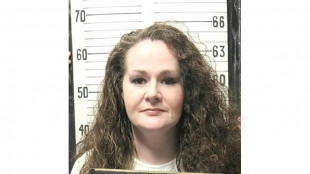 US woman who survived botched execution is conscious, speaking: lawyers

 Climate champion Australia digging more coal

 Emotion, tears as Messi retires from Argentina national team

 Dodgers push Braves to the brink of MLB playoff exit

 Crisis-stricken Haiti postpones elections

 N. Korea's Kim pledges 'invariable support' in Putin birthday letter

US states that loosened their gun laws following a landmark court ruling saw thousands more childhood firearm deaths than they otherwise would have -- the vast majority homicides and suicides -- according to a study published Monday.
Jeremy Faust, an emergency physician at Brigham and Women's Hospital in Boston and lead author of the paper in JAMA Pediatrics, told AFP he was drawn to the topic as a father wondering whether today's world is safer for children than when he was growing up.
"Mortality from car accidents has fallen dramatically, but at the same time, firearm mortality rose and replaced car accidents as the leading cause of death in children over the age of one," he said -- a trend unique among peer nations.
To probe this shift, Faust and his colleagues analyzed state-level data before and after McDonald v Chicago, the 2010 Supreme Court decision that extended the Second Amendment to state and local governments.
The ruling sparked a wave of legislation, some tightening gun laws but much of it loosening them.
The team grouped states into three categories -- most permissive, permissive, and strict -- and used Centers for Disease Control data on firearm deaths among children aged 0–17.
They ran an "excess mortality analysis," comparing actual deaths from 2011 to 2023 against projections based on prior trends from 1999 to 2010 and population growth.
The results were stark: more than 7,400 excess pediatric firearm deaths in states that loosened gun laws -- including over 6,000 in the most permissive group of states.
By contrast, the eight strictest states overall saw no excess deaths. The model predicted 4,267 fatalities, while 4,212 were recorded -- a near-match that bolstered confidence in the analysis.
"The biggest thing people always want to know is, what's the intent behind these?" said Faust.
"And I think what surprises most people is that accidents are a very small number of these deaths -- it's mostly homicide and suicide."
While the study showed strong associations, it cannot prove causation -- a key limitation.
But in a test of whether broader increases in violence might explain the trend, rather than changes to the law, the team analyzed non-firearm homicides and suicides and found no similar rise, a result that makes the findings "pretty compelling," said Faust.
Black children saw the steepest increases. While the reasons are unclear, the authors speculated that disparities in safe firearm storage could play a role.
There were some exceptions. Deaths rose in Illinois and Connecticut despite tighter laws -- though in the latter case, the spike was entirely attributable to the 2012 Sandy Hook mass shooting at an elementary school.
"Big picture, we have a major problem in this country," said Faust.
"But we also have a handful of states that are resisting these increases and, in fact, turning the other direction."
A.Suleiman--SF-PST