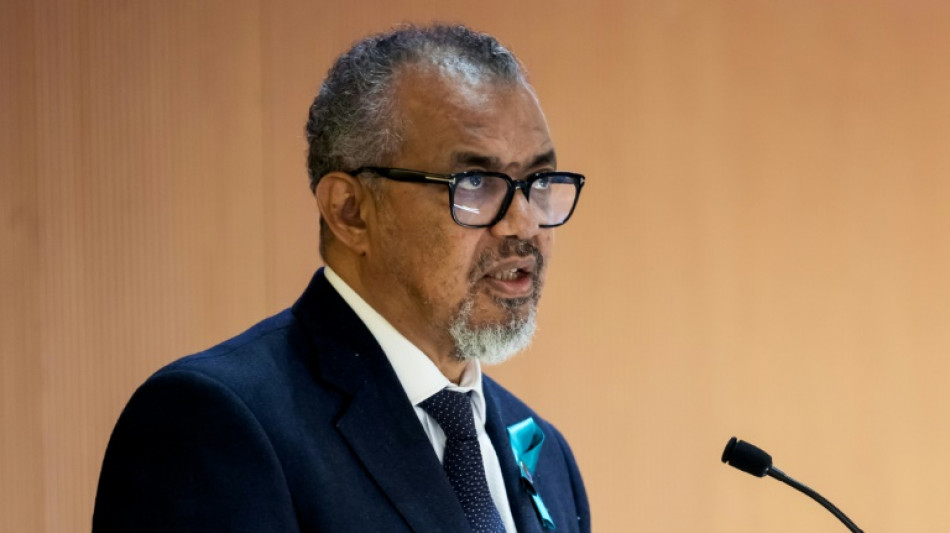
WHO chief begs Israel to show 'mercy' in Gaza / Photo: Fabrice COFFRINI - AFP

 مصطفى معروفي ينشر قصيدة 'أصوغ كلامي أهتدي بتجاربي'

 Luxembourg Pay Rise Delayed as Regional and World Headlines Develop

 Audience to Choose the Set List at Luxembourg's First FAMIL Jukebox Night

 Raheem Sterling Receives Suspended Sentence After Lamborghini Crash

 Black Friday Discounts Cut Prices on Two Top-Rated Wiper Blades

 مواجهة في البرازيل بين نشطاء وفلسطينيين وسياح إسرائيليين حول جدارية مؤيدة

 رئيس جامعة القدس يستعرض نموذج الشراكة بين التعليم العالي والصناعة في قمة QS بأبوظبي

 ابتكارات فلسطينية في مسابقة "سيف" العالمية بالرياض

 تحذير أمني من تكثيف إسرائيل إرسال رسائل نصية مستهدفة للفلسطينيين

 Polanski Accuses Sadiq Khan of Undermining Thames Water Nationalisation

 Nigeria Envoy's $61 Billion Claim Faces Scrutiny Amid Diplomatic Tensions

 وزير المالية يبحث مع برنامج الأمم المتحدة الإنمائي توسيع الدعم في غزة والضفة

Fighting back tears, the head of the World Health Organization on Thursday urged Israel to have "mercy" in the Gaza war and insisted peace would be in Israel's own interests.
In an emotional intervention at the WHO annual assembly, Tedros Adhanom Ghebreyesus said the war was hurting Israel and would not bring a lasting solution.
"I can feel how people in Gaza would feel at the moment. I can smell it. I can visualise it. I can hear even the sounds. And this is because of PTSD (post-traumatic stress disorder)," said Tedros, 60, who has often recalled his own wartime upbringing in Ethiopia.
"You can imagine how people are suffering. It's really wrong to weaponise food. It's very wrong to weaponise medical supplies."
The United Nations on Thursday began distributing around 90 truckloads of aid which are the first deliveries into Gaza since Israel imposed a total blockade on March 2.
Tedros said only a political solution could bring a meaningful peace.
"A call for peace is actually in the best interests of Israel itself. I feel that the war is hurting Israel itself and it will not bring a lasting solution," he said.
"I ask if you can have mercy. It's good for you and good for the Palestinians. It's good for humanity."
- 'Systematic' destruction -
WHO emergencies director Michael Ryan said that 2.1 million people in Gaza were "in imminent danger of death".
"We need to end the starvation, we need to release all hostages and we need to resupply and bring the health system back online," he said.
"As an ex-hostage, I can say that all hostages should be released. Their families are suffering. Their families are in pain," he added.
The WHO said Gazans were suffering acute shortages of food, water, medical supplies, fuel and shelter.
Four major hospitals have had to suspend medical services in the past week, due to their proximity to hostilities or evacuation zones, and attacks.
Only 19 of the Gaza Strip's 36 hospitals remain operational, with staff working in "impossible conditions", the UN health agency said in a statement.
"At least 94 percent of all hospitals in the Gaza Strip are damaged or destroyed," it said, while north Gaza "has been stripped of nearly all health care".
It said that across the Palestinian territory, only 2,000 hospital beds remained available -- a figure "grossly insufficient to meet the current needs".
"The destruction is systematic. Hospitals are rehabilitated and resupplied, only to be exposed to hostilities or attacked again. This destructive cycle must end."
O.Mousa--SF-PST