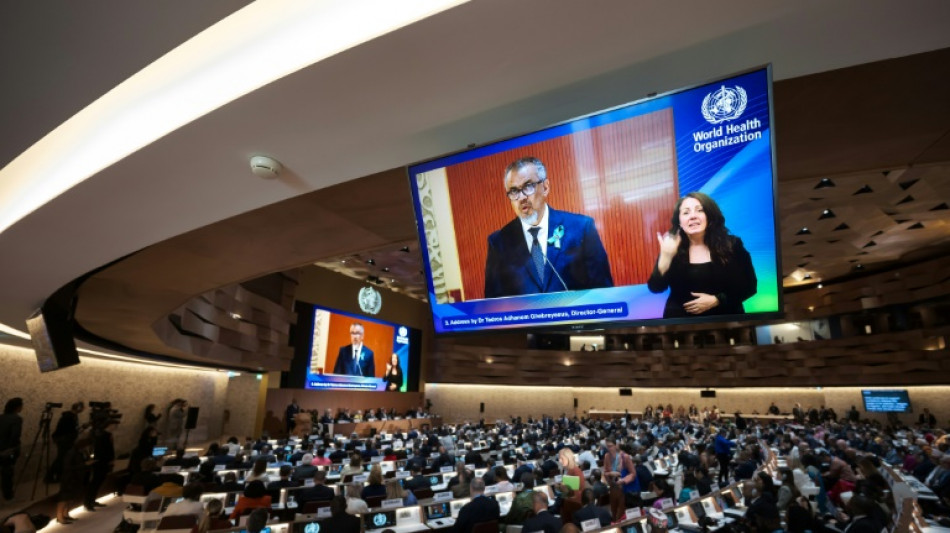
Path cleared for WHO assembly to adopt pandemic agreement / Photo: Fabrice COFFRINI - AFP

 West must embrace 'national power' or face decline: Rubio

 Shell refining margins reach record highs as wars hit supply

 Former Spain, Barca winger Pedro retires from football

 Arteta signs new Arsenal deal until 2030

 Stocks decline as oil climbs on Mideast flareup
 Gauff says online abuse was 'draining' after China Open exit

 As sector struggles, Porsche puts luxury ahead of volume
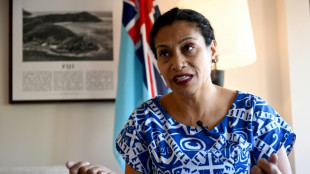 'It's personal': Fiji minister pushes better climate finance at pre-COP

 Russia glosses over dark Soviet past in reinvented museum

 UK tax body opened probe into Man City in 2018: FT

 Yemen's Houthis claim new attacks on Saudi airports as conflict deepens
 Germany factory production at highest level for 18 months
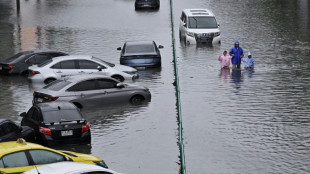 Thailand floods death toll rises to 60 since mid-September

 US pushes Russia for information on plague reports

 Myanmar leader lands in Malaysia for migrant return talks
 Indian central bank hikes rates for first time since 2023
 US military on Okinawa face curfew, alcohol ban after murder case
 Fierce lobbying in EU over 'forever chemicals'

 Dodgers beat Braves and Padres avoid sweep in MLB playoffs
 Mourning, war and elections as Israel marks October 7

 Messi says Argentina retirement is 'saddest day of my career'

 Oil rises and stocks fall as Hormuz worries flare

 Pacific presses world for help 'surviving' climate change at pre-COP summit

 Verstappen revival to be put to the test in steamy Singapore
 US woman who survived botched execution is conscious, speaking: lawyers

WHO's annual assembly is expected to adopt a landmark agreement on tackling future pandemics on Tuesday, after a top committee in the UN agency unanimously approved it.
The accord's text was concluded in April after three years of tense negotiations.
Its adoption would be a success for the World Health Organization as it tries to balance drastic budget cuts against its duty to respond to numerous health crises across the globe.
The WHO Pandemic Agreement aims to prevent in the future the sort of disjointed response and international disarray that surrounded the Covid-19 crisis, by improving global coordination and surveillance of pandemics, and access to vaccines.
The agreement's approval in committee format on Monday paves the way for its formal adoption by the full World Health Assembly, which serves as the WHO's decision-making body.
The chair of the committee, Namibian Health Minister Esperance Luvindao, announced that it had adopted the resolution by 124 votes, with none against. Eleven countries abstained, including Iran, Israel, Italy, Poland and Russia.
WHO chief Tedros Adhanom Ghebreyesus said afterwards it was a step towards governments around the world working together to address "the threats posed by pathogens and viruses of pandemic potential".
He said the accord would ensure countries work better, faster and more equitably together "to prevent and respond to the next pandemic threat".
- Budget cloud -
The United States pulled out of the negotiations towards the pandemic agreement after US President Donald Trump's decision to withdraw his country from the WHO, a process that takes one year to complete.
"In a time of growing geopolitical tensions and seismic changes, this agreement is proof that the world is still together," said Precious Matoso of South Africa.
The assembly, which runs until May 27, opened Monday under a budget cloud darkened by the US decision to not pay its WHO membership dues.
The issue -- which threatens to slash the UN agency's staff numbers and operations -- is the sombre backdrop to the assembly, which has to grapple with a $1.7 billion gap in the WHO's 2026-2027 spending plans.
The financing woes and Washington's freeze on international aid, were foremost on delegates' minds.
The United States was absent from the gathering, as was Argentina.
Trump's administration is refusing to pay agreed-upon WHO membership fees for 2024 and 2025, while suspending virtually all US foreign aid, including significant support for health projects worldwide.
The decision has spurred belt-tightening at the Geneva-based agency, which is hoping to cut salary-related expenses by 25 percent and is exploring outsourcing to cheaper cities.
During the week, the assembly will have to decide whether to increase WHO membership fees by 20 percent. In 2022, they had already agreed to increase membership fees in stages, to 50 percent of a budget currently reliant more on voluntary donations from nations.
The WHO has already trimmed its 2026-2027 budget from $5.3 billion to $4.2 billion. But even so, Tedros warned the agency needs to find $1.7 billion to get there.
V.Said--SF-PST