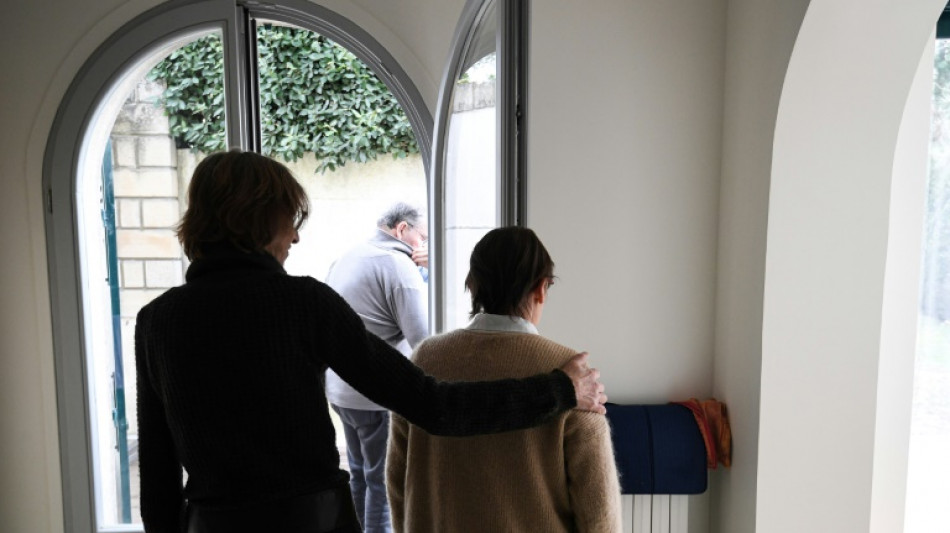
US approves first blood test for Alzheimer's / Photo: ALAIN JOCARD - AFP

 West must embrace 'national power' or face decline: Rubio

 Shell refining margins reach record highs as wars hit supply

 Former Spain, Barca winger Pedro retires from football

 Arteta signs new Arsenal deal until 2030

 Stocks decline as oil climbs on Mideast flareup

 Gauff says online abuse was 'draining' after China Open exit

 As sector struggles, Porsche puts luxury ahead of volume

 'It's personal': Fiji minister pushes better climate finance at pre-COP

 Russia glosses over dark Soviet past in reinvented museum

 UK tax body opened probe into Man City in 2018: FT

 Yemen's Houthis claim new attacks on Saudi airports as conflict deepens

 Germany factory production at highest level for 18 months

 Thailand floods death toll rises to 60 since mid-September
 US pushes Russia for information on plague reports

 Myanmar leader lands in Malaysia for migrant return talks

 Indian central bank hikes rates for first time since 2023

 US military on Okinawa face curfew, alcohol ban after murder case

 Fierce lobbying in EU over 'forever chemicals'

 Dodgers beat Braves and Padres avoid sweep in MLB playoffs

 Mourning, war and elections as Israel marks October 7

 Messi says Argentina retirement is 'saddest day of my career'

 Oil rises and stocks fall as Hormuz worries flare

 Pacific presses world for help 'surviving' climate change at pre-COP summit

 Verstappen revival to be put to the test in steamy Singapore

 US woman who survived botched execution is conscious, speaking: lawyers
The United States on Friday approved the first blood test for Alzheimer's, a move that could help patients begin treatment earlier with newly approved drugs that slow the progression of the devastating neurological disease.
The test, developed by Fujirebio Diagnostics, measures the ratio of two proteins in the blood. The rato is correlated with amyloid plaques in the brain -- a hallmark of Alzheimer's that, until now, has been detected only through brain scans or spinal fluid analysis.
"Alzheimer's disease impacts too many people -- more than breast cancer and prostate cancer combined," said Food and Drug Administration Commissioner Marty Makary.
"Knowing that 10 percent of people aged 65 and older have Alzheimer's, and that by 2050 that number is expected to double, I am hopeful that new medical products such as this one will help patients."
There are currently two FDA approved treatments for Alzheimer's: lecanemab and donanemab, which target amyloid plaque and have been shown to modestly slow cognitive decline, though they do not cure the disease.
Advocates for the intravenous antibody therapies, including many neurologists, say they can offer patients a few additional months of independence -- and are likely to be more effective if started earlier in the disease's course.
In clinical studies, the blood test produced results largely in line with positron emission tomography (PET) brain scans and spinal fluid analysis.
"Today's clearance is an important step for Alzheimer's diagnosis, making it easier and potentially more accessible for US patients earlier in the disease," said Michelle Tarver of the FDA's Center for Devices and Radiological Health.
The test is authorized for use in clinical settings for patients showing signs of cognitive decline, and results must be interpreted alongside other clinical information.
Alzheimer's is the most common form of dementia. It worsens over time, gradually robbing people of their memories and independence.
J.AbuHassan--SF-PST