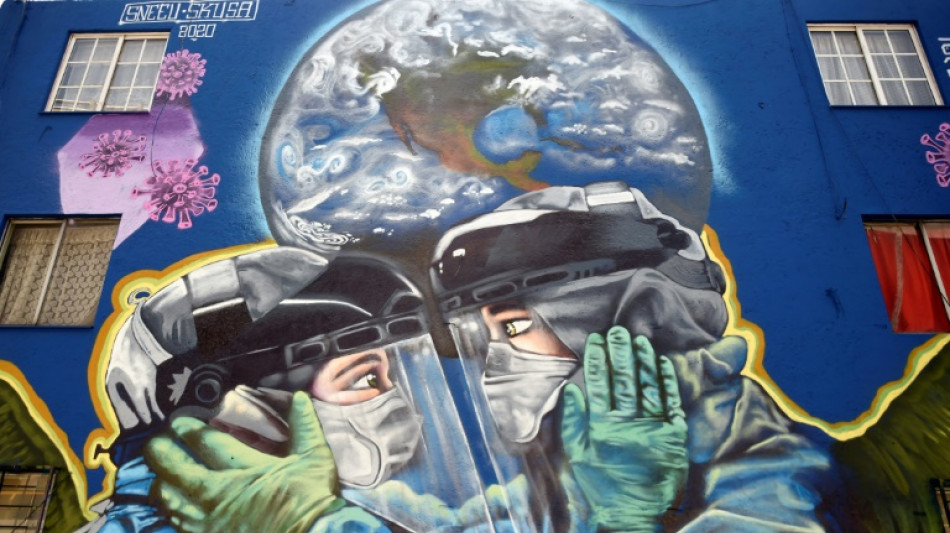
WHO countries reach landmark agreement on tackling future pandemics / Photo: ALFREDO ESTRELLA - AFP

 West must embrace 'national power' or face decline: Rubio
 Shell refining margins reach record highs as wars hit supply
 Former Spain, Barca winger Pedro retires from football
 Arteta signs new Arsenal deal until 2030
 Stocks decline as oil climbs on Mideast flareup
 Gauff says online abuse was 'draining' after China Open exit
 As sector struggles, Porsche puts luxury ahead of volume
 'It's personal': Fiji minister pushes better climate finance at pre-COP
 Russia glosses over dark Soviet past in reinvented museum
 UK tax body opened probe into Man City in 2018: FT
 Yemen's Houthis claim new attacks on Saudi airports as conflict deepens
 Germany factory production at highest level for 18 months
 Thailand floods death toll rises to 60 since mid-September

 US pushes Russia for information on plague reports
 Myanmar leader lands in Malaysia for migrant return talks
 Indian central bank hikes rates for first time since 2023
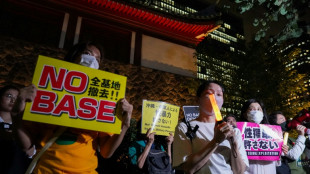 US military on Okinawa face curfew, alcohol ban after murder case
 Fierce lobbying in EU over 'forever chemicals'
 Dodgers beat Braves and Padres avoid sweep in MLB playoffs
 Mourning, war and elections as Israel marks October 7

 Messi says Argentina retirement is 'saddest day of my career'
 Oil rises and stocks fall as Hormuz worries flare

 Pacific presses world for help 'surviving' climate change at pre-COP summit
 Verstappen revival to be put to the test in steamy Singapore
 US woman who survived botched execution is conscious, speaking: lawyers
Years of negotiations culminated early Wednesday with countries agreeing the text of a landmark accord on how to tackle future pandemics, aimed at avoiding a repeat of the mistakes made during the Covid-19 crisis.
After more than three years of talks and one last marathon session, weary delegates at the World Health Organization's headquarters sealed the deal at around 2:00 am (0000 GMT) Wednesday.
"Tonight marks a significant milestone in our shared journey towards a safer world," WHO chief Tedros Adhanom Ghebreyesus said.
"The nations of the world made history in Geneva today."
Five years after Covid-19 killed millions of people and devastated economies, a growing sense of urgency hung over the talks, with new health threats lurking, ranging from H5N1 bird flu to measles, mpox and Ebola.
The final stretch of negotiations also took place with cuts to US foreign aid spending and threatened tariffs on pharmaceuticals casting a shadow over the talks.
- 'It's adopted' -
Right until the last minute, disagreement had lingered over a few thorny issues.
Negotiators stumbled over the agreement's Article 11, which deals with transferring technology for pandemic health products towards developing nations.
During the Covid-19 pandemic, poorer states accused rich countries of hoarding vaccines and tests.
Countries with large pharmaceutical industries have strenuously opposed the idea of mandatory tech transfers, insisting they must be voluntary.
But it appeared the obstacle could be overcome by adding that any transfer needed to be "mutually agreed".
The core the agreement is a proposed Pathogen Access and Benefit-Sharing System (PABS), aimed at allowing the swift sharing of pathogen data with pharmaceutical companies, enabling them to quickly start working on pandemic-fighting products.
In the end, the 32-page agreement was entirely highlighted in green, indicating it had been fully approved by WHO member states.
"It's adopted," negotiations co-chair Anne-Claire Amprou announced, to thundering applause.
"In drafting this historic agreement, the countries of the world have demonstrated their shared commitment to preventing and protecting everyone, everywhere, from future pandemic threats."
The finalised text will now be presented for sign-off at the WHO's annual assembly next month.
- 'More equity' -
As intense talks in corridors and closed rooms drew towards an end late on Tuesday, Tedros joined the negotiations, telling reporters he thought the current draft was "balanced", and that a deal would bring "more equity".
While taking measures to coordinate pandemic prevention, preparedness and response could be costly, "the cost of inaction is much bigger", he insisted.
"Virus is the worst enemy. (It) could be worse than a war."
The United States, which has thrown the global health system into crisis by slashing foreign aid spending, was not present.
US President Donald Trump ordered a withdrawal from the United Nations' health agency and from the pandemic agreement talks after taking office in January.
However, the US absence, and Trump's threat to slap steep tariffs on pharmaceutical products, still hung over the talks, making manufacturers and governments more jittery.
But in the end, countries reached consensus.
Many saw the approval of the text as a victory for global cooperation.
"At a time when multilateralism is under threat, WHO member states have joined together to say that we will defeat the next pandemic threat in the only way possible: by working together," said former New Zealand prime minister Helen Clark, co-chair of the Independent Panel for Pandemic Preparedness and Response.
As the congratulatory speeches continued on towards daybreak, Eswatini's representative stressed that "whilst we celebrate this moment, we need not rest on our laurels".
"The real work begins now."
M.Qasim--SF-PST