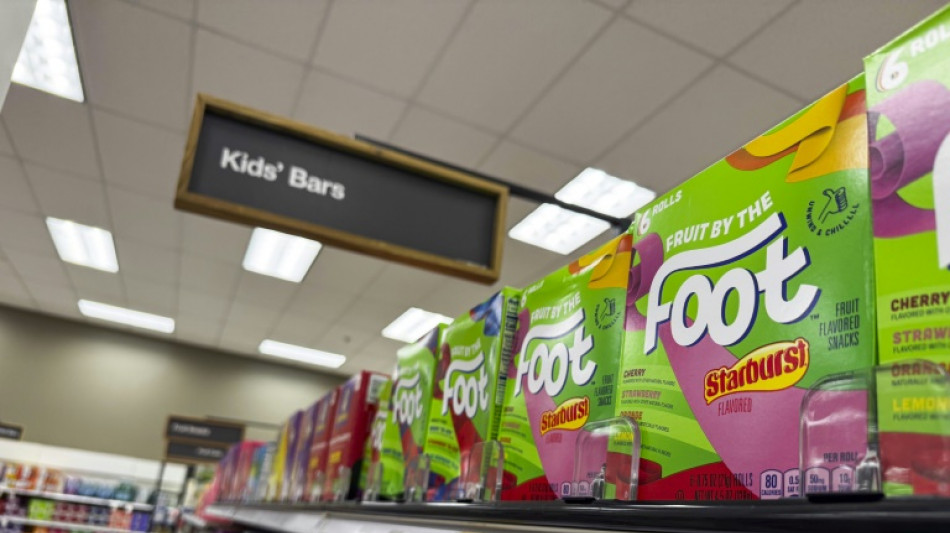
US bans red food dye over possible cancer risk: health authorities / Photo: ROBERTO SCHMIDT - AFP

 US woman who survived botched execution is awake and speaking

 From 1800s to modern pharma: a Nobel-winning chemistry quest
 Southampton boss Eckert given suspended ban over 'Spygate'
 Russia warns of 'false' information as second plague case reported

 IEA ready to release more oil reserves if necessary

 HSBC 'consults' over UK unit job cuts amid AI adoption
 UK court quashes five ex-traders' Libor rate rigging convictions
 XM Receives “Global Customer Experience Leader Award 2026” at the TrustFinance Performance Awards
 Stocks slide as oil climbs on Mideast flareup
 Heavy casualties in Ukraine after Russian strikes
 French wine harvest set to hit historic low

 Kyiv 'cannot agree' to EU membership limiting food exports: minister
 Arteta targets more Arsenal glory after signing new deal until 2030

 Russell hit with Singapore grid penalty for taking new power unit

 Spotify expands audiobooks to more than 180 markets

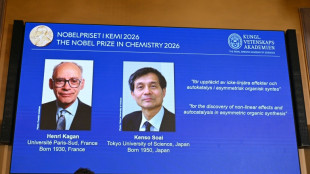 French-Japanese duo wins chemistry Nobel for solving molecular 'mystery'

 England's Nations League surge helps heal World Cup wounds

 Mayor of opposition stronghold Izmir defects to Erdogan party

 Mertens beats Gauff to set up Swiatek clash at China Open
 Benin full of pride at role in Messi's last dance
 France suspends stun grenade use at student protests ahead of PM speech

 Indonesian court hears 'negligence' complaint against state over fires, haze

 Rubio in Greece to urge against Western civilisation 'decline'
 Micron workers at Taiwan plant vote in favour of strike
 In 'The Social Reckoning,' Jeremy Allen White takes on Facebook's 'frightening' ambition

Outgoing US President Joe Biden's administration on Wednesday announced a ban on Red Dye No 3, a controversial food and drug coloring long known to cause cancer in animals.
Decades after scientific evidence first raised alarm, Red 3, as it is also called, is currently used in nearly 3,000 food products in the United States, according to the nonprofit Environmental Working Group.
"FDA is revoking the authorized uses in food and ingested drugs of FD&C Red No 3 in the color additive regulations," said a document from the Department of Health and Human Services, published in the Federal Register on Wednesday.
The decision follows a petition filed in November 2022 by the Center for Science in the Public Interest (CSPI) and other advocacy groups, which cited the "Delaney Clause" -- a provision mandating the prohibition of any color additive shown to cause cancer in humans or animals.
Notably, the FDA determined as early as 1990 that Red 3 should be banned in cosmetics because of its link to thyroid cancer in lab rats.
However, the additive continued to be used in foods, largely due to resistance from the food industry. Manufacturers of maraschino cherries, for example, relied on Red 3 to maintain the iconic red hue of their products.
It's also present in thousands of candies, snacks and fruit products.
The United States is one of the last major economies to take action on the dye. The European Union prohibited its use in 1994, with similar bans implemented in Japan, China, the UK, Australia and New Zealand.
CSPI hailed the decision as overdue and expressed hope it would lead to further action against other potentially harmful chemicals in food.
"They don't add any nutritional value, they don't preserve the food -- they're just there to make food look pretty," Thomas Galligan, a scientist with CSPI, told AFP.
"There's growing discussion across the political spectrum about food additives and chemicals, which reflects ongoing failures by the FDA."
O.Farraj--SF-PST